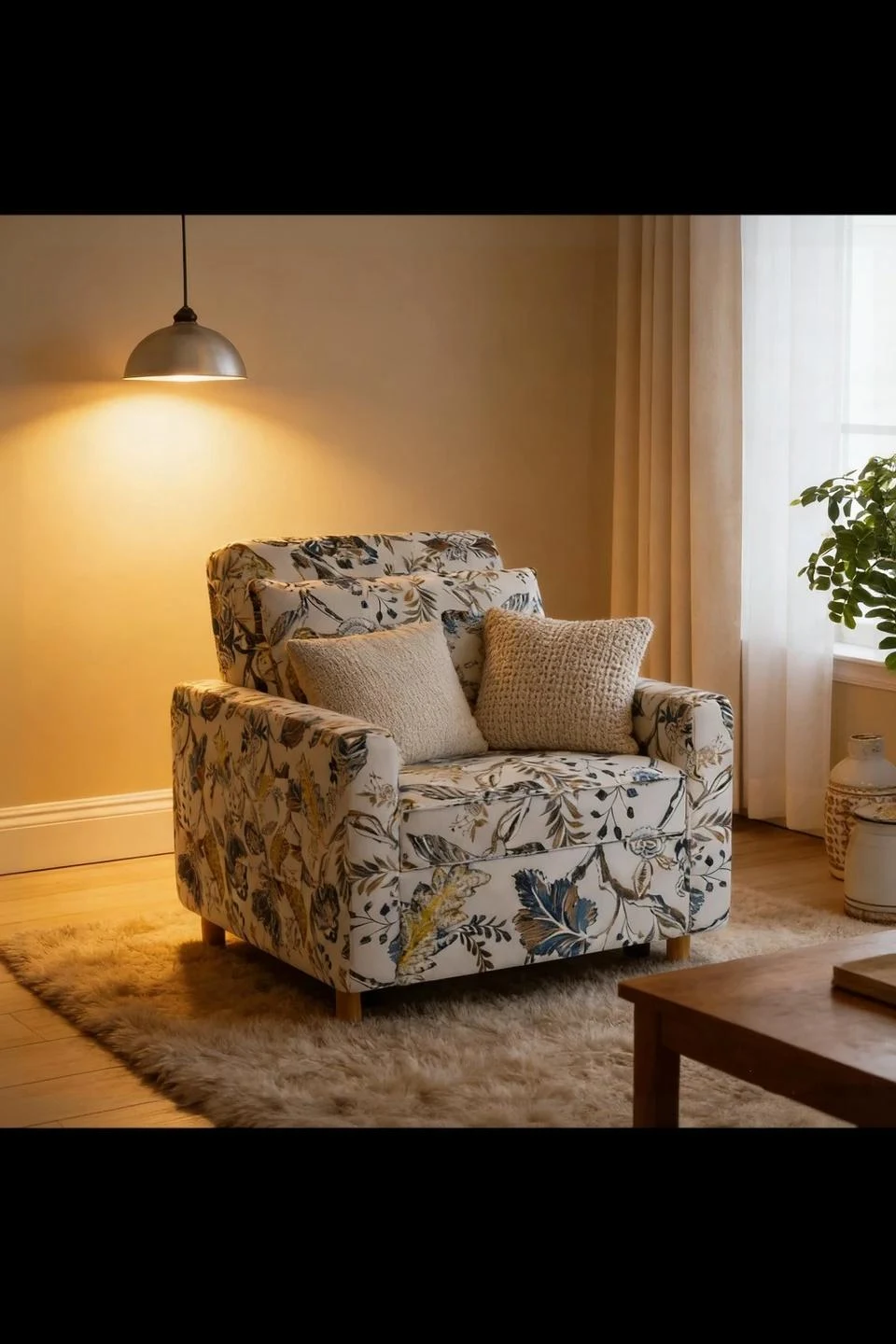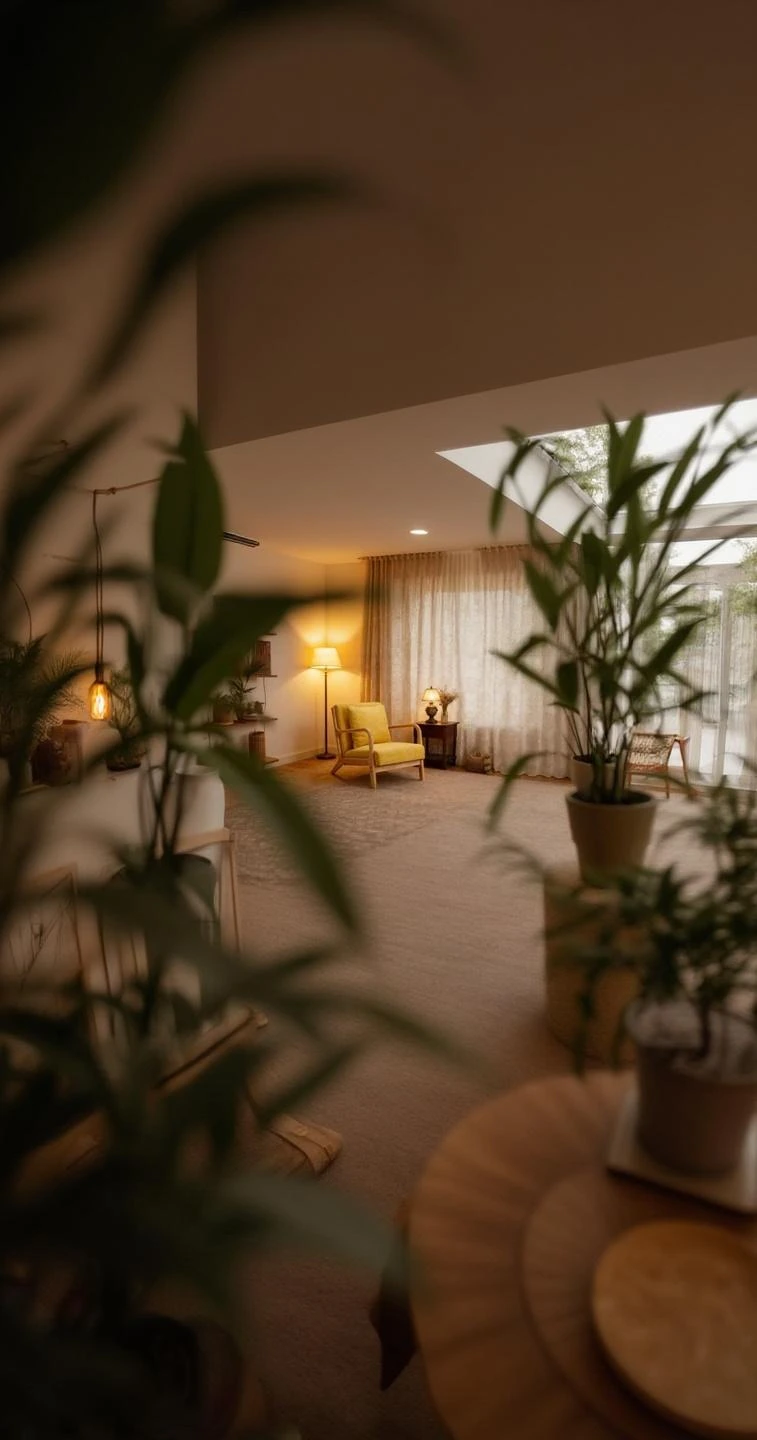
A reading nook in a small apartment is twelve square feet doing the work of an entire room. It's the corner where you actually settle when you want to disappear into a book — quietly different from the sofa where you doom-scroll, the dining chair where you eat lunch, the bed where you sleep. Done well, it makes a 500-square-foot studio feel deliberately zoned. Done poorly, it's an accent chair sitting in a hallway.
We've helped friends and clients build reading corners in apartments from 320 sq ft to 1100 sq ft, and the pattern is the same regardless of total square footage: the difference between a nook and a chair in a corner is the layered set of small decisions, made in the right order, that signal the space's purpose.
This is the practical guide.
Step 1 — Choose the corner (this matters more than choosing the chair)
Most failed reading nooks fail at the corner-choice step. The instinct is to put the chair where there's empty floor space — by the wall in the living room, in the hallway, by the bedroom door. None of those are reading-nook locations.
The corners that actually work have three properties:
- At least one adjacent wall. The chair backs up against a wall or has a wall to one side. Open-corner placements (chair sitting in the middle of a room) fail because they don't feel enclosed enough to disappear into.
- A nearby light source — or a place to put one. Either a window for daytime reading or a junction box / outlet within 6 feet for a floor lamp.
- At least 24 inches of floor space on either side of the chair. This is for the side table, the stack of books, the throw blanket on the floor — the evidence that the corner is a reading place.
- The corner of the bedroom (best, usually). Quiet, naturally enclosed, often has a window. Trade-off: you have to pass the chair to get to bed, which is fine.
- The corner of the living room opposite the TV. Counter-intuitive but works — your reading corner is the anti-TV corner. Watching TV and reading happen at different times, in different parts of the same room.
- An alcove under a window. If the apartment has any kind of bay window, alcove, or recessed wall, that's a built-in reading nook waiting to happen.
- The space at the foot of a bed (in studio apartments). Risky — if too tight, feels cramped. If 30+ inches between bed foot and chair back, can work.
- Hallway niches. Foot traffic kills the settling-in feeling.
- The corner of the kitchen. Reading next to where you cook makes neither activity better.
- Anywhere the chair backs up to a high-traffic walking path. If people regularly walk behind the chair, you'll never relax in it.
- Seat depth: 18-19 inches. Not deeper (you can't get up easily) and not shallower (you can't lean back).
- Backrest height: 32+ inches. Anything shorter is a desk chair, not a reading chair.
- Lumbar support visible in the silhouette. A flat-backed accent chair is a conversation chair, not a reading chair.
- Height: 17-22 inches. Slightly above the chair seat. You should be able to set down a mug without lifting your shoulder.
- Footprint: 12-18 inches diameter or square. Big enough for a drink, a book, a phone, a small lamp; small enough not to crowd.
- Material: anything that won't water-mark. A wood side table without a sealed top is asking for a coffee ring. Marble, ceramic, sealed wood, metal — all good.
- A small rug (3x5 or 4x6) under the chair. Anchors the corner visually. Wool or wool-blend feels right under bare feet.
- A throw blanket thrown over the chair back or arm. Even if you never use it, it signals settled.
- One or two throw pillows in textures that don't compete with the chair upholstery (linen pillows on a velvet chair, knitted pillows on a linen chair).
- A book stack on the side table or floor. 4-6 books, spines facing in different directions. The visual signal that reading happens here.
- A candle. Even unlit. Anchors the side table.
- A mug or teacup, even when empty. Signals warmth.
- One personal item — a framed photo, a small ceramic, a bowl of stones from a beach. Whatever has personal weight.
- Reading chair (under 30" wide): $180-260
- Side table: $35-70
- Floor lamp (arc or articulated): $80-180
- LED bulb (2700K, dimmable, 100W equiv): $12
- Small rug (3x5 wool blend): $60-90
- Throw blanket: $25-45
- Two throw pillows: $25-50
- Candle and small accessories: $15-30
The candidates in most small apartments:
The corners that don't work:
Step 2 — The chair (right size, right depth)
The biggest mistake: oversizing.
A 36-inch wide barrel chair is comfortable, but in a 700 sq ft apartment, it dominates the room. You want a chair under 30 inches wide for any small space, ideally 26-28 inches. The chair should fit the corner without crowding it — leave at least 12 inches of floor on either side.
Spec lines that matter for long-session reading:
For the curated picks across price points, see Best Reading Chairs for a Cozy Corner Under $200. For the wider lineup, the Accent Chairs collection has been vetted for nook-suitable seating.
Step 3 — The side table (the unsung hero)
Without a side table, a reading chair isn't a reading nook — it's a chair where you sometimes try to read.
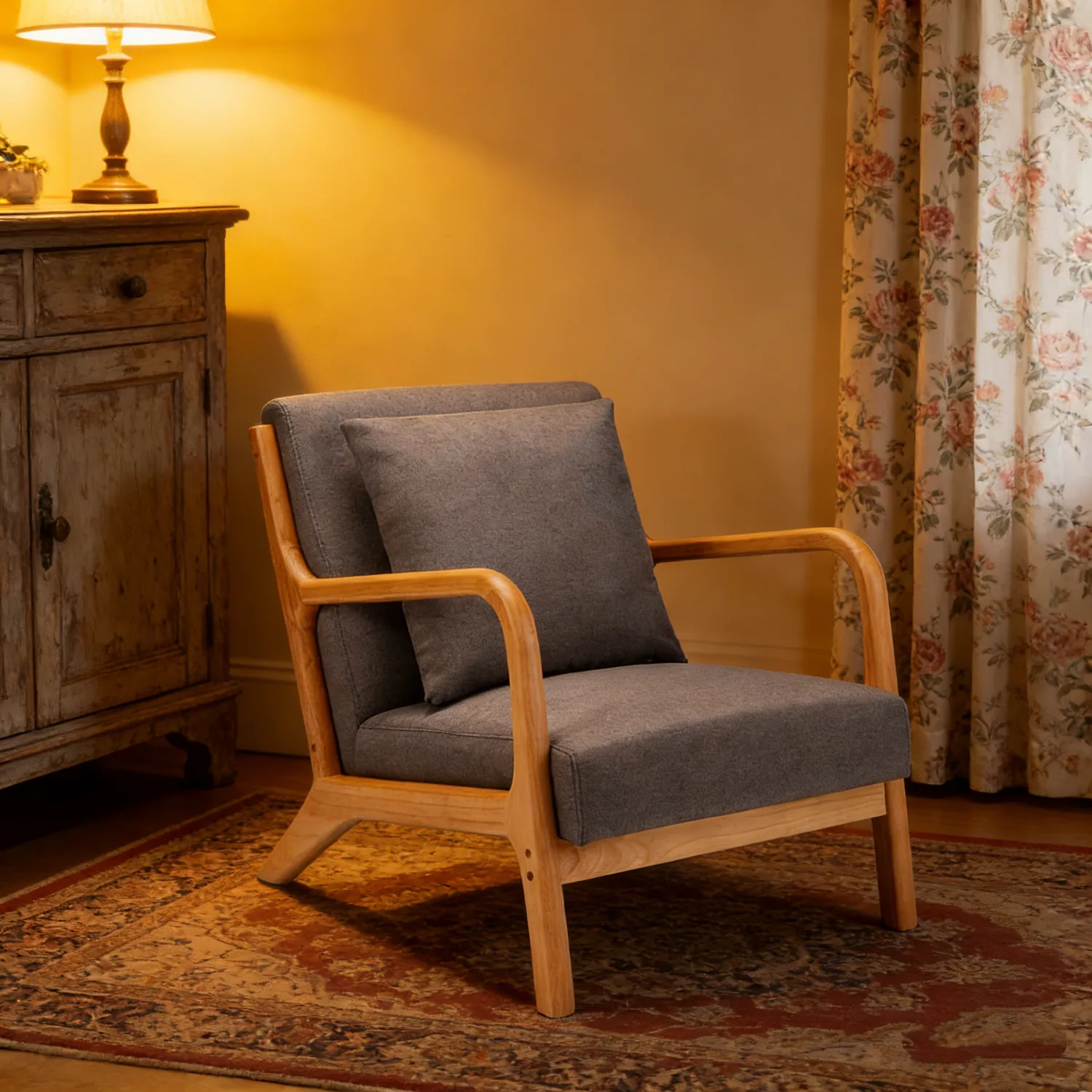
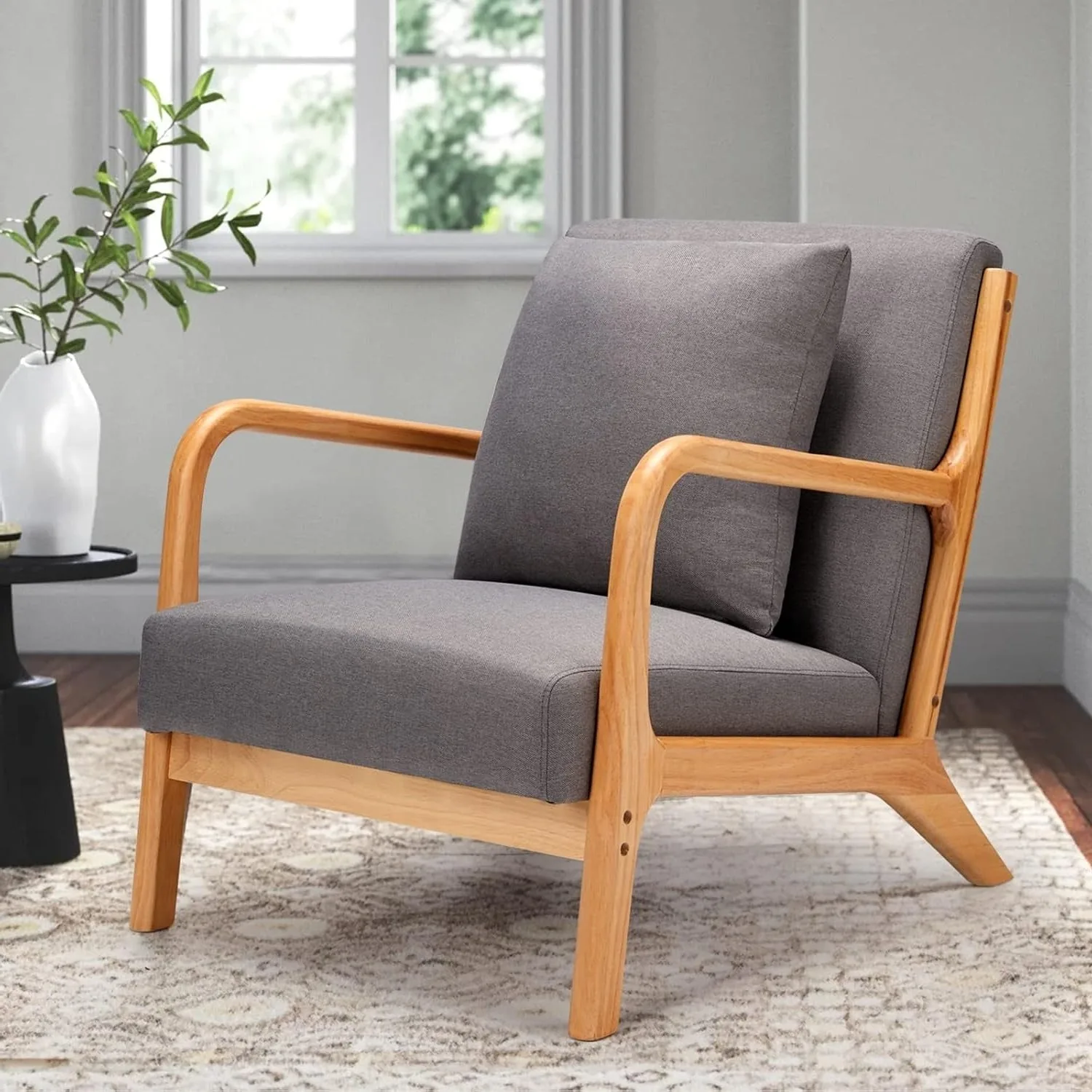
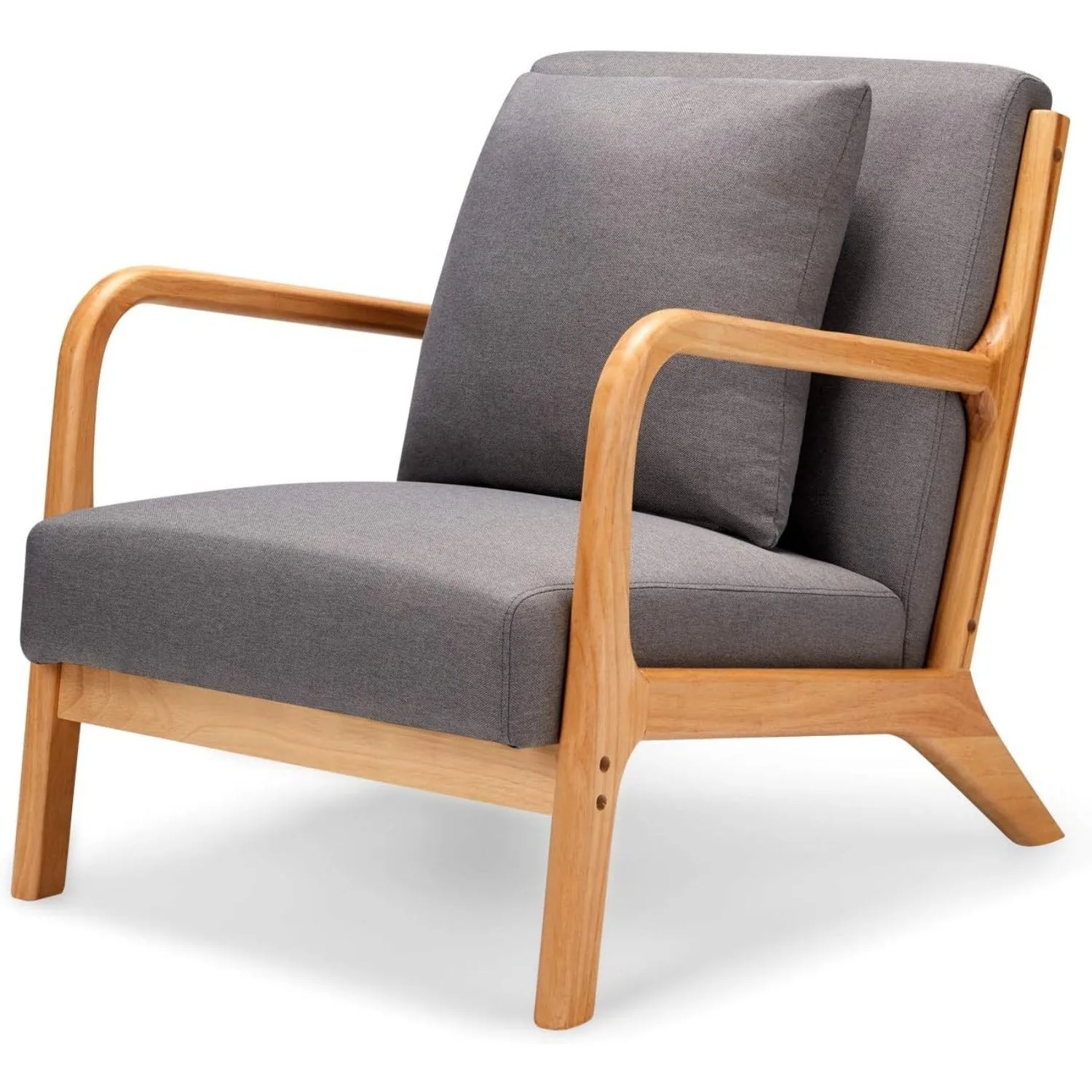
YODOLLA Gray Linen Accent Chair - Modern Reading Armchair for Living Room & Bedroom
YODOLLA · Featured in this article
Specs:
Budget line: $30-80. Don't overspend here. The side table is where most of the function lives but the chair is where most of the visible quality should live.
Step 4 — The light (this is half the work)
Reading light is non-negotiable. Three options that work, in order of preference:
Floor lamp angled over the back of the chair. Bulb behind your shoulder, angled down onto the page. The light reaches the book, not your eyes. This is the cleanest setup. Look for arc lamps (taller, angles further) or articulated arm floor lamps. Budget: $80-180.
Wall sconce mounted at shoulder height with a swing arm. Same idea, mounted to the wall instead of standing on the floor. Saves floor space (huge in studios). Requires either an electrician (hardwired) or an outlet within reach (plug-in cord). Budget: $50-150 plus install.
Table lamp on the side table. The least good option for actual reading because the lamp height usually puts the bulb in your line of sight. Works as ambient light but you'll want a second light source for the actual reading.
Bulb choice for any of these: 2700K warm white, 800-1100 lumens, dimmable, CRI 90+. Cool-white reading light feels clinical and tires your eyes faster.
Step 5 — The soft layer
This is what turns a functional reading corner into a destination:
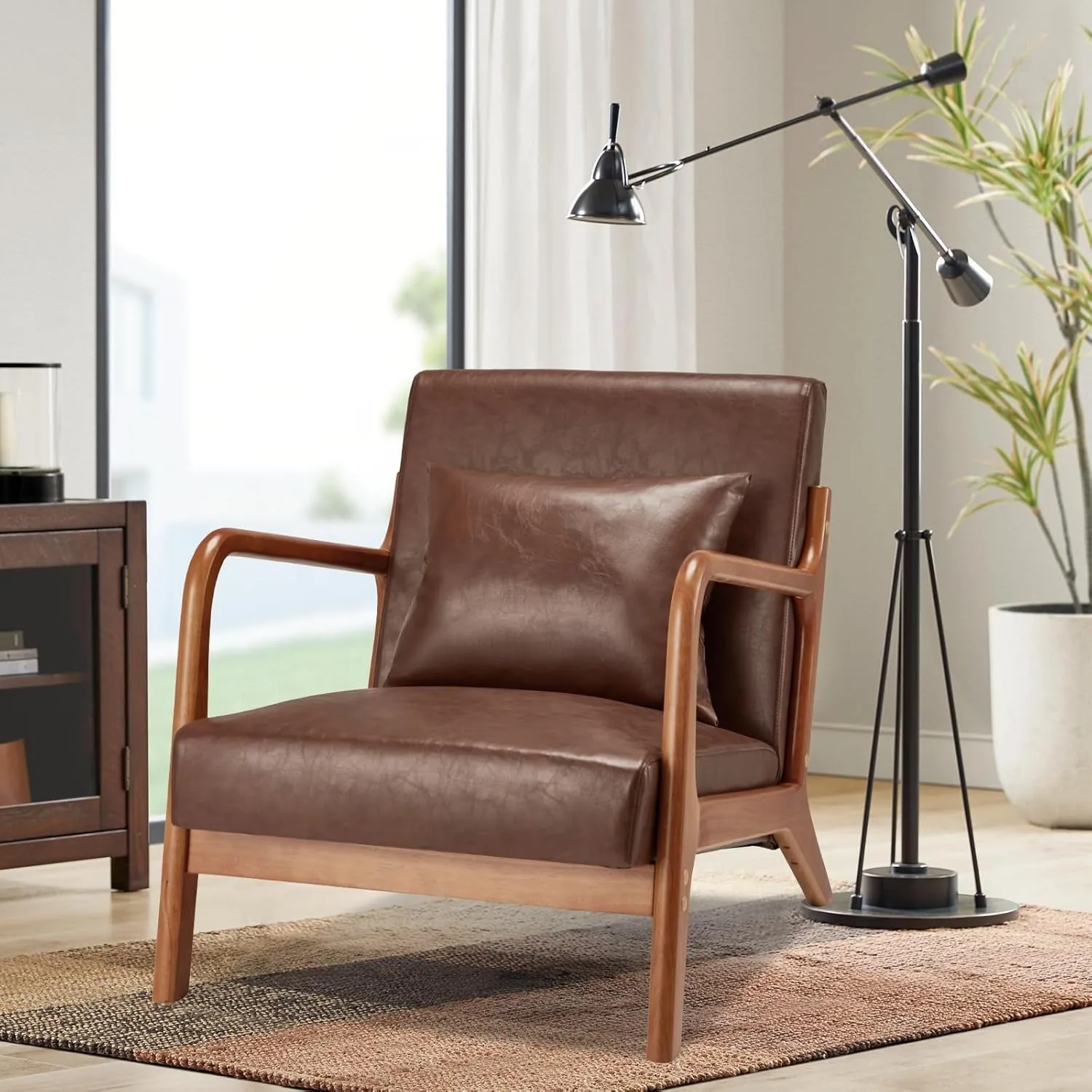
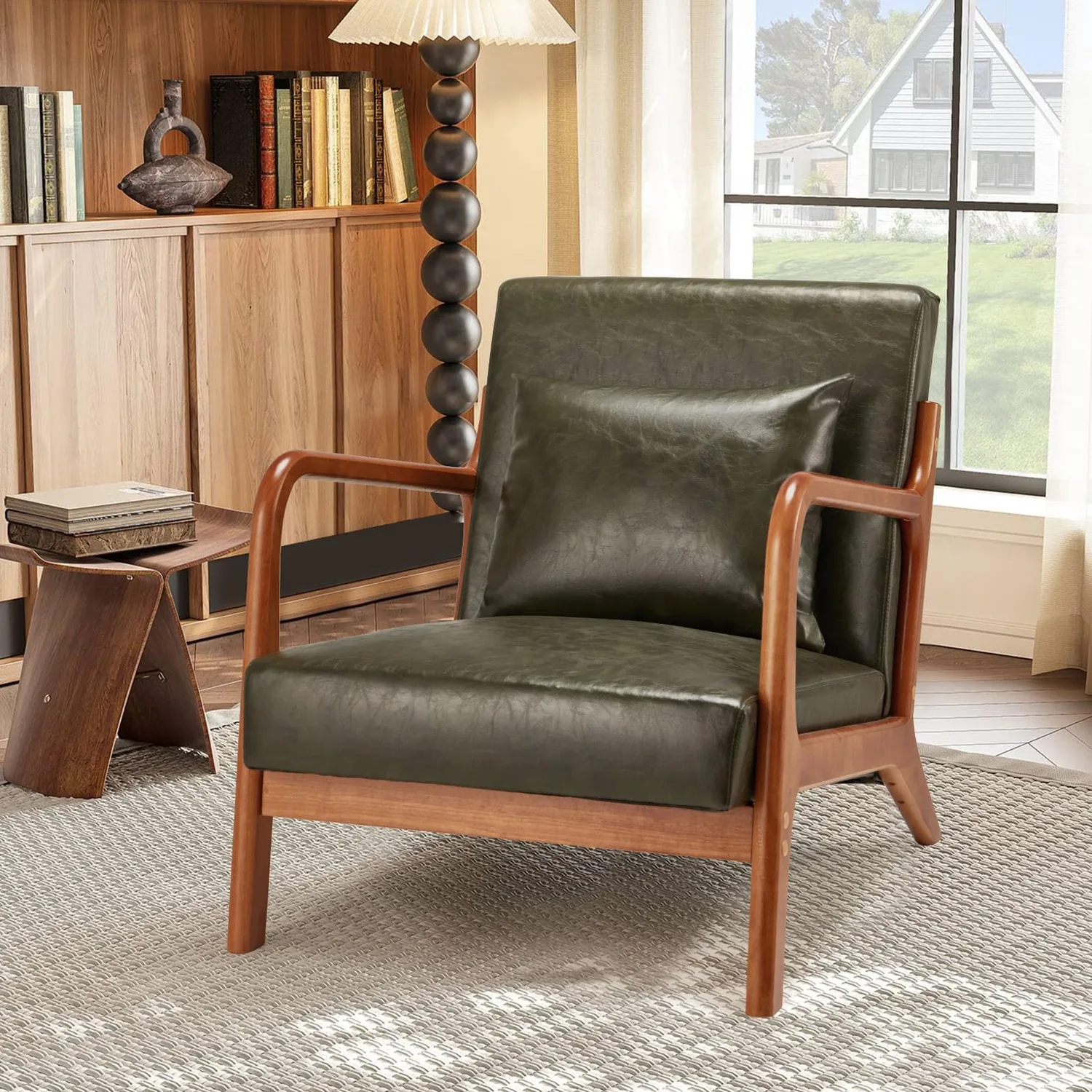
Cozy Brown Reading Chair - Transform Your Reading Nook Into a Peaceful Sanctuary
YODOLLA · Featured in this article
Budget for the soft layer: $80-150 total. The single biggest visual impact comes from the rug; the second-biggest from the throw.
Step 6 — The "ritual" objects
This is the layer most reading-nook posts skip, but it's what differentiates a corner that looks good in photos from a corner you actually use:
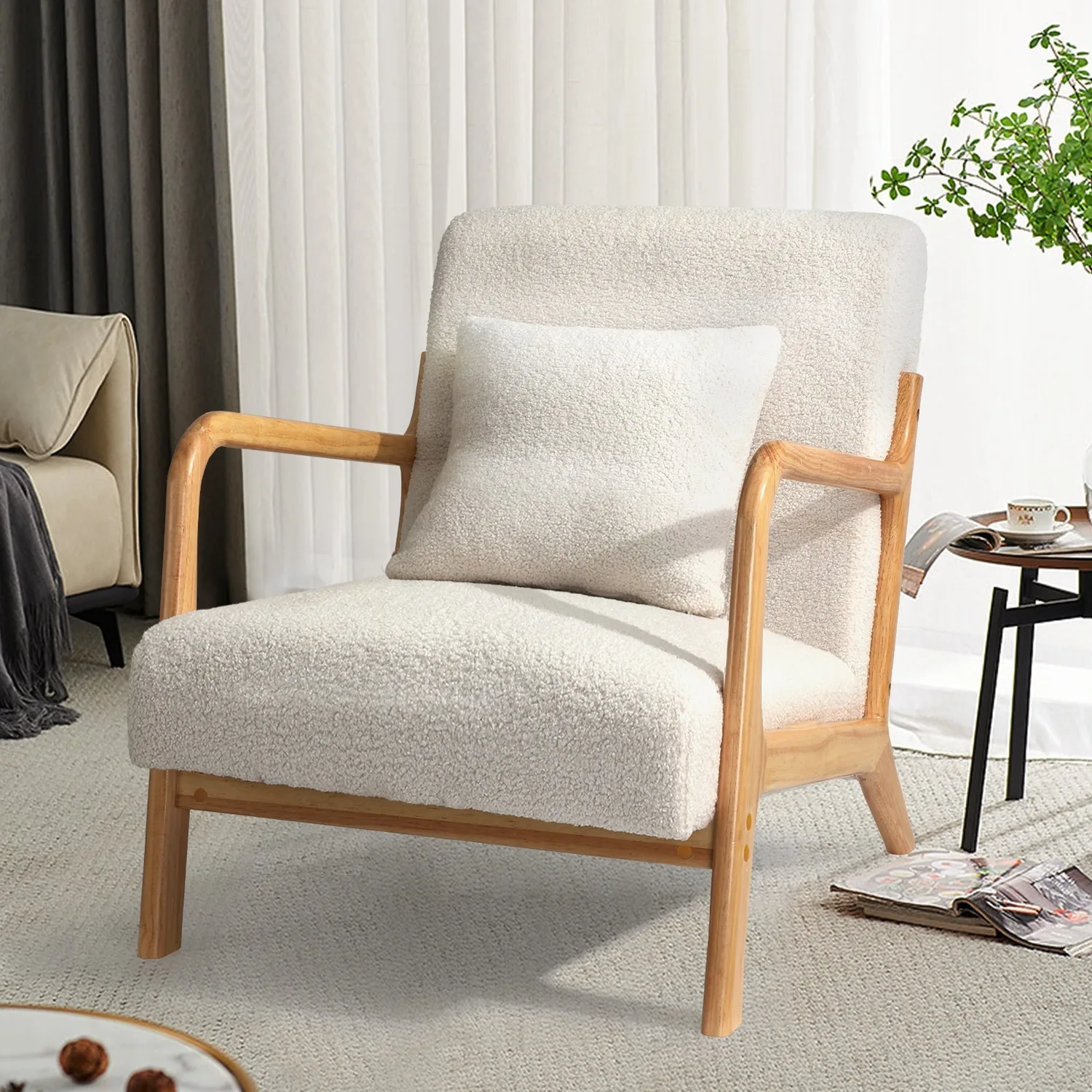
These are the cheapest and most-skipped layer. They're also the difference between "Pinterest reading corner" and "the corner I actually go to when I want to disappear for an hour."
Common small-apartment compromises (and how to handle them)
No room for a separate side table.
Solution: a wall-mounted shelf at side-table height (16-20 inches above seat), depth 8-10 inches. Eats no floor space, holds drink and book.
No outlet for a floor lamp.
Solution: a battery-powered LED floor lamp, or a plug-in sconce with cord cover running along the wall to the nearest outlet.
Too few square feet for a chair AND a side table AND a rug.
Solution: skip the rug, accept the floor as-is, prioritize the chair-table-lamp combo. The rug is the easiest layer to add later.
Roommate's stuff in the corner you want to use.
This is a negotiation problem, not a furniture problem. Talk to them.
Two layouts for two common apartment shapes
Studio apartment, 400-500 sq ft, single open room:
Place the chair in the corner opposite the bed, ideally with the chair facing toward a window. Side table on the chair's "drink hand" side (right for most people). Floor lamp behind the chair on the same side. Small rug (3x5) under the chair extending forward 18 inches.
1-bedroom, 600-800 sq ft, separate bedroom:
Place the chair in the bedroom corner closest to a window, NOT in the living room. The reading corner shouldn't compete with the social/TV space. Same chair-table-lamp setup. Use a slightly larger rug (4x6) since the bedroom has more floor space.
When the nook isn't working
You bought everything but you're not using it.
Diagnosis: usually the corner choice was wrong. Try moving the whole setup to a different corner before assuming the chair is wrong.
The chair is comfortable but your eyes get tired.
Diagnosis: light is wrong. Either too low-lumen, too cool a color temperature, or hitting your face instead of the page.
The corner reads as visually messy.
Diagnosis: too many objects on the side table. Edit ruthlessly. A reading nook needs fewer visual elements than a normal styling vignette. Minimum: drink, book, lamp, candle.
A budget breakdown ($380-$520 starting from scratch)
Hit those eight pieces and a 12 sq ft corner becomes the most-used 12 sq ft in the apartment.
Frequently asked questions
The FAQ at the bottom covers questions we get most: how small is too small for a reading nook, whether you can use a chair you already own, the best alternative to a floor lamp when ceilings are low, and how to make a nook work in a rental where you can't drill into walls.
Browse the curated Accent Chairs collection for nook-suitable chairs that fit small footprints, or read Best Reading Chairs for a Cozy Corner Under $200 for the specific picks.