A reading chair under $200 has to clear one bar that most furniture ignores: can you actually sit in it for two hours? The reading chair is the only seat in your home with a single, specific job — supporting you through a long, uninterrupted task — and most accent chairs in this price range fail that test by minute thirty.
We tested twenty-three accent chairs under $200 across the spring. Six made it through. The rest split into the predictable failure modes: foam too soft, lumbar support absent, fabric warm in summer and cold in winter, footprint too large for the corner where it actually had to live, or — surprisingly common — the chair that looks great empty and unsittable when occupied because the seat depth is wrong for any human under six feet tall.
Below: the six picks that passed, what each one is actually best for, and the four spec lines you should always check before buying any reading chair sight unseen.
The four spec lines that determine whether a chair is comfortable
Most accent chair listings hide these in the fine print. Find them before you buy:
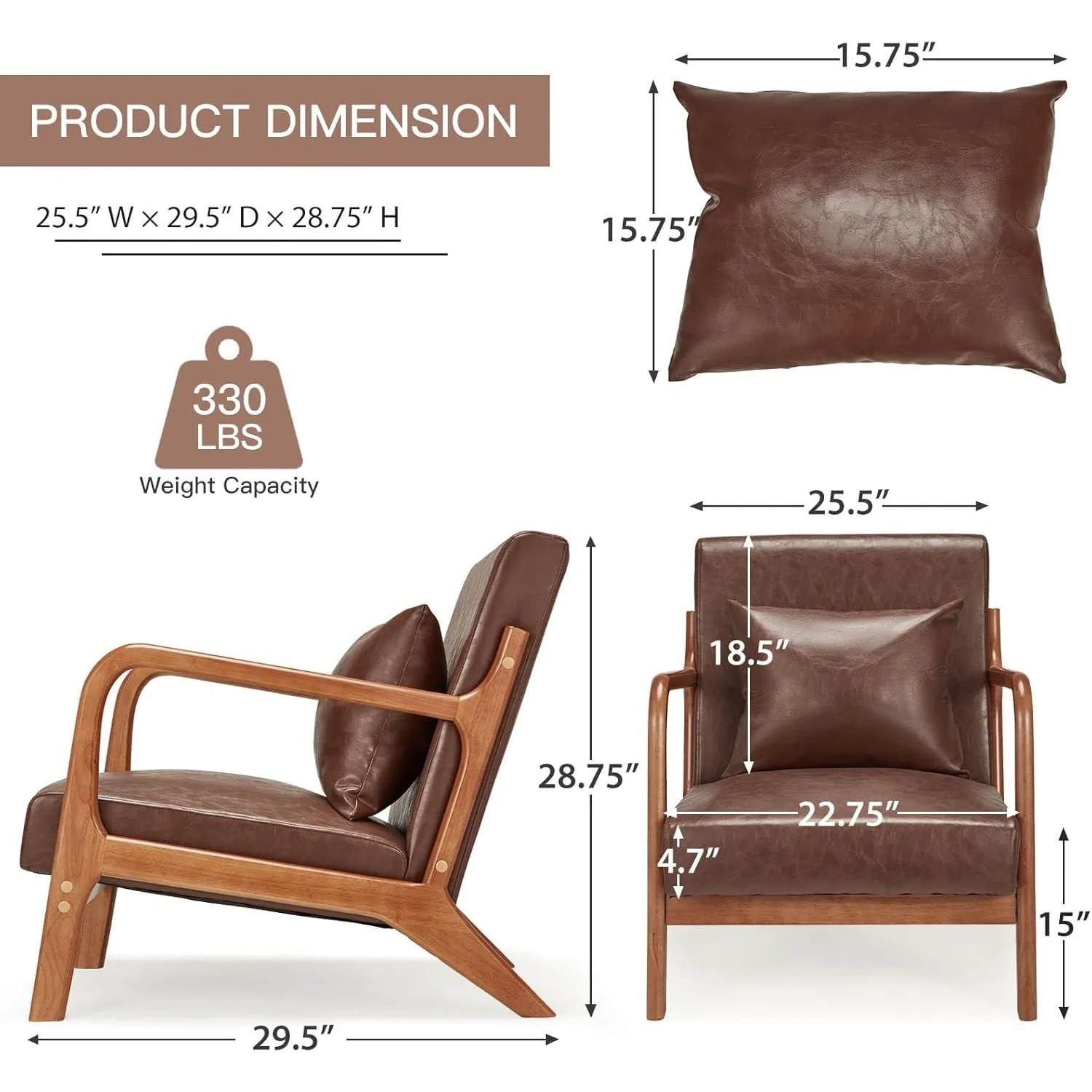
Seat depth: 17-20 inches. Under 17, you sit on the edge. Over 20, you can't lean back without your feet leaving the floor (assuming average height). The 18-19 inch range is the sweet spot for most adults.
Seat height: 17-19 inches from floor. This is the height where your knees fall at roughly 90 degrees with your feet flat. Lower than 17 (deep "lounge" chairs) means difficulty getting up; over 19 means feet won't reach without an ottoman.
Backrest height: 32-38 inches from seat. A reading chair needs to support your shoulders and head when you lean back. Anything under 32 inches is a "task chair" not a "reading chair."
Lumbar support: a visible curve in the back, 6-8 inches above the seat. Look for the silhouette photo, not the marketing description. A flat-backed chair with no lumbar curve is a casual conversation chair, not a reading chair.
If a listing doesn't include all four numbers, the listing is incomplete. Ask the merchant or skip to a chair where the spec is published.
The six picks
1. The classic linen accent chair (gray or beige)
The everyone-can-recommend choice. A modern Scandinavian-influenced accent chair with linen upholstery, 17-inch seat depth, mid-height back, and either tapered wood legs or matte black metal. Shows up in the curated lineup most consistently because it's the chair that fits the most rooms.
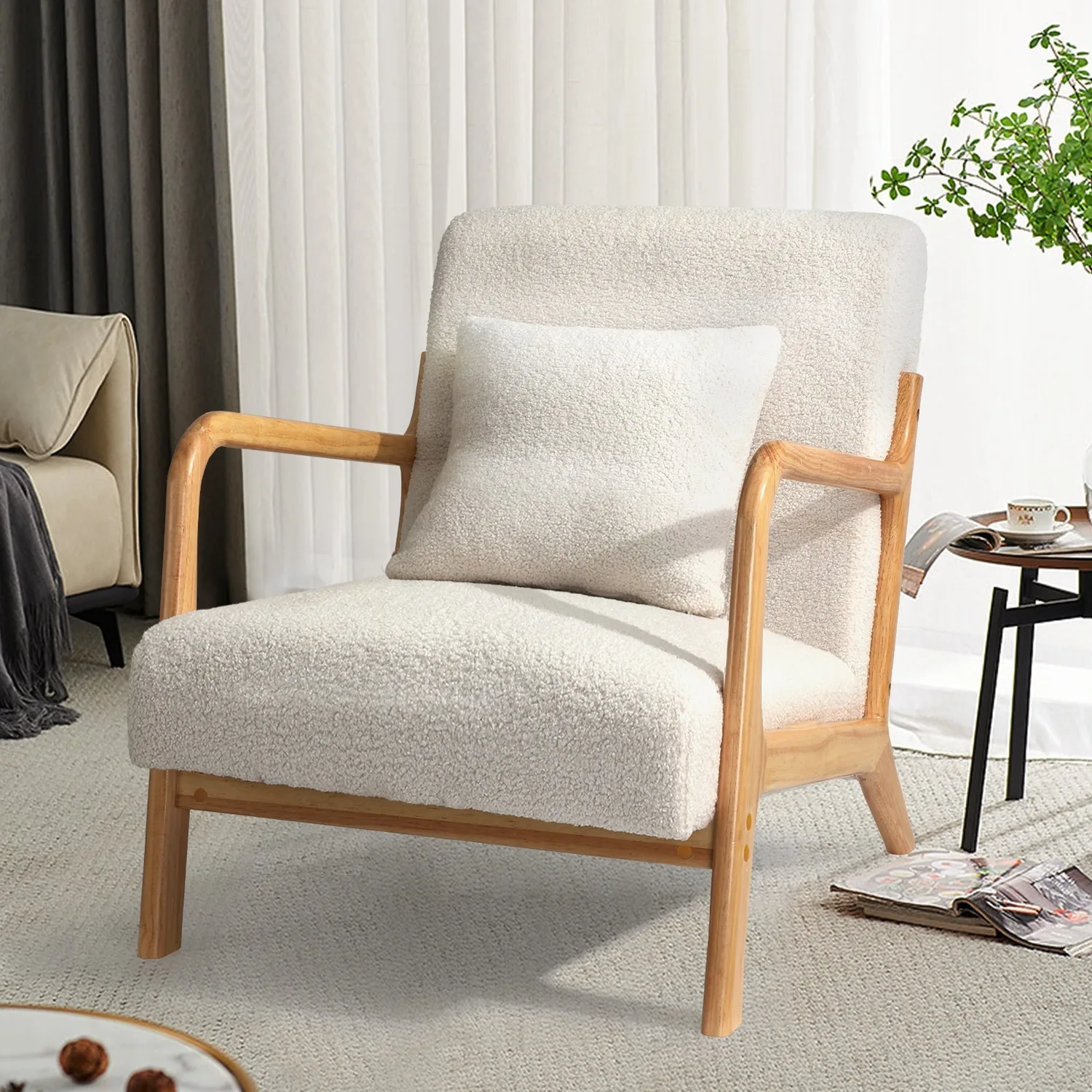
Best for: Living rooms with mid-century or modern Scandinavian decor, neutral palettes, single-chair reading corners. Linen reads slightly cool in summer (good) and slightly chilly in winter (bring a throw).
Watch for: Pure flax linen wrinkles, snags, and shows wear. Performance linen blends (typically labeled "linen-look" or "linen blend") behave better day-to-day. Not as crisp visually but much more practical.
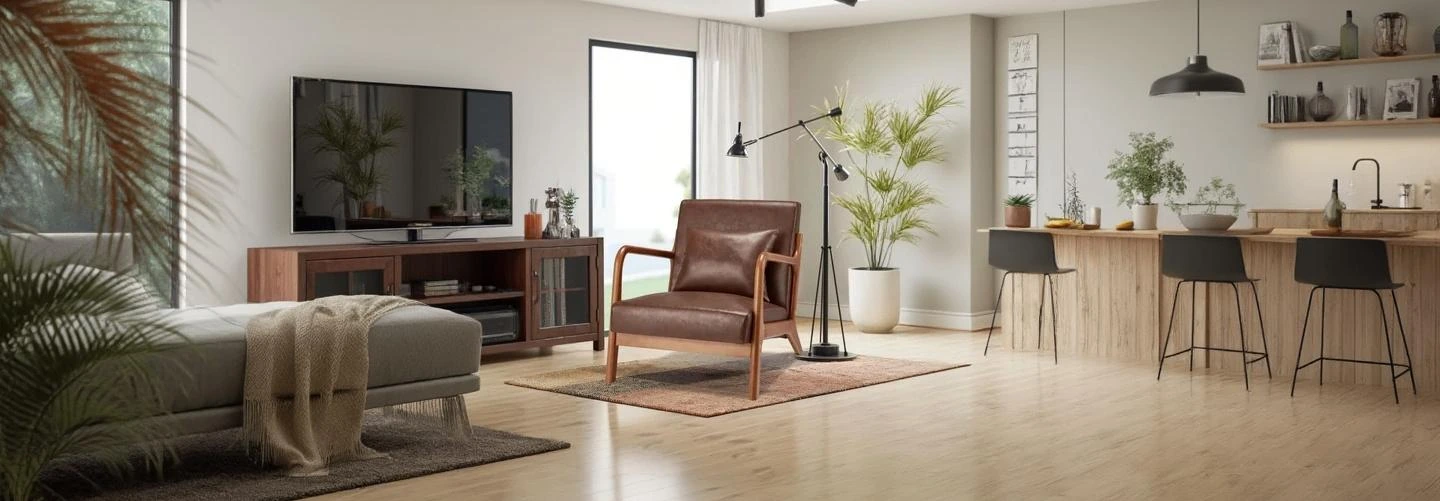
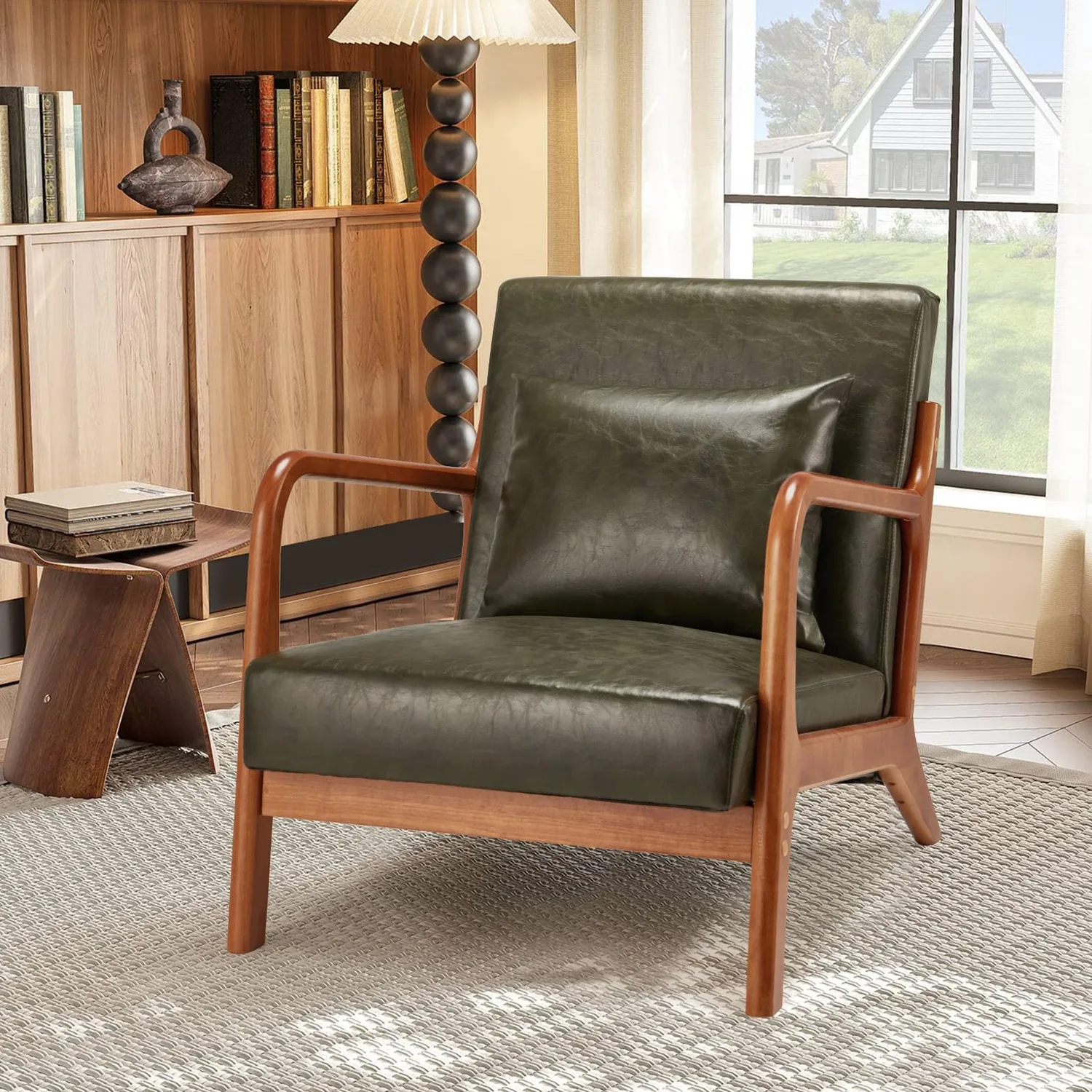
2. The cozy brown reading armchair
Heavier silhouette, padded arms, deeper seat (around 19 inches), warmer fabric. The chair you sink into. Reads more traditional than the linen accent, more cozy than the modern Scandi.
Best for: Dedicated reading corners with a side table and lamp setup, libraries, dens, the chair-in-the-bedroom move. Particularly good for tall readers (5'10"+) who find shallower modern chairs uncomfortable.
Watch for: "Cozy" sometimes translates to "too soft" — foam density matters here. High-density foam (look for HD30+ rating in fine print) holds up; budget chairs with cheap foam compress in 6-12 months and lose their shape.
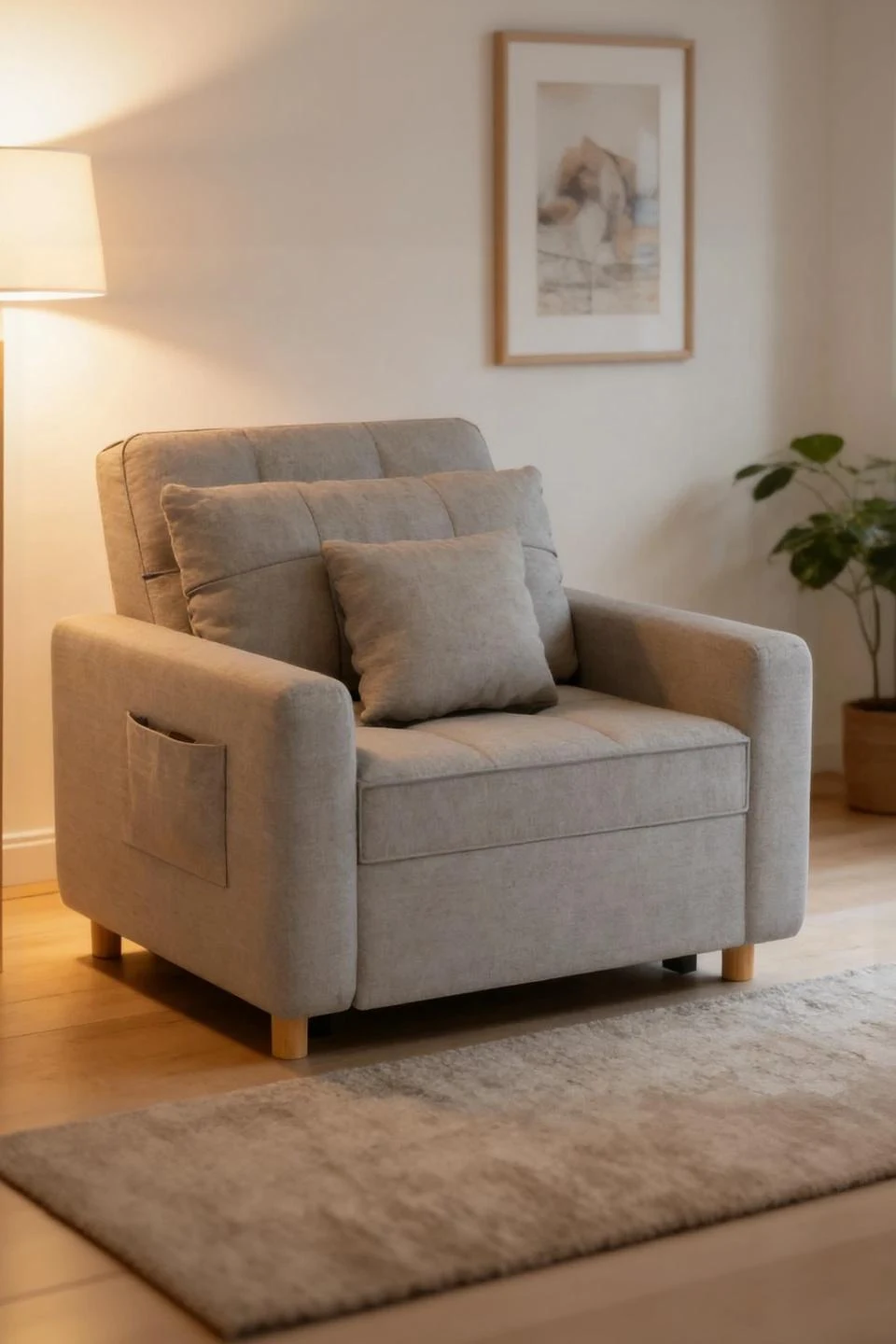
3. The convertible chair-bed
The dual-purpose move: an accent chair that folds out into a single sleeper for guests. Footprint of an oversized armchair, function of an extra bed.
Best for: Studio apartments, guest rooms that double as offices, small homes where a regular sofa-bed is too large. Particularly clutch for hosting one guest occasionally without dedicating a whole bedroom.
Watch for: As a reading chair, convertible models are usually a B+, not an A. The mechanism that makes them fold-out compromises seat structure slightly. If reading is the primary use and guest sleeping is rare, a regular accent chair plus an air mattress in the closet is often the better solution.
4. The slim-footprint reading chair (under 28" wide)
The chair for the corner that didn't quite know what to be. Many accent chairs are 30-34 inches wide, which is too much for a small studio or a tight corner. A 26-28 inch wide chair fits where bigger chairs don't.
Best for: Studios, small bedrooms, the awkward L of an open floor plan, alcoves under windows.
Watch for: Slim chairs sometimes shortchange the seat depth to maintain visual proportions. Confirm the seat depth is still in the 17-19 inch range.
5. The barrel chair (curved high back)
The barrel silhouette — curved high back wrapping around the sitter — is the most enveloping option. Reads as more architectural and statement-driven than a standard accent chair.
Best for: Living rooms where the chair will be a visual focal point, eclectic interiors that mix periods and styles, anywhere you want to literally lean into the chair as your reading position.
Watch for: The wrap-around back makes barrel chairs visually heavy. They can dominate a small room. If your reading corner is also where guests sit, the barrel can read as a "bigger-deal" chair than the rest of the seating, throwing the balance.
6. The mid-century single (tapered legs, low arms)
A tighter, more upright reading chair, usually with tapered wood legs and a slightly more vertical seating posture. Reads as a less-deep, more-active reading position.
Best for: Readers who tend toward shorter sessions (an hour or two) or who use the chair primarily for laptop work. The more upright posture is better for active reading or note-taking.
Watch for: This style is not for long lounging sessions. If you read 3+ hours at a stretch, you'll want a deeper-seat chair.
What you don't need (despite the marketing)
Power recliner mechanism. For under $200, power recliners are either underpowered (motor strains) or cheaply made (mechanism breaks within a year). For reading specifically, a fixed-position chair with a separate ottoman is more reliable, easier to repair, and usually more comfortable.
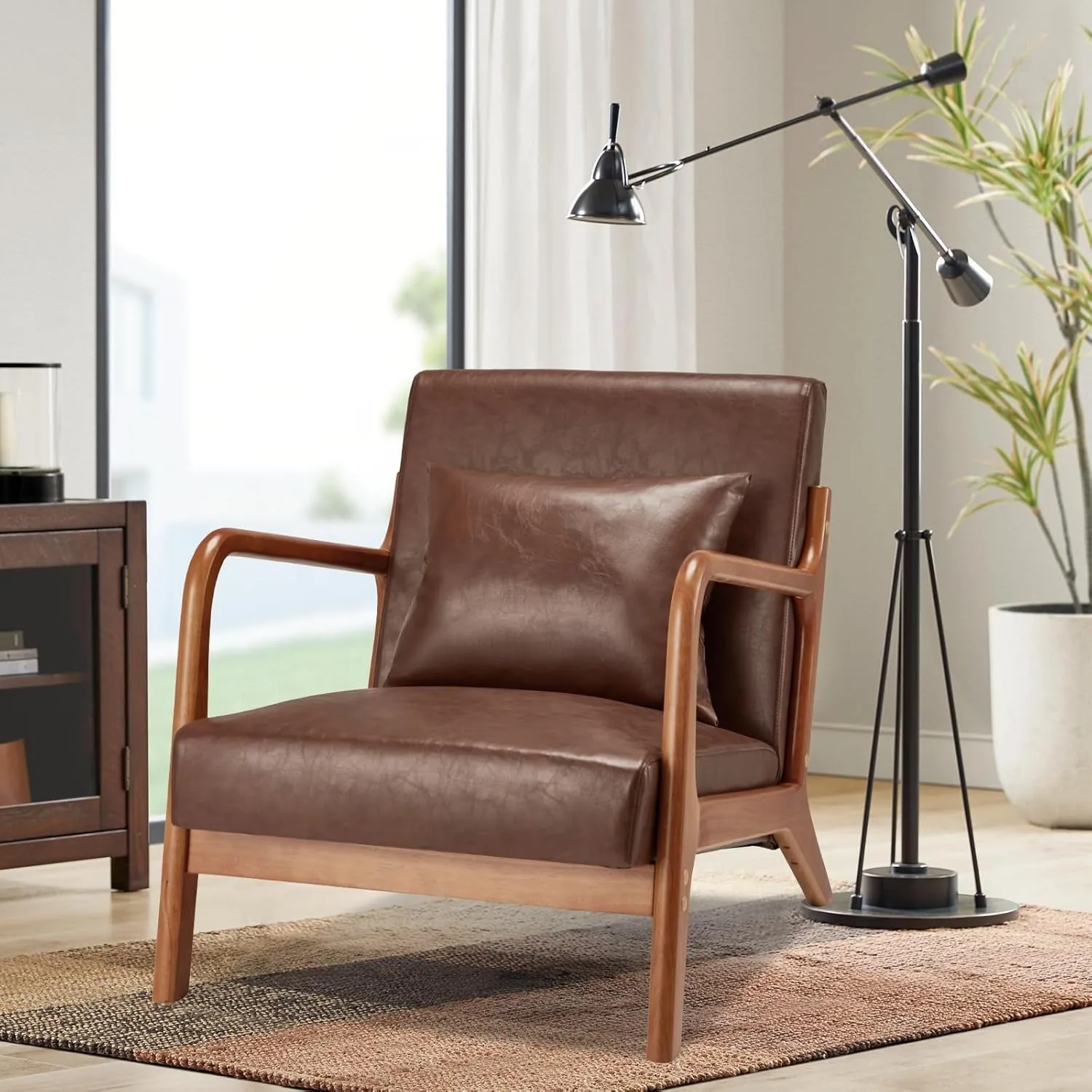
Cozy Brown Reading Chair - Transform Your Reading Nook Into a Peaceful Sanctuary
YODOLLA · Featured in this article
"Memory foam" cushion. Memory foam works for mattresses; for upholstered seating, it tends to overpack and hold heat. Standard high-density polyurethane foam wrapped in dacron is the durable, breathable, comfortable choice.
Swivel base. Swivel adds a mechanism that fails. For dedicated reading, the chair doesn't need to rotate. If you want to face two directions occasionally, a stationary chair plus repositioning beats a swivel that wobbles by year two.
Built-in USB charger. Charging your phone next to a reading chair is what side tables are for. The integrated USB ports in some accent chairs draw extra cost and add another component that can fail. Skip.
How to pair the chair with the rest of the corner
A reading chair almost never works alone. The corner needs:
- A side table (16-22 inches tall) for a drink, a phone, the book you're not currently holding
- A floor lamp or arc lamp angled over the chair from behind, so the bulb itself isn't in your line of sight
- A small rug (3x5 or 4x6) anchoring the chair zone to the rest of the room
- A throw blanket thrown over the back, even if you never use it — it signals "this is a place where you settle"
Without those four pieces, even a great chair reads as "an accent chair sitting alone in the corner." With them, it reads as a reading nook. For the layered approach to building a reading nook from scratch, see How to Create a Reading Nook in a Small Apartment.
Where each picks goes wrong
Even the six picks have failure modes. Common issues:
- Linen chairs in sunny rooms fade unevenly within 18 months. Solution: rotate the chair 90 degrees once a season.
- Convertible chair-beds with constant guest use wear at the fold-mechanism within 2-3 years.
- Cozy brown reading chairs in homes with cats become destination furniture for the cat. The chair becomes covered in fur within a week and the upholstery shreds within a year. Cat-household readers should consider performance microfiber instead of brushed cotton.
- Barrel chairs in rooms with low ceilings (under 8 feet) feel cramping rather than enveloping.
Buy the chair for the room you have, not the room you wish you had.
The honest answer to "is $200 enough for a real reading chair?"
Yes — for a chair that lasts 3-7 years and supports your reading practice well. Below $200, you compromise in ways you'll notice (cheap foam, thin upholstery, weak frame). Above $400, you get jumps in fabric quality, frame solidity, and design that matter to people who'll have the chair for 15+ years.
The sweet spot for most readers: $150-$300 for the first chair you buy, then upgrade once you know what you actually want. Most people don't know which posture, depth, and style works for them until they've owned one.
For the curated Accent Chairs collection, each piece in our current lineup has been vetted against the four-spec test above.
Frequently asked questions
The FAQ below covers the questions we get most: foam density and longevity, fabric care for linen vs performance blends, how to choose between a chair-and-ottoman or a recliner, and what the right side-table height is for any reading chair.