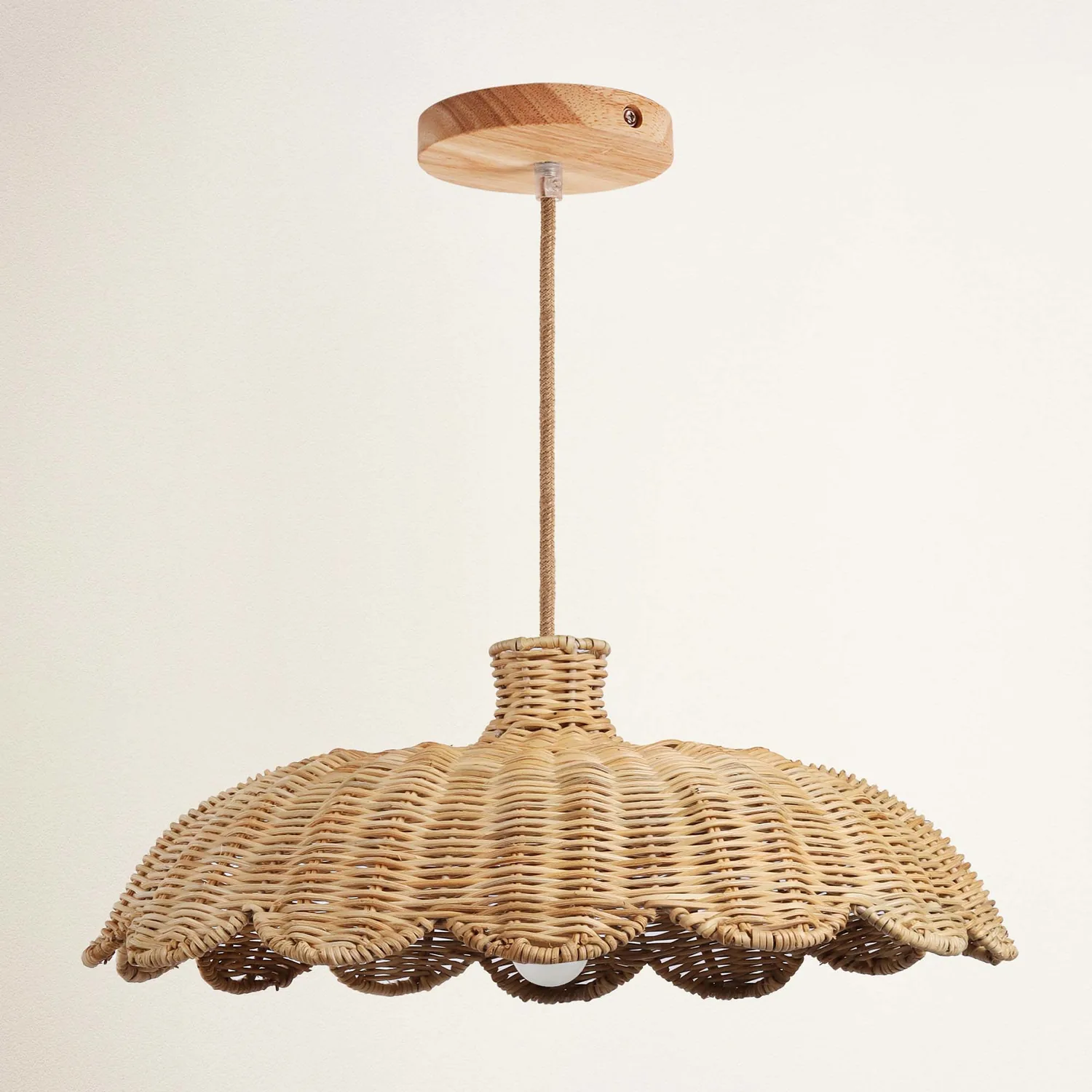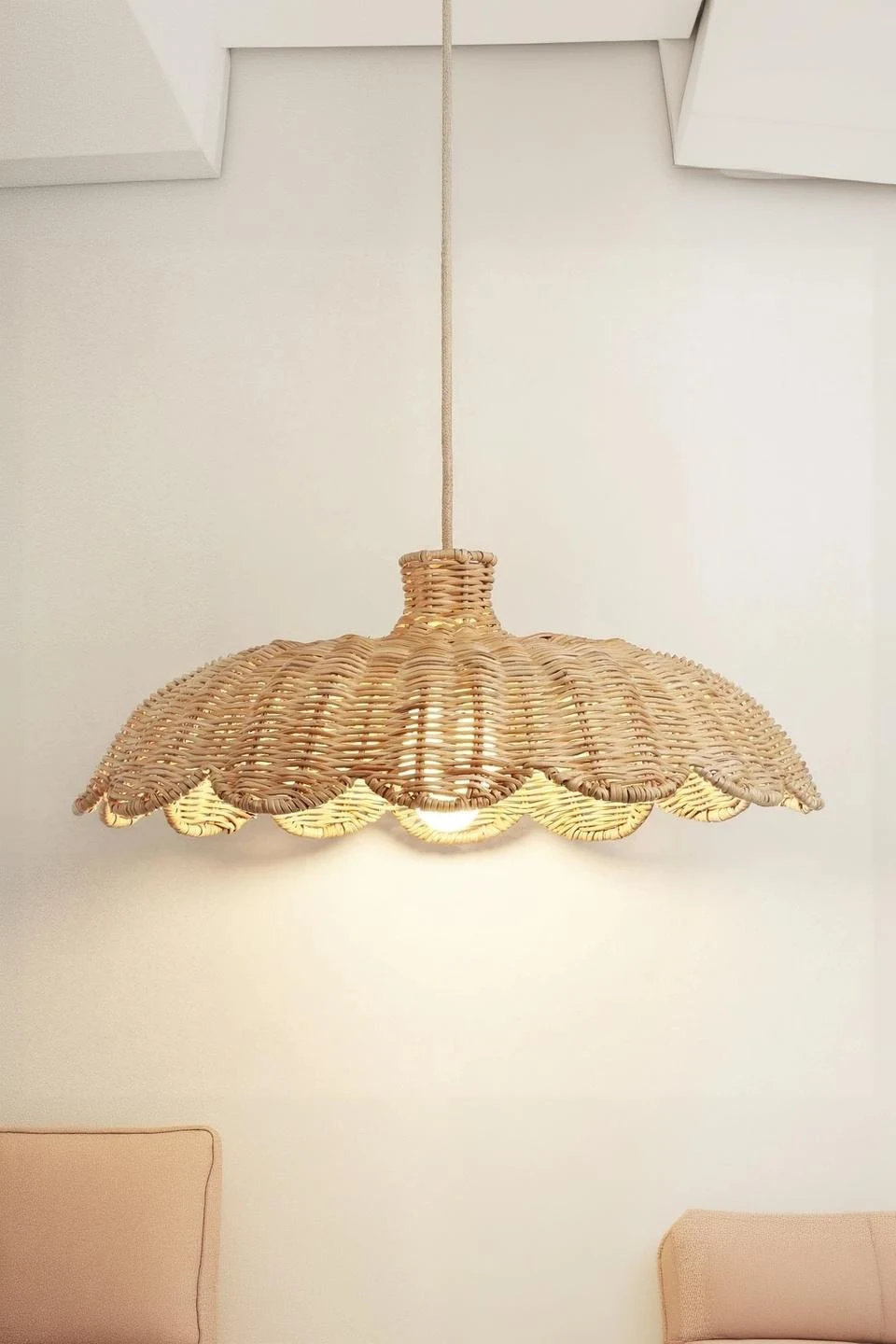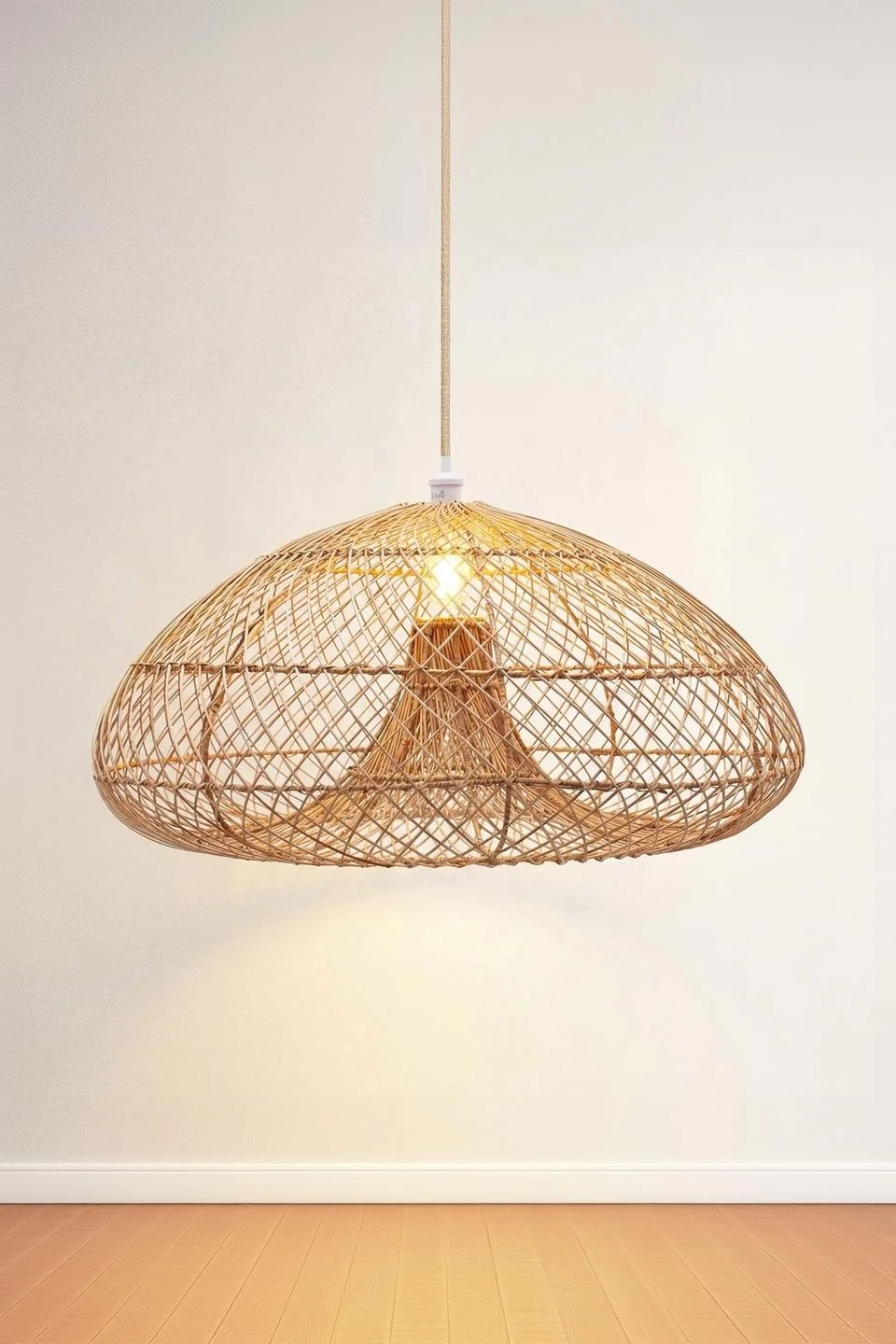
A handwoven pendant changes a dining room more than any other single decision. Paint colors fade into the background once you live with them. Tables and chairs do their job and stop being noticed. But a woven pendant — rattan, jute, seagrass, hemp — keeps doing visible work every time you walk into the room. The texture catches light. The shadow play across the ceiling shifts through the day. The whole room reads as deliberate.
We've been collecting these for the curated lighting lineup for two years, and the differences between good and great in this category are real. Not all rattan is equal. Not all weaves age the same way. The cluster of decisions — diameter, drop length, weave density, finish — adds up to either a piece you love for a decade or a piece you're quietly tired of by year three.
Below: ten picks across the texture spectrum, with notes on what each one is best paired with, what room it earns its place in, and the trade-offs to know before you commit.
What separates a great handwoven pendant from a good one
Three things, in our experience, do most of the work:
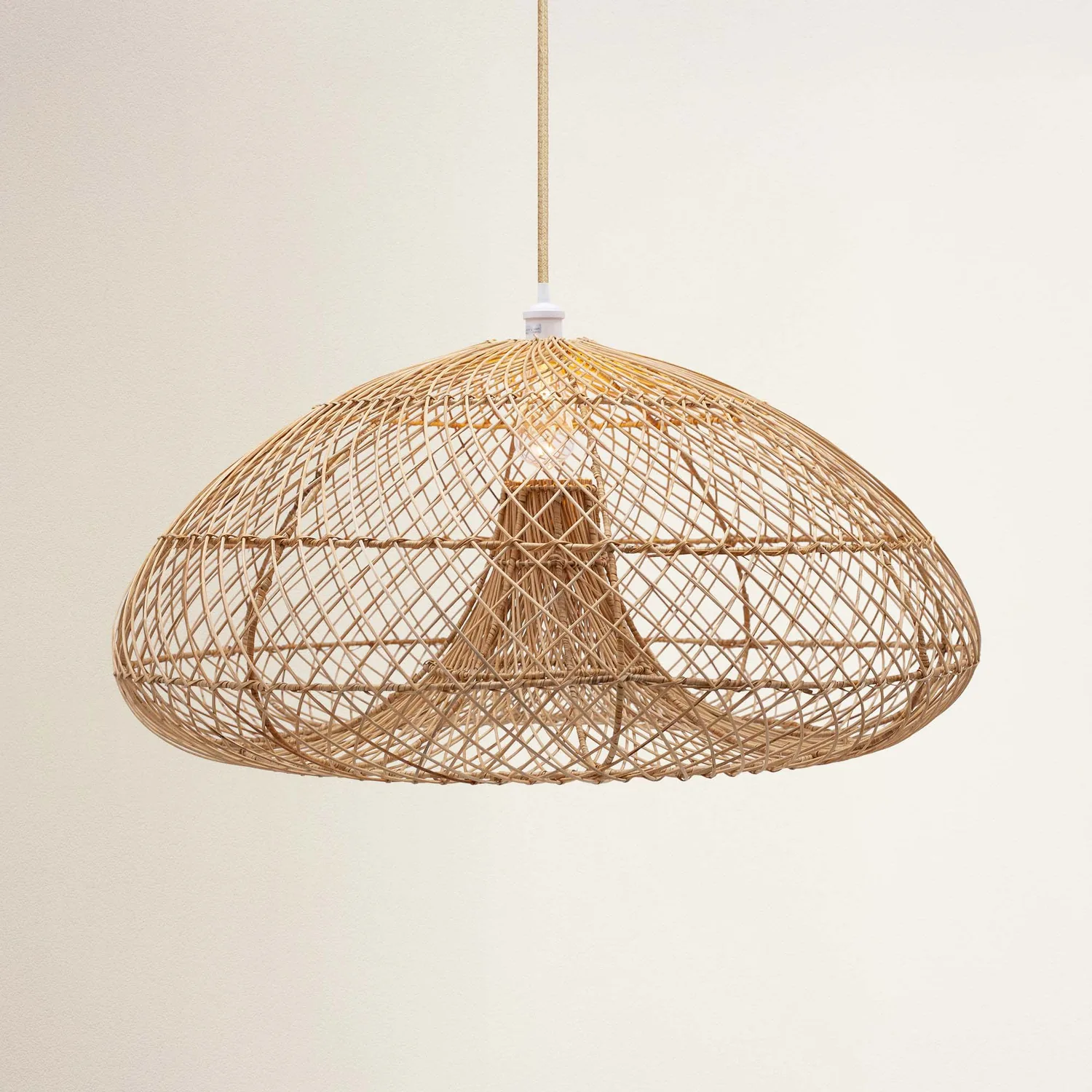
Weave density and tightness. A loose, uneven weave reads as casual at first and frayed by year three. A tight, even weave with consistent gauge across the surface reads as crafted and ages into character. Look for the photo of the inside of the pendant — if the manufacturer doesn't show it, that's usually because it's the part that's not as well finished.
Sealing and finish. Unsealed natural fiber yellows fast (six months in a sunny room) and starts shedding fine particles within a year. Marine-grade lacquer or a UV-stable acrylic seal extends the life by 10x. The finish should look matte-to-low-sheen, never glossy — glossy is the giveaway of cheap polyurethane.
Hardware. Brass or matte black powder-coated steel hardware lasts decades. Bare zinc or chrome looks fine on the showroom floor and gets pitted within two years in any humid room.
The ten picks
1. The wide statement pendant (28-36" diameter)
This is the showpiece. A single oversized rattan pendant centered above a 6-foot dining table reads as editorial — like a piece you'd see in Domino or House Beautiful. The footprint is significant, so this only works in rooms with at least 9-foot ceilings.
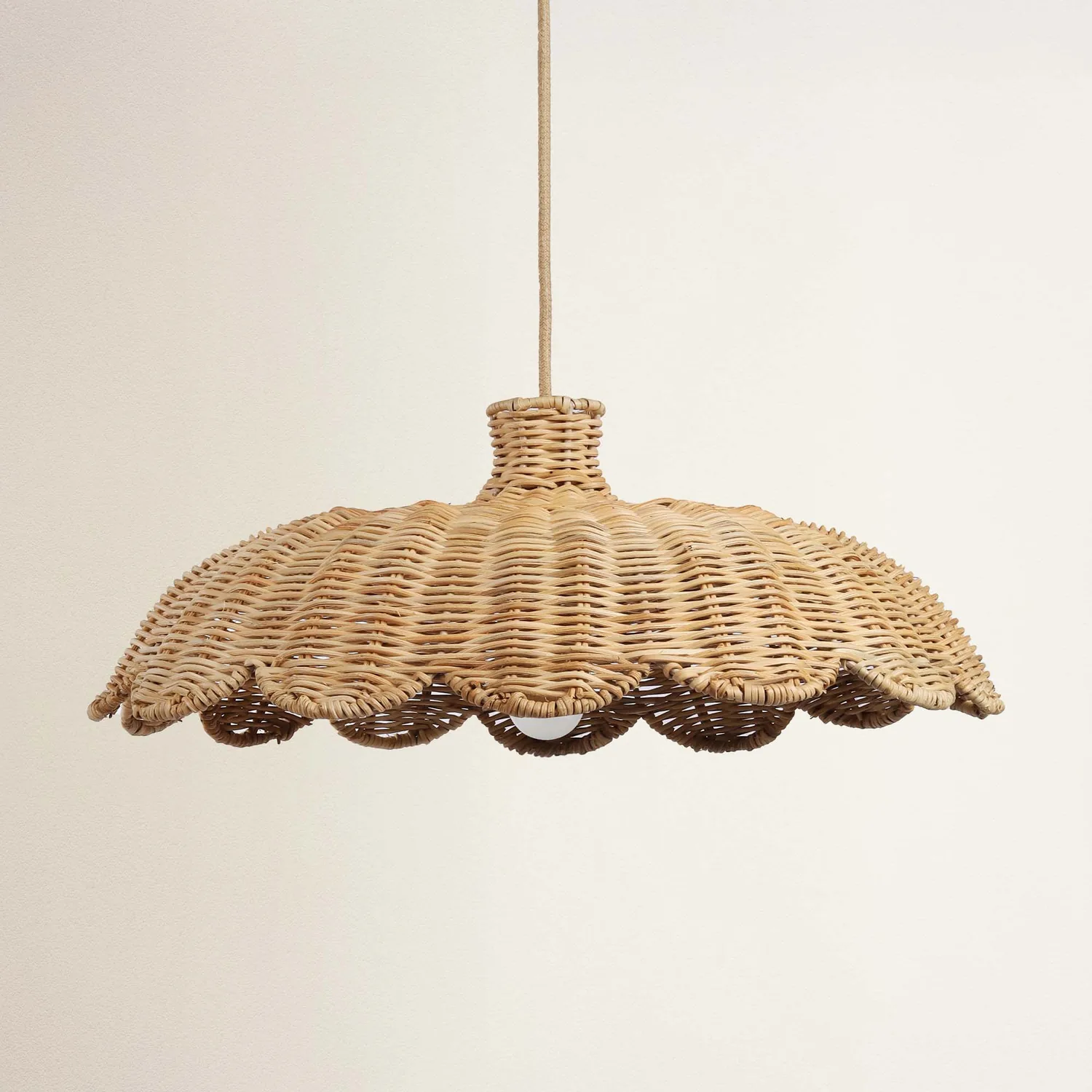
Best paired with: A rectangular wood dining table (oak, walnut, or live edge) and matching dining chairs. Don't compete — let the pendant be the only "loud" piece in the room.
Trade-off: At this scale, the pendant blocks sightlines if you have an open floor plan. Test the visual line from your sofa first.
2. The classic medium drum (18-22" diameter)
The reliable, "you cannot get this wrong" choice. An 18- to 22-inch handwoven drum pendant centered over a four-person dining table is the most consistently styled lighting we've seen in well-curated homes.
Best paired with: Pretty much anything. The medium drum is the unstructured t-shirt of dining lighting — works with mid-century modern, with farmhouse, with coastal, with boho. The fiber type tilts the room more than the size does.
3. The cluster (3 small pendants, 8-12" each)
A cluster of three small woven pendants at staggered heights replaces the single-statement-piece move with a more architectural one. Reads as more contemporary, especially over a long rectangular table or kitchen island.
Best paired with: Long live-edge or marble dining tables, kitchens with islands over 5 feet, or breakfast nooks with bench seating where a single pendant would look undersized.
Trade-off: Three pendants means three sets of cords + three canopy plates. Modern wiring can hide most of this, but you'll want an electrician for clean install.
4. The conical "hat" pendant (16-24" diameter)
The conical silhouette — wider at the bottom, narrower at the top — directs more light downward onto the table and less ambient up onto the ceiling. Practical choice if your dining room is also where you read mail or kids do homework.
Best paired with: Modern Scandinavian or Japanese-influenced interiors. The clean cone reads more graphic than the drum.
5. The tall woven cylinder (12-16" diameter, 24-36" tall)
A vertical column of woven fiber. Makes the most sense in rooms with very high ceilings (11+ feet) where a horizontal piece would visually disappear. Tall cylinders pair beautifully with double-height ceilings or vaulted spaces.
Best paired with: Architectural rooms — exposed beams, double-height great rooms, modern lofts.
6. The bell pendant (15-20" diameter)
The bell — narrow top, wide bottom, curved profile — is the romantic one. Reads softer than the drum, more sculptural than the cone.
Best paired with: Coastal or Mediterranean-influenced rooms with white or cream walls, soft-toned woods (oak, ash), and natural fabrics.
7. The tiered/multi-level pendant (18-26" diameter)
Two or three concentric woven rings stacked vertically with offset diameters. The most decorative of the bunch — reads as feature, not background.
Best paired with: Statement-driven dining rooms where the pendant is intentionally the focal point. Don't pair with patterned wallpaper or a busy gallery wall — too much.
8. The asymmetric/sculptural pendant (15-25" wide)
Not all woven pendants are circular. Asymmetric pendants — leaning teardrops, elongated ovoids, sculpted curves — bring movement to a still room.
Best paired with: Modern art-forward spaces. Looks at home in a room with a single large piece of contemporary art and minimal other styling.
Trade-off: Asymmetric pieces date faster than classic round pendants. Buy this one if you genuinely love it now, not because it photographs well.
9. The rattan-and-metal hybrid (20-28" diameter)
A rattan or seagrass weave wrapped around a visible black or brass metal frame. Reads more industrial-luxe than pure boho. The structural metal also tends to be more durable than fully-soft weaves.
Best paired with: Modern farmhouse, industrial-modern, or any room that already mixes warm and cool elements (brass hardware, black window frames, leather seating).
10. The seagrass globe (14-22" diameter)
A spherical seagrass weave. The casual, beachy cousin of the more structured rattan drum. Best in rooms that don't take themselves too seriously — breakfast nooks, casual kitchens, beach houses.
Best paired with: Lighter palettes (whites, sandy beiges, washed woods). Avoid in dark or formal dining rooms — the casualness reads as underdone rather than intentional.
How to size for your dining table
The simplest rule: pendant diameter ≈ half the table width. So a 60-inch table wants a 30-inch pendant, a 72-inch table wants a 36-inch pendant. For round tables, take the diameter and apply the same rule.
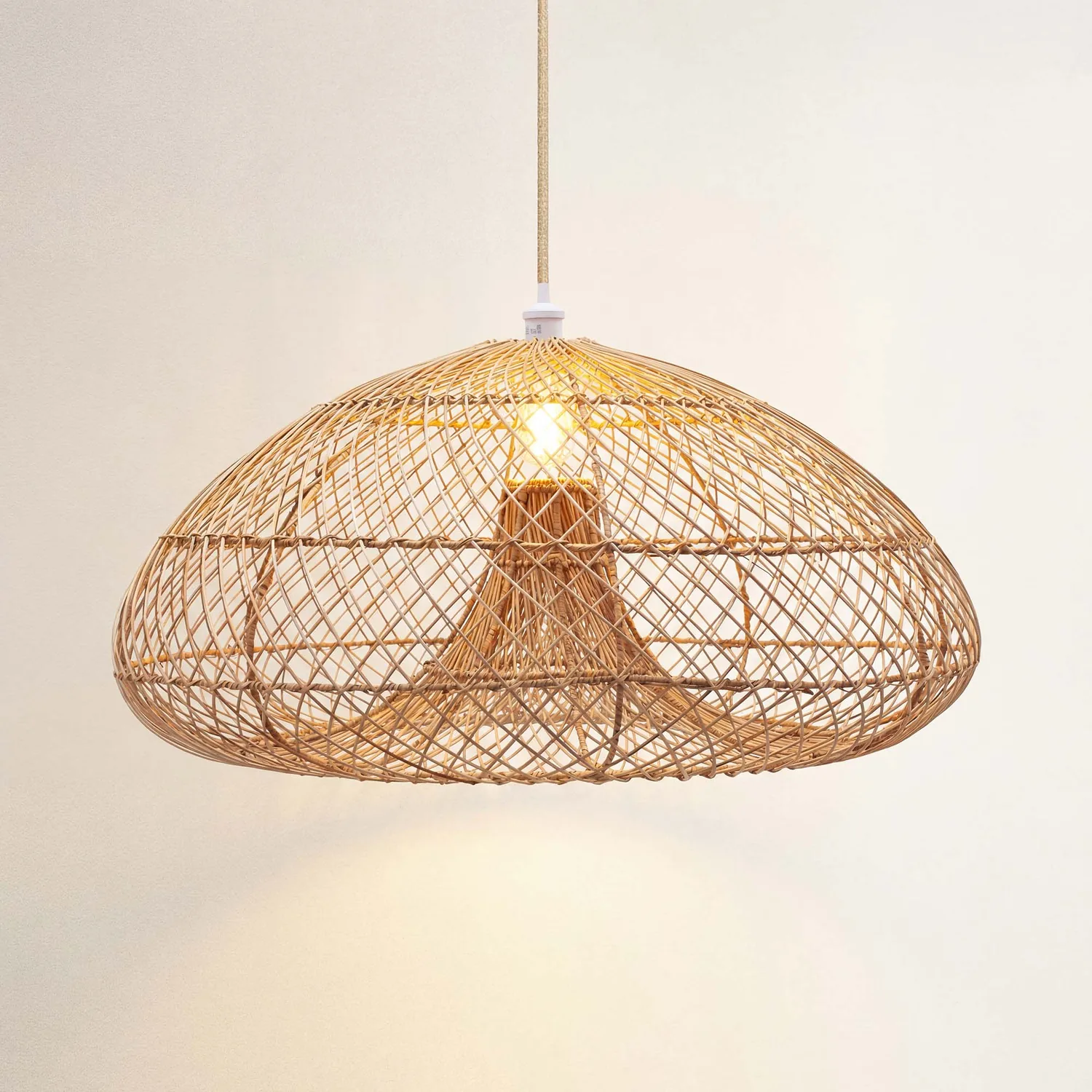
Abyssal Pendant Light – Handcrafted Woven Statement Lighting for Elevated Bohemian Interiors
Rowabi · Featured in this article
Drop length: 30-36 inches from the table surface to the bottom of the pendant is the standard. If your ceilings are over 9 feet, you can push to 36-40 inches; under 8 feet, drop to 28-30.
Cluster sizing: total visual width of the cluster ≈ 60% of the table width. So three 12-inch pendants spaced 4 inches apart = 44 inches of visual width = right for a 72-inch table.
What to avoid
Cheap rattan over plastic frames. You can spot it in the photos — the weave looks too uniform, too perfect, too plastic-shiny. Real rattan has natural variation; manufactured "rattan-look" doesn't.
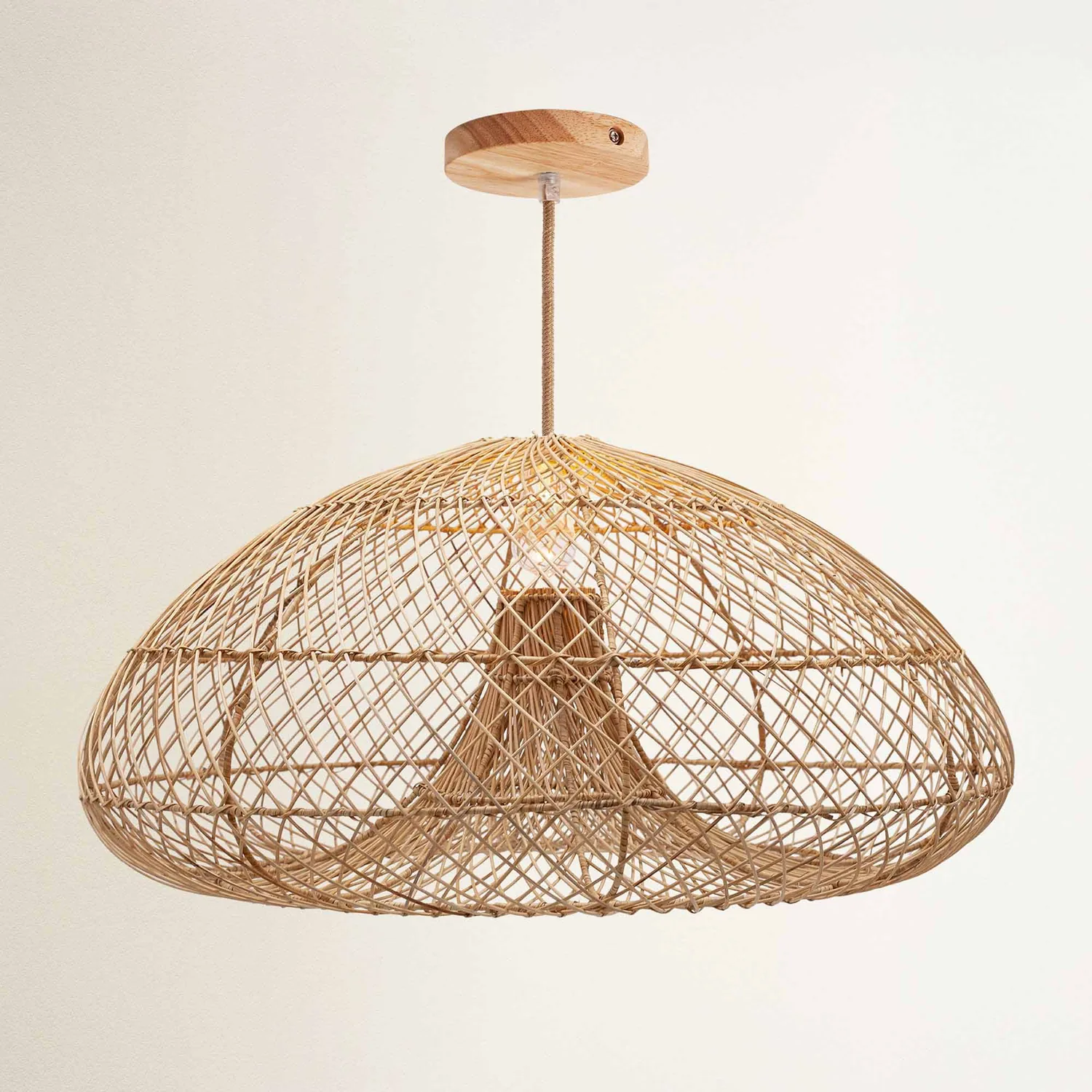
Pendants without clear bulb compatibility info. If the spec sheet doesn't tell you what bulb shape and max wattage it takes, the listing is incomplete. You'll end up with one of those situations where you want to swap to a smart bulb and discover the canopy doesn't fit a standard E26 socket.
Dimmer-incompatible LED bulbs. This isn't the pendant's fault, but it's the most common dining-light frustration: people install a beautiful pendant, drop in an LED, and discover their dimmer flickers. Solution: dimmer-compatible LED bulbs (look for the "dimmable" label) and a modern LED-rated dimmer switch.
How to integrate with the rest of the room
Two layers always beat one. A great pendant + a wall sconce or buffet lamp + maybe a candle group on the table = three light sources, three different heights, three reasons the room feels finished. A great pendant alone, with no secondary light, reads as undersold every time.
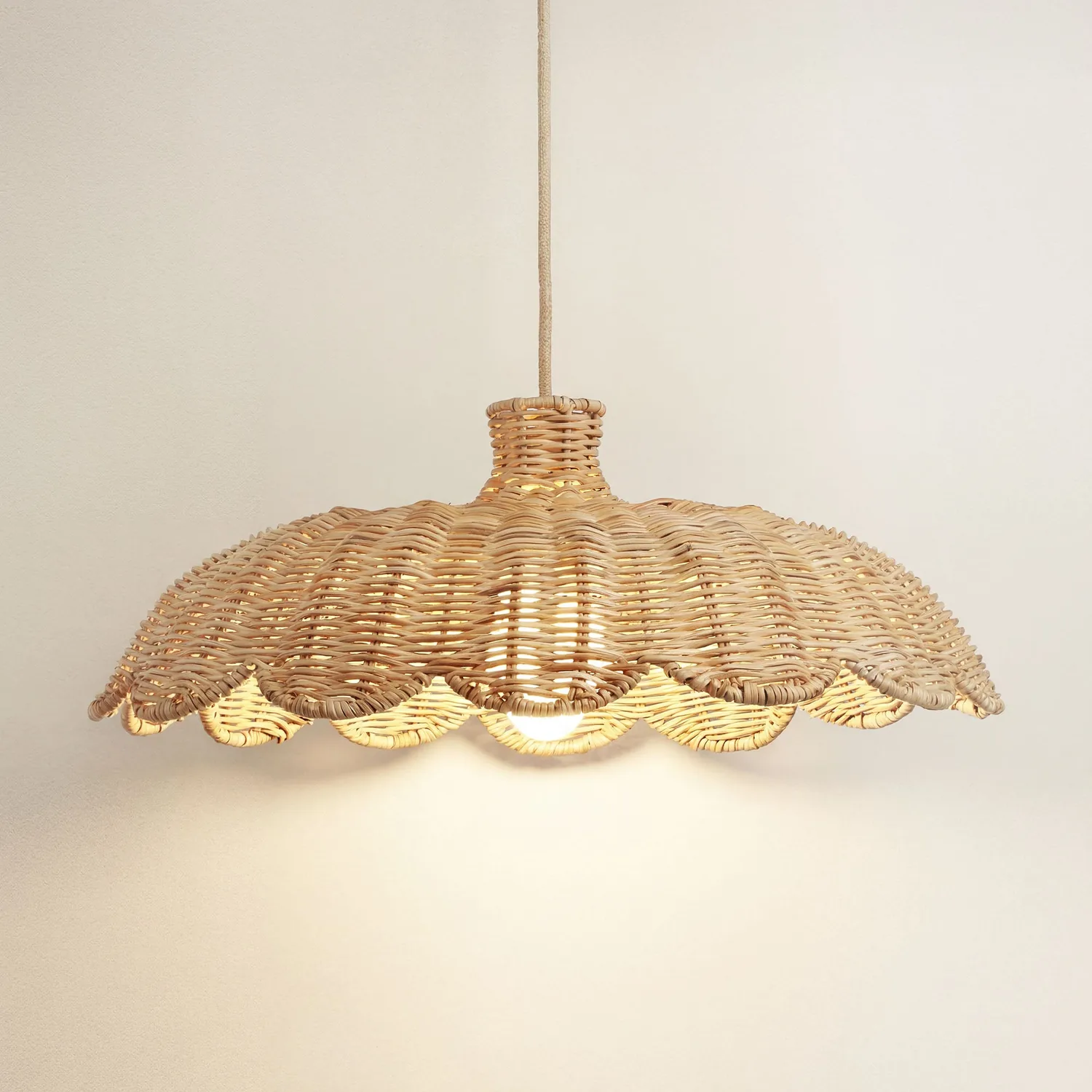
Aurelia Rattan Pendant Light | Handwoven Boho Ceiling Fixture for Dining & Living Spaces
Rowabi · Featured in this article
For pairing the pendant with the rest of the lighting in your home, see How to Choose the Right Size Pendant Light for Your Dining Table for the math. For a broader collection of curated boho lighting beyond pendants, browse Boho Lighting.
Frequently asked questions
The FAQ at the bottom covers the questions we get most: pendant height for a dining table, sizing for tables of various widths, durability of handwoven rattan, kitchen-versus-dining placement guidance, and bulb selection.