There's something almost theatrical about outdoor dining when the light hits just right. We've all chased that perfect golden-hour glow, only to watch it fade into darkness halfway through the main course. String lights help, sure, but they can read casual—even a touch predictable. If you're looking to transform your outdoor dining space from pleasant to genuinely memorable, the answer might be hovering right above your head: a solar chandelier. These aren't your grandmother's dusty crystal fixtures (though we love those indoors). Today's outdoor solar chandeliers bring the drama and elegance of traditional overhead lighting without a single wire, outlet, or electrician bill in sight.
The Unexpected Sophistication of Solar Overhead Lighting
For years, solar lighting occupied a specific niche in our outdoor consciousness: pathway markers, maybe a few accent stakes near the hostas. Functional, yes. Sophisticated, not quite. But the technology has evolved dramatically, and nowhere is that more apparent than in solar chandeliers designed specifically for outdoor entertaining. These fixtures now offer genuinely warm, flattering light—the kind that makes everyone look good and turns a Tuesday night dinner into an occasion.
The real magic happens in how they transform the spatial quality of outdoor dining. A chandelier creates a defined "room" in open air, anchoring your dining area with intention. Instead of light washing across your entire yard from all directions, you get a focused pool of illumination that draws people together. It's the difference between eating in a well-lit parking lot and dining in a bistro courtyard. The psychological shift is subtle but powerful: guests linger longer, conversations flow more easily, and suddenly your backyard feels less like an extension of the house and more like its own distinct destination.
Why Solar Makes More Sense Than You'd Think
The obvious appeal of solar chandeliers is the installation simplicity—or rather, the lack of installation altogether. You're not running electrical lines through your yard, drilling through your pergola, or calculating load requirements. You hang it where the light is right, both literally and aesthetically. But there's a less obvious advantage that becomes apparent after your first dinner party: the freedom to experiment with placement.
Traditional wired fixtures lock you into a specific spot. Solar chandeliers let you test different heights, positions, and arrangements until you find the perfect balance. Want to center it over the table this month but shift it closer to the conversation area next season? Done. Planning to rearrange your outdoor furniture layout? The lighting moves with you. This flexibility extends to homes where outdoor electrical access is limited or non-existent—vacation properties, rentals, or older homes where adding exterior outlets means significant renovation.
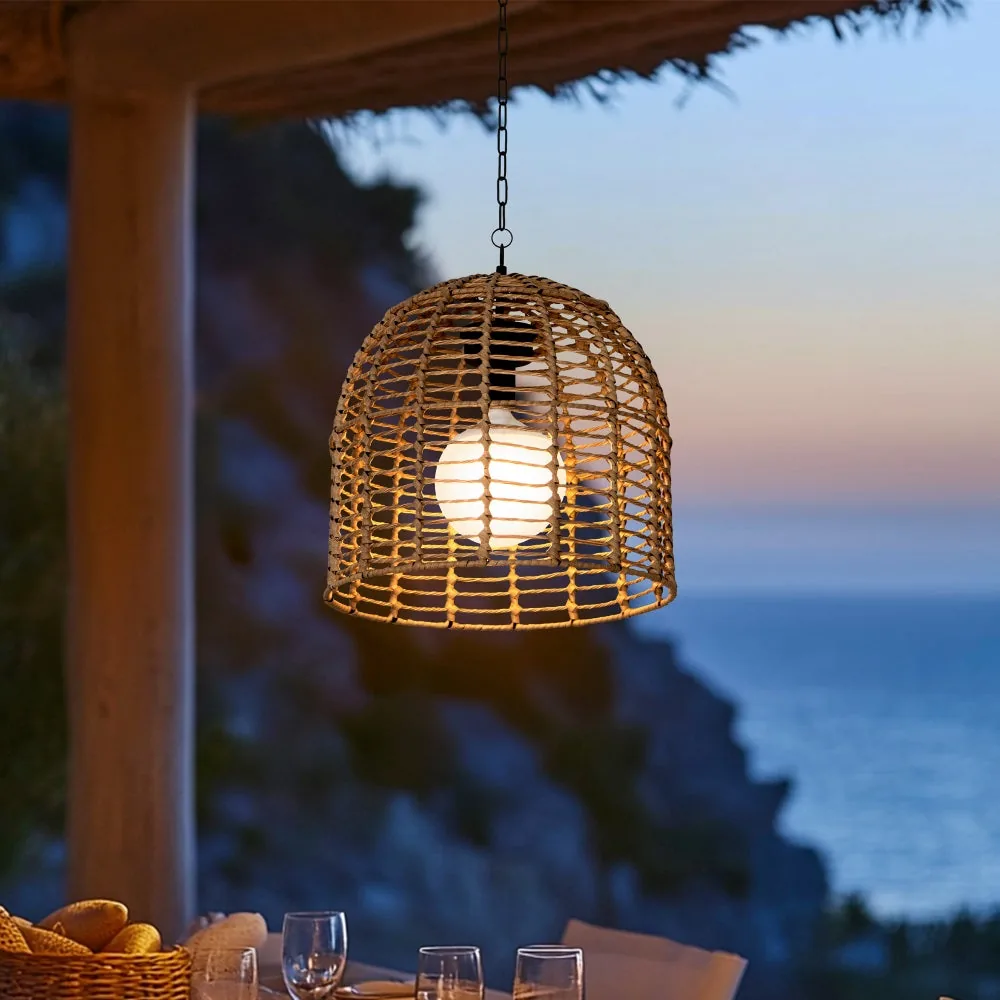
The quality of light has improved exponentially in recent years. Early solar fixtures emitted that telltale cool-blue LED glow that felt more interrogation room than intimate dinner. Modern solar chandeliers use warm white LEDs (typically 2700-3000K) that mimic the flattering glow of traditional incandescent bulbs. Many include brightness settings and remote controls, so you can adjust the mood from cocktails (brighter, energizing) to dessert (dimmed, relaxed) without leaving your seat. The Elegant Wicker Outdoor Chandelier with Remote demonstrates this evolution beautifully, offering the kind of control you'd expect from hardwired systems.
Choosing a Style That Actually Works Outdoors
Here's where things get interesting: not every beautiful chandelier belongs outside. The difference between a fixture that thrives in the elements and one that looks bedraggled after a single season comes down to material choices and design integrity. Woven wicker and rattan chandeliers have become particularly popular, and for good reason. They offer visual warmth and texture without the weight of metal or glass, and quality versions use weather-resistant synthetic materials that withstand UV exposure and moisture.
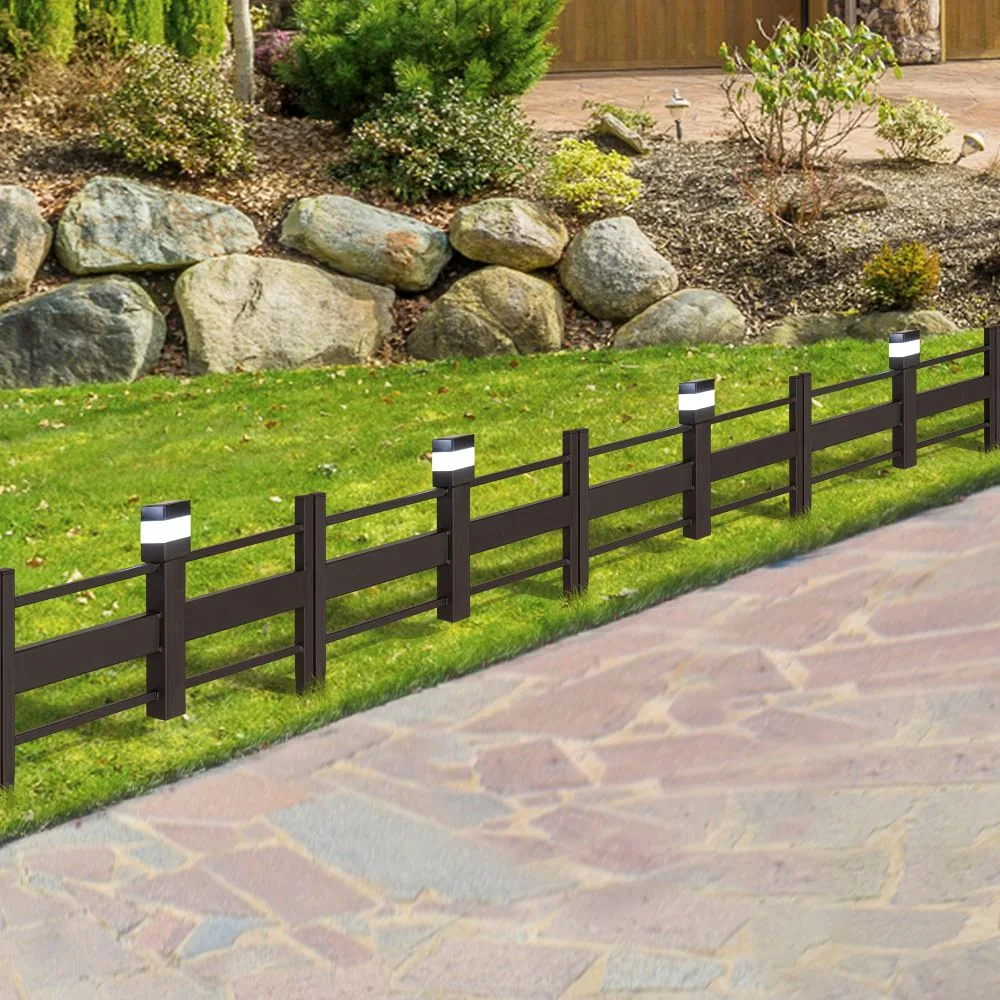
Solar-Lit Garden Border Fence - Transform Your Outdoor Space with Elegant Metal Edging
Sunjoy · Featured in this article
Metal chandeliers work wonderfully when they're properly treated—think powder-coated finishes or rust-resistant alloys. Black metal fixtures carry particular appeal because they virtually disappear against the evening sky, letting the light itself become the focal point. The form should complement rather than compete with your outdoor aesthetic. If your space leans modern and minimal, look for clean lines and geometric shapes. For a more bohemian or Mediterranean vibe, curved metalwork or natural fiber textures make sense.
Size matters more than you might expect, and the usual interior design rules need adjusting for outdoor spaces. A chandelier that would seem oversized in a dining room often reads just right over an outdoor table because there are no walls to provide scale reference. As a general guideline, look for fixtures at least 20-24 inches in diameter for a standard six-person table. Anything smaller risks looking tentative, like you weren't quite committed to the idea. The height should be 30-36 inches above the table surface—high enough that people can see each other comfortably, low enough that the fixture defines the space.
Layering Your Outdoor Lighting Strategy
Solar chandeliers work best as part of a broader lighting approach rather than as a standalone solution. Think of it as the anchor piece in a layered lighting scheme. While the chandelier provides your primary task lighting for dining, you'll want ambient light sources to define the perimeter and add depth to the space. This is where exploring your broader outdoor solar lighting options becomes valuable.
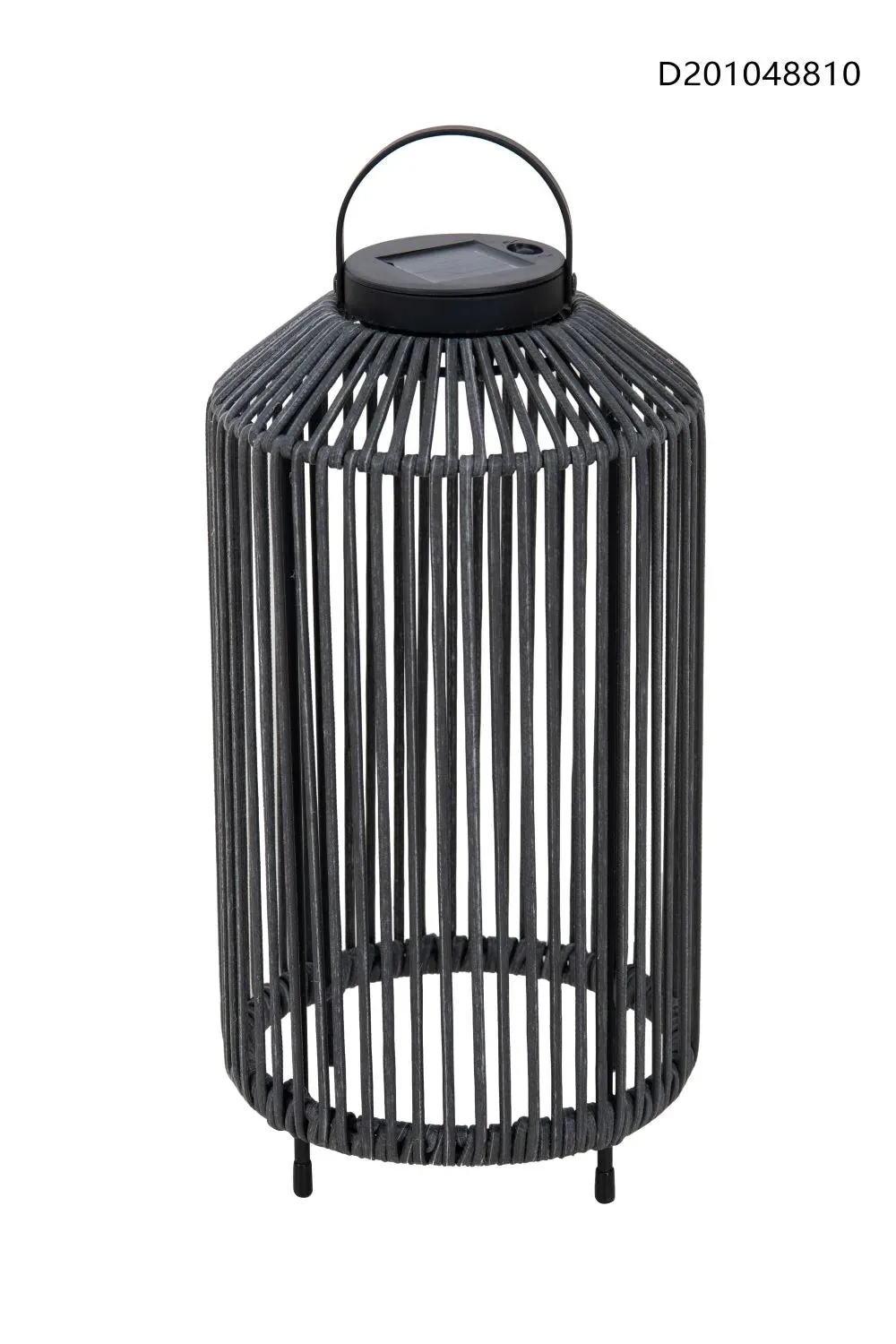
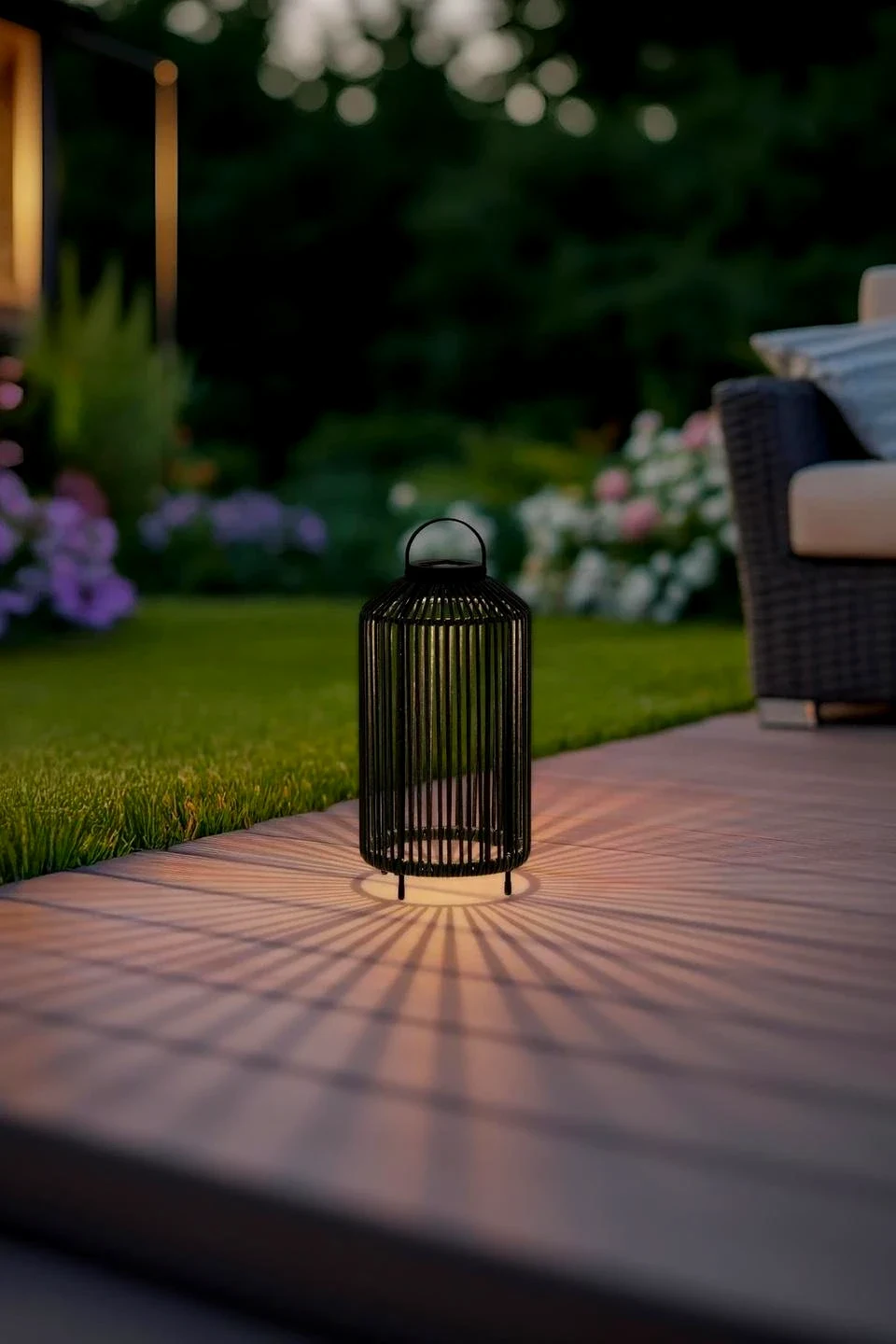
Consider how your chandelier interacts with other light sources in sight lines. A well-placed solar lantern on a console table or shelf can provide visual interest at a different height level, creating dimension. The Transform Your Evenings: 25-in Black Solar Lantern offers that kind of supporting role—substantial enough to register but not competing with your overhead fixture. If your dining area sits adjacent to garden beds or pathways, subtle edge lighting can extend the sense of intentional design beyond the dining zone itself.
The goal is creating multiple layers of light at different heights and intensities, all working together to make the space feel cohesive and considered. Your chandelier becomes the jewelry—the statement piece that catches attention—while other sources provide the foundation that makes it shine.
The Practical Realities Nobody Mentions
Let's talk honestly about solar performance, because it matters. Even the best solar chandeliers need adequate sunlight during the day to deliver reliable illumination at night. If you're hanging your fixture under a solid roof or in deep tree shade, it won't charge effectively. Most quality solar chandeliers need 6-8 hours of direct or bright indirect sunlight to provide 4-6 hours of evening light. Position the solar panel strategically—many chandeliers feature removable panels with extension cables, letting you hang the fixture in shade while placing the panel in full sun.
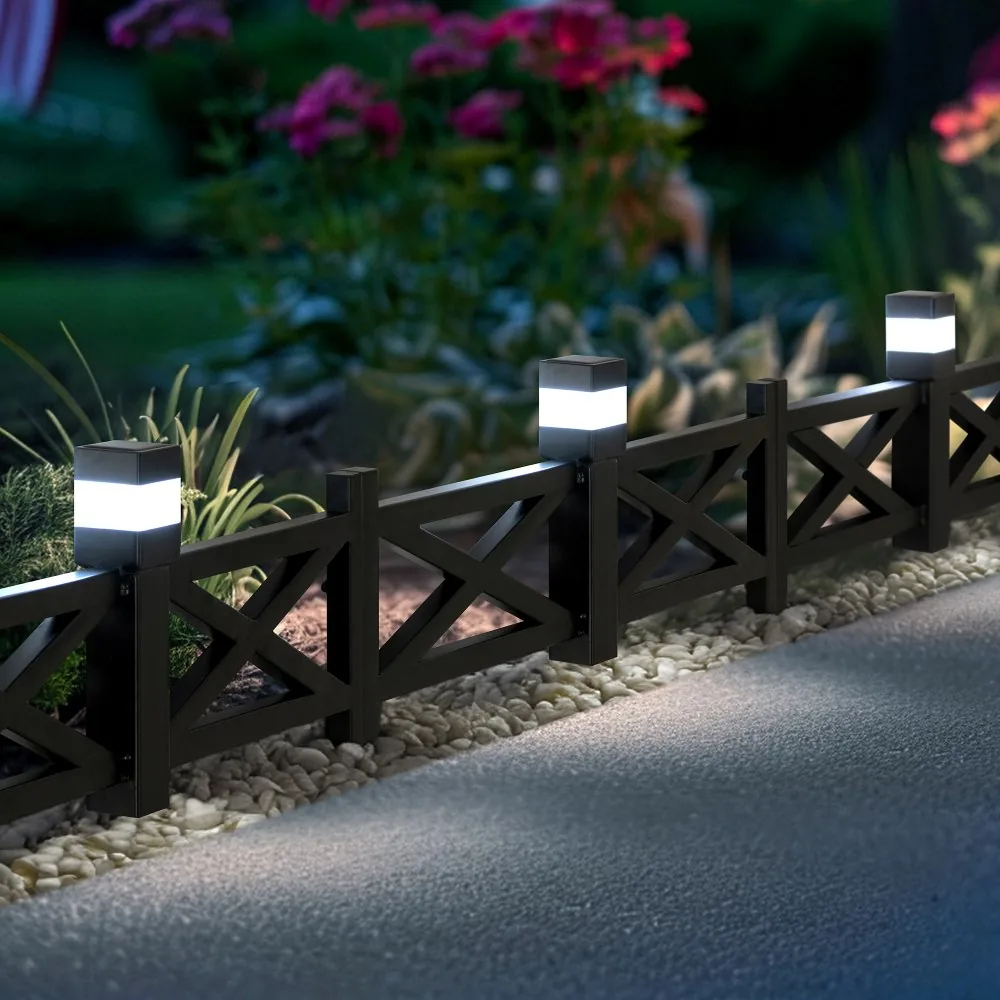
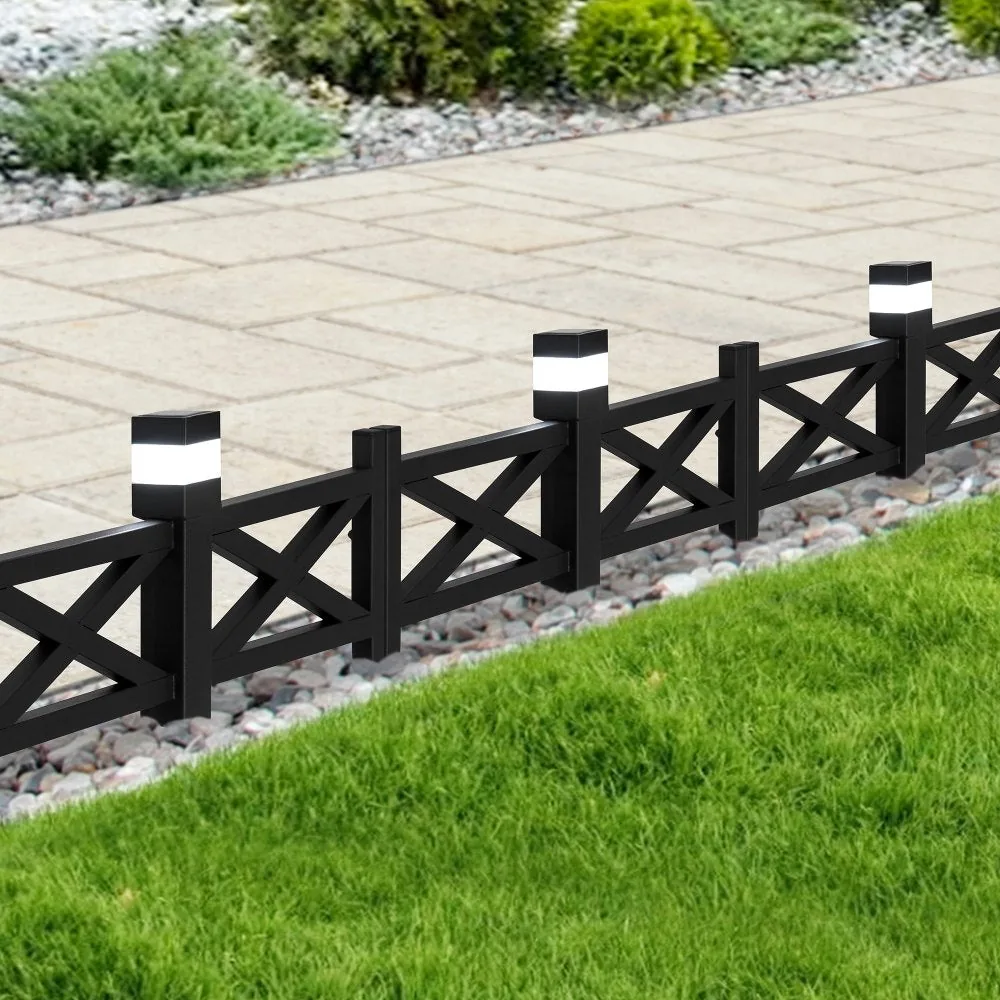
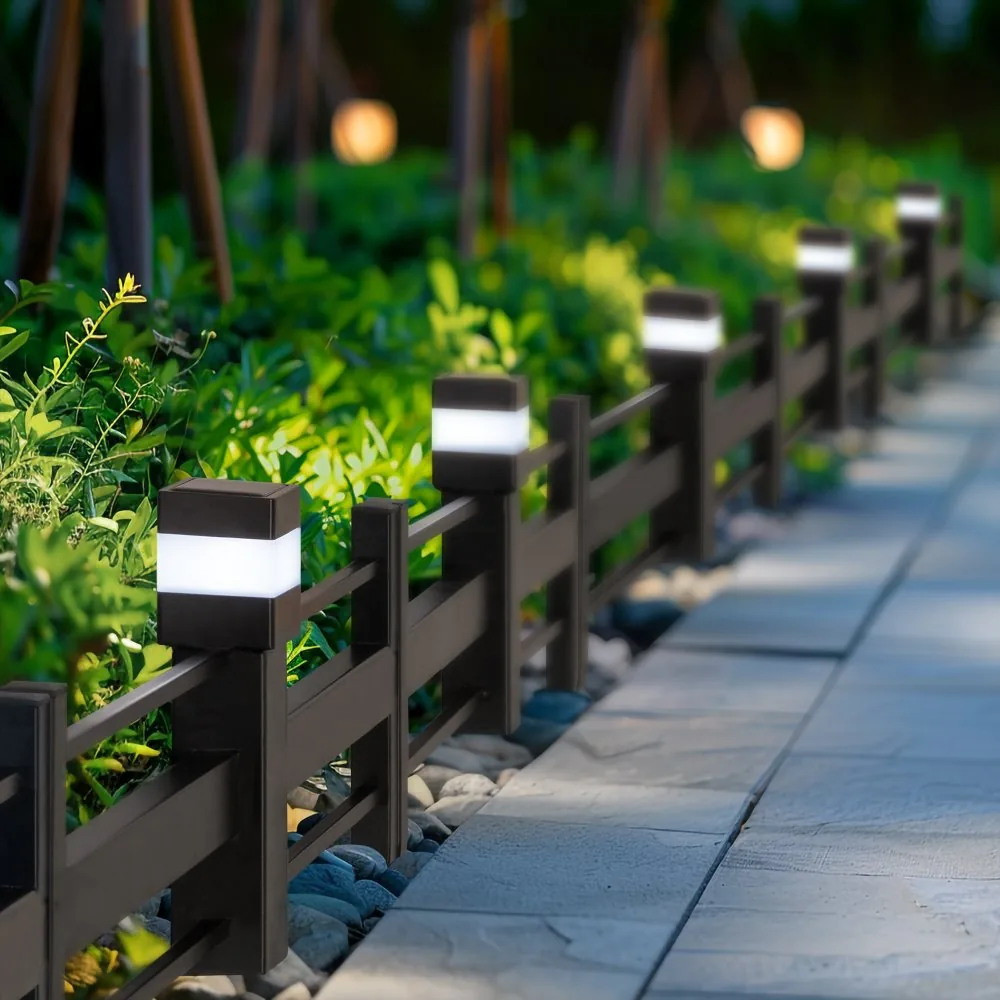
Transform Your Garden with Elegant Solar-Lit Metal Fence Panels - Create Your Dream Outdoor Space
Sunjoy · Featured in this article
Battery life degrades over time, typically after 500-1000 charge cycles. Quality fixtures use replaceable batteries, which is worth confirming before purchase. Cheaper models often have sealed battery compartments, turning the entire fixture into a disposable item once the battery fails. Weather resistance is another consideration: look for IP ratings of at least IP44 (protection against splashing water) or higher if you're in a particularly wet climate or won't be bringing the fixture inside during severe weather.
Maintenance is genuinely minimal but not zero. The solar panel needs occasional cleaning—dust, pollen, and debris reduce charging efficiency. A quick wipe with a damp cloth every few weeks keeps things running optimally. If your chandelier includes glass elements or intricate metalwork, you'll want to clean it as you would any outdoor furniture, perhaps once a season. Store the fixture during harsh winter months if you live in an area with heavy snow or ice, both to preserve the materials and to protect the solar components from extreme temperature swings.
Making It Work With Your Existing Outdoor Setup
The beauty of solar chandeliers lies in their adaptability, but that doesn't mean every space accommodates them equally well. If you have a pergola, arbor, or covered patio, you've got built-in hanging infrastructure. Use sturdy hooks rated for the fixture's weight plus a safety margin—outdoor chandeliers catch wind and experience weather stresses that indoor fixtures never face. For dining areas without overhead structures, a freestanding shepherd's hook or decorative post system can provide the necessary support, essentially creating architecture where none exists.
Think about sight lines from inside your home. The view through your kitchen or living room window changes dramatically when there's a beautiful light source drawing the eye outward. Position your chandelier where it enhances both the outdoor experience and the indoor-outdoor visual connection. This dual perspective often means placing it slightly off-center from a purely outdoor viewpoint, but the trade-off is worth it when you're inside looking out.
Consider how your chandelier functions during daylight hours too. Unlike purely functional fixtures that disappear or look purely utilitarian during the day, a well-chosen chandelier should be attractive even when unlit. Natural materials like wicker bring texture and visual interest, while sculptural metal designs can serve as garden art. This 24-hour appeal matters because you'll see the fixture every time you're outside, not just during evening meals.
When the Sun Goes Down
There's a moment during every outdoor dinner party when conversation shifts. Usually it happens as natural light fades and artificial light takes over—people settle deeper into their chairs, laughter comes more easily, and the evening transforms from event to experience. A well-placed solar chandelier doesn't just illuminate that moment; it creates the conditions for it to happen. The light pools around the table like an embrace, separating this intentional gathering space from the vast darkness beyond. It's design as hospitality, and it works every time.
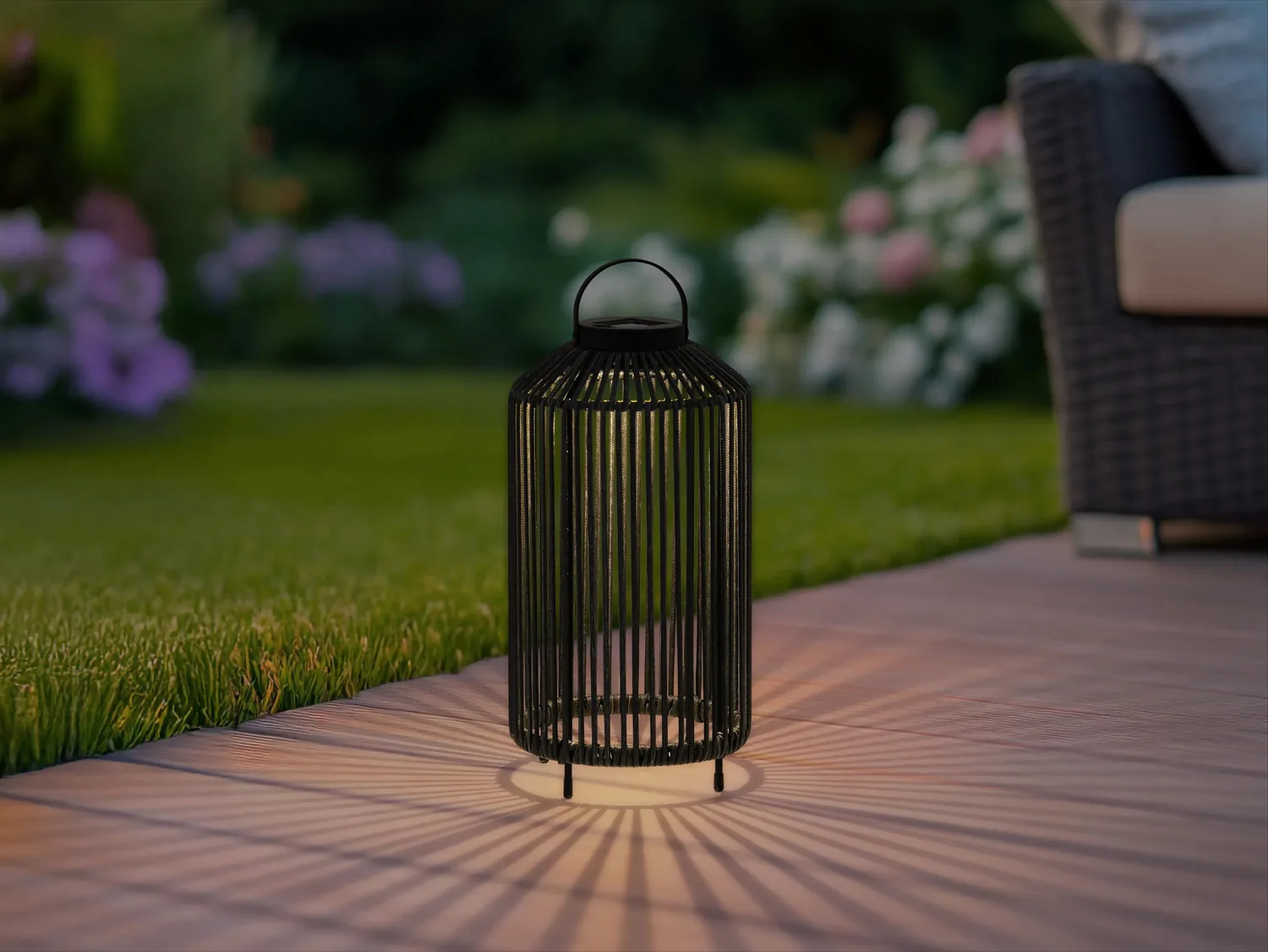
Transform Your Evenings: 25-in Black Solar Lantern - Elegant Outdoor Ambiance
Sunjoy · Featured in this article
The frequently asked questions section that follows addresses common concerns about solar chandelier selection, installation, and maintenance.
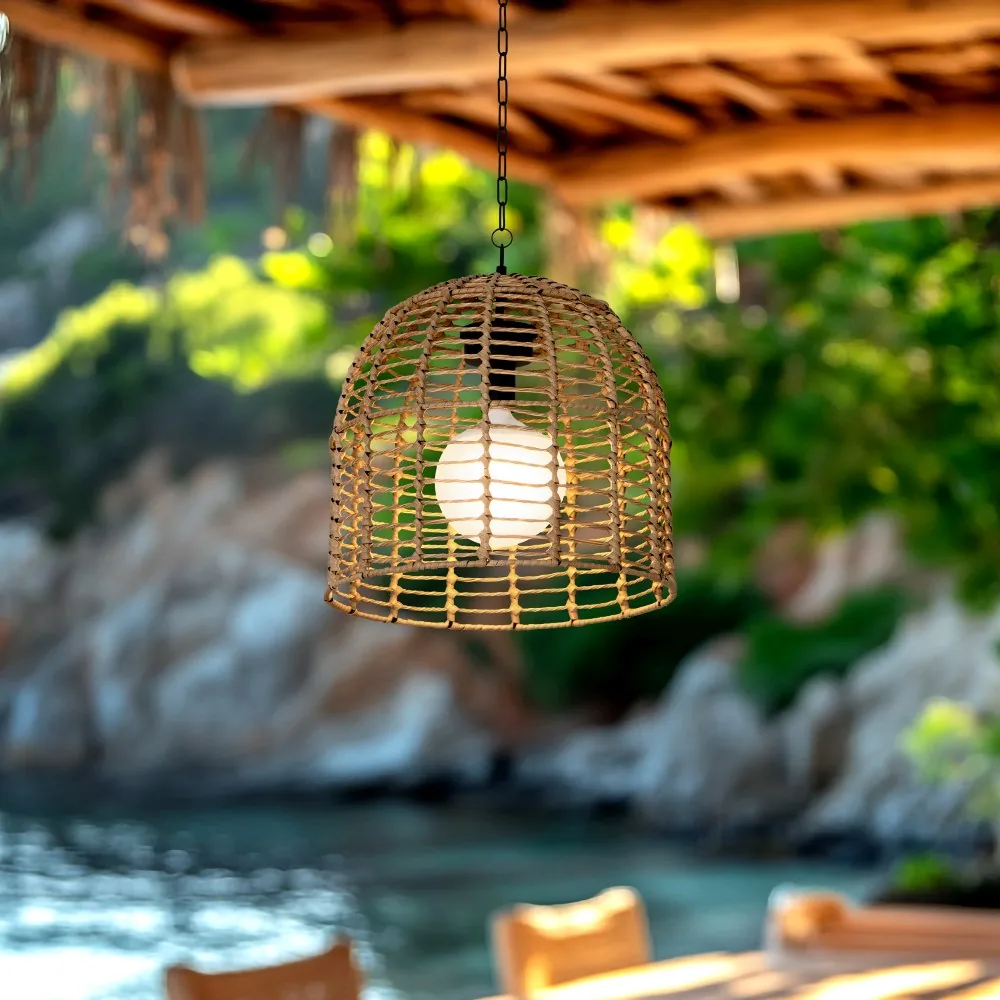
Elegant Wicker Outdoor Chandelier with Remote - Transform Your Patio into Paradise
Sunjoy · Featured in this article
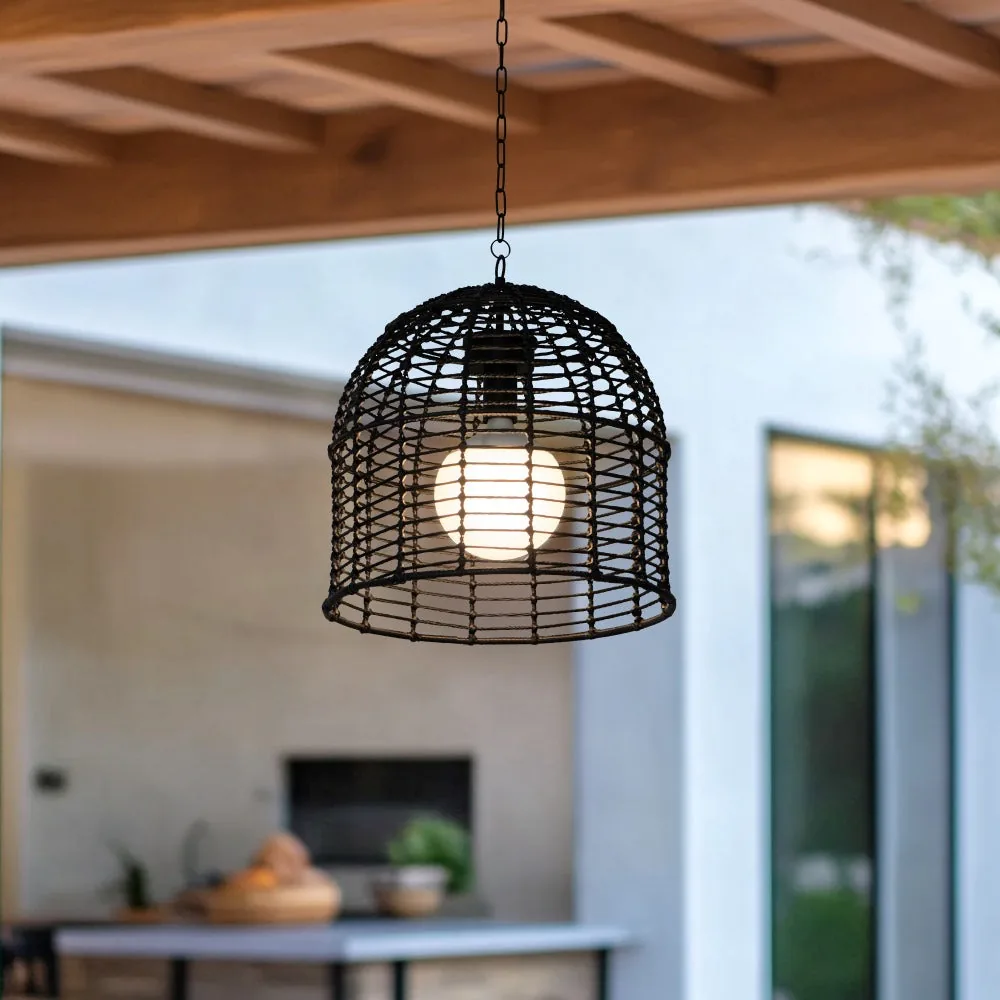
Black Wicker Outdoor Chandelier with Remote - Transform Your Patio into a Luxury Retreat
Sunjoy · Featured in this article