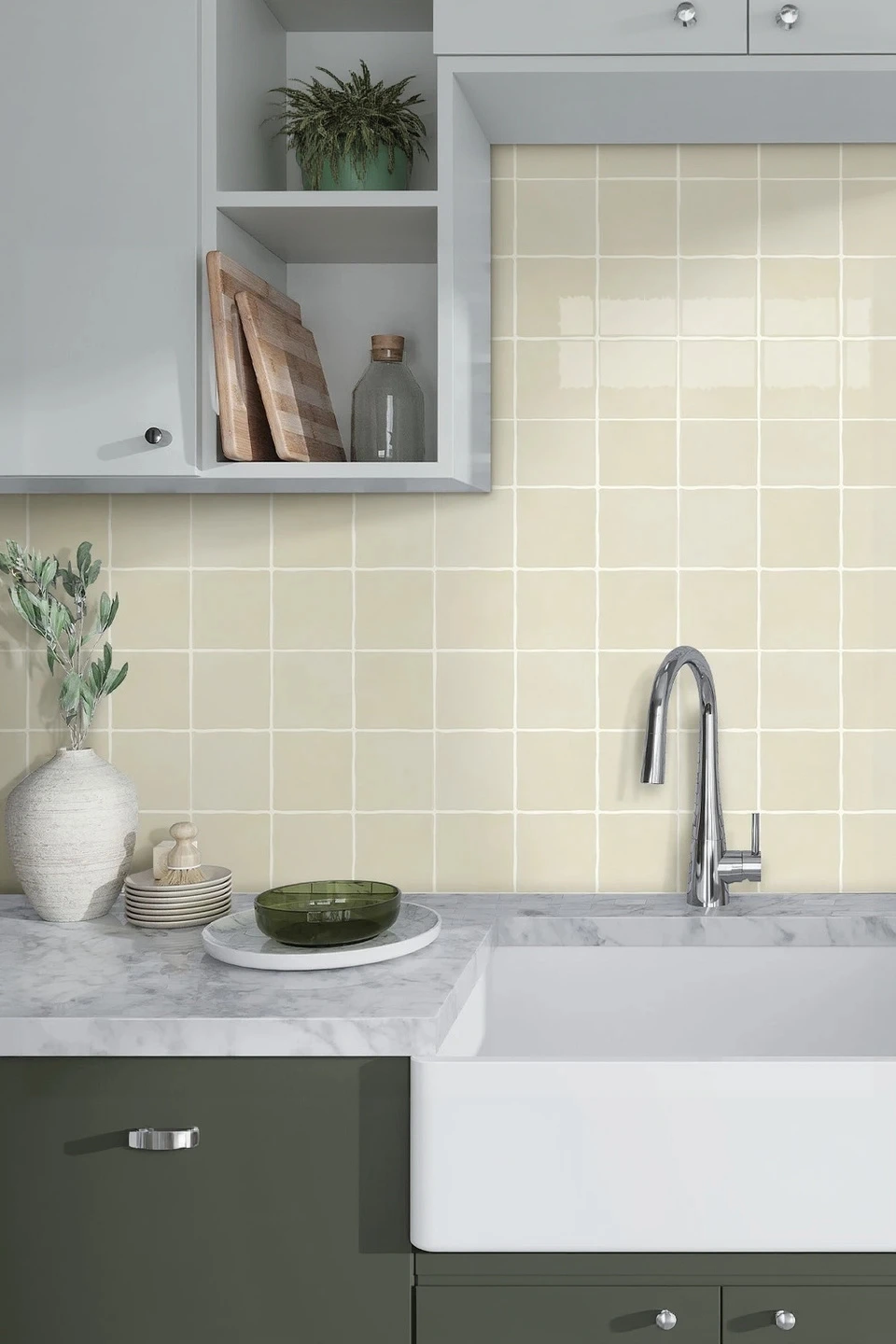
Open shelving and bare walls have become a defining look in modern kitchen design, but they present a unique styling challenge: how do you create visual interest on expanses of wall that would traditionally be hidden behind upper cabinets? The answer lies in strategic use of peel and stick backsplash, transforming what could feel like awkward negative space into a design statement that grounds your kitchen's aesthetic.
Without upper cabinets to anchor your sight line, the wall space between countertop and ceiling becomes the kitchen's canvas. This is actually an opportunity, not a limitation. The right backsplash treatment can make a kitchen without uppers feel intentional and polished rather than unfinished, while maintaining the airy, open quality that probably drew you to this layout in the first place.
Understanding Your Vertical Real Estate
The first step is reimagining how much wall you're actually working with. In a traditional kitchen with upper cabinets, backsplash is an 18-inch strip. In an open-wall kitchen, you might have anywhere from four to eight feet of vertical space to consider. This doesn't mean you should tile from counter to ceiling—that can feel overwhelming and expensive—but it does mean thinking differently about proportion.
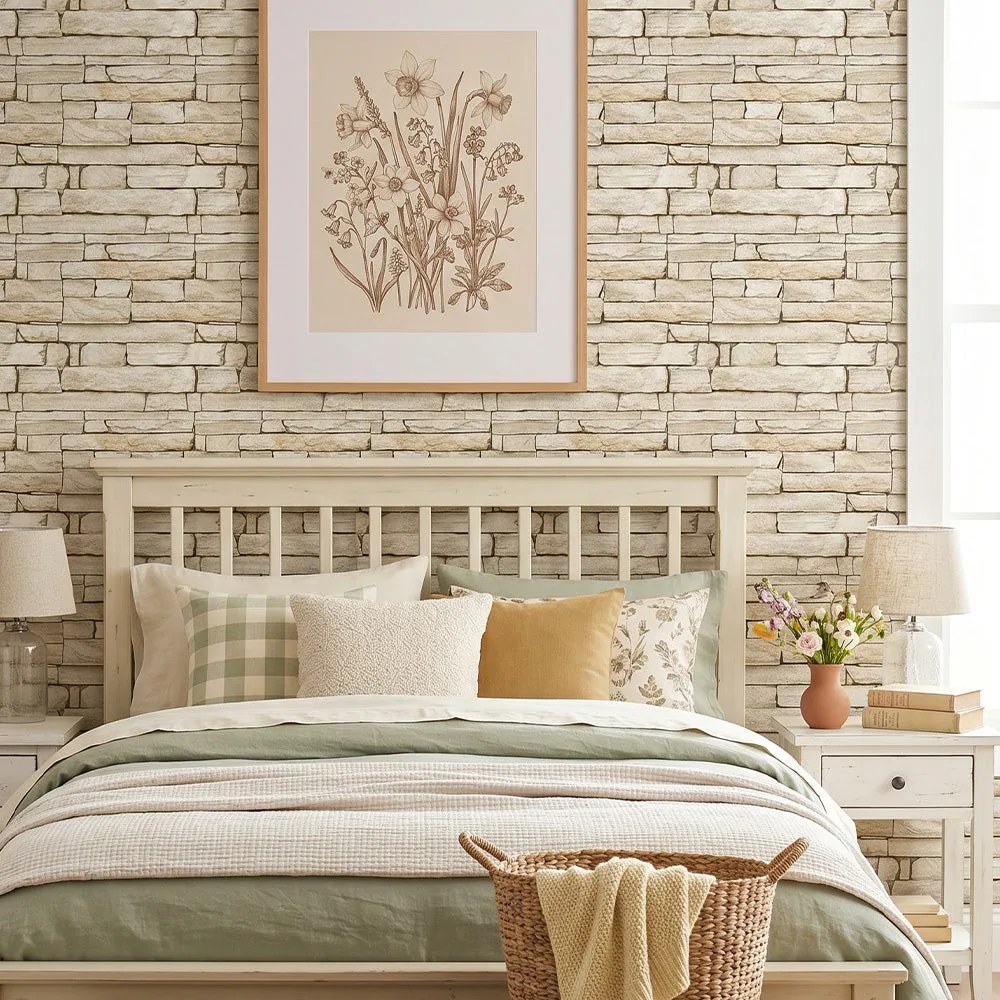
Consider taking your backsplash higher than the standard 18 inches, perhaps extending to 30 or 36 inches. This creates a defined zone that feels deliberate without overwhelming the room. The beauty of peel and stick tile is that you can experiment with heights before committing. Hold sample sheets against the wall at different levels to see what feels balanced with your room's proportions.
In kitchens with particularly high ceilings, a mid-height backsplash can actually emphasize the verticality in a pleasing way, drawing the eye upward while maintaining breathing room. The key is ensuring the endpoint feels intentional—align it with a window sill, match the height of an adjacent doorway, or create a clean horizontal line that the eye can rest on.
Choosing Materials That Command Attention (Without Cabinets to Compete)
Without the visual weight of upper cabinets, your backsplash needs to work harder to establish the kitchen's character. This is where texture becomes crucial. Flat subway tile that might have looked crisp against white cabinets can feel a bit lost against an open wall. Instead, consider options with dimensional interest.
The 3D Stacked Stone Peel and Stick Wall Tile brings an architectural quality that creates subtle shadows throughout the day as light shifts. This textural variation gives the eye something to engage with even in an otherwise minimal space. The natural stone appearance also introduces an organic element that balances the hard edges of countertops and appliances—particularly valuable when you don't have the warmth of wood cabinetry.
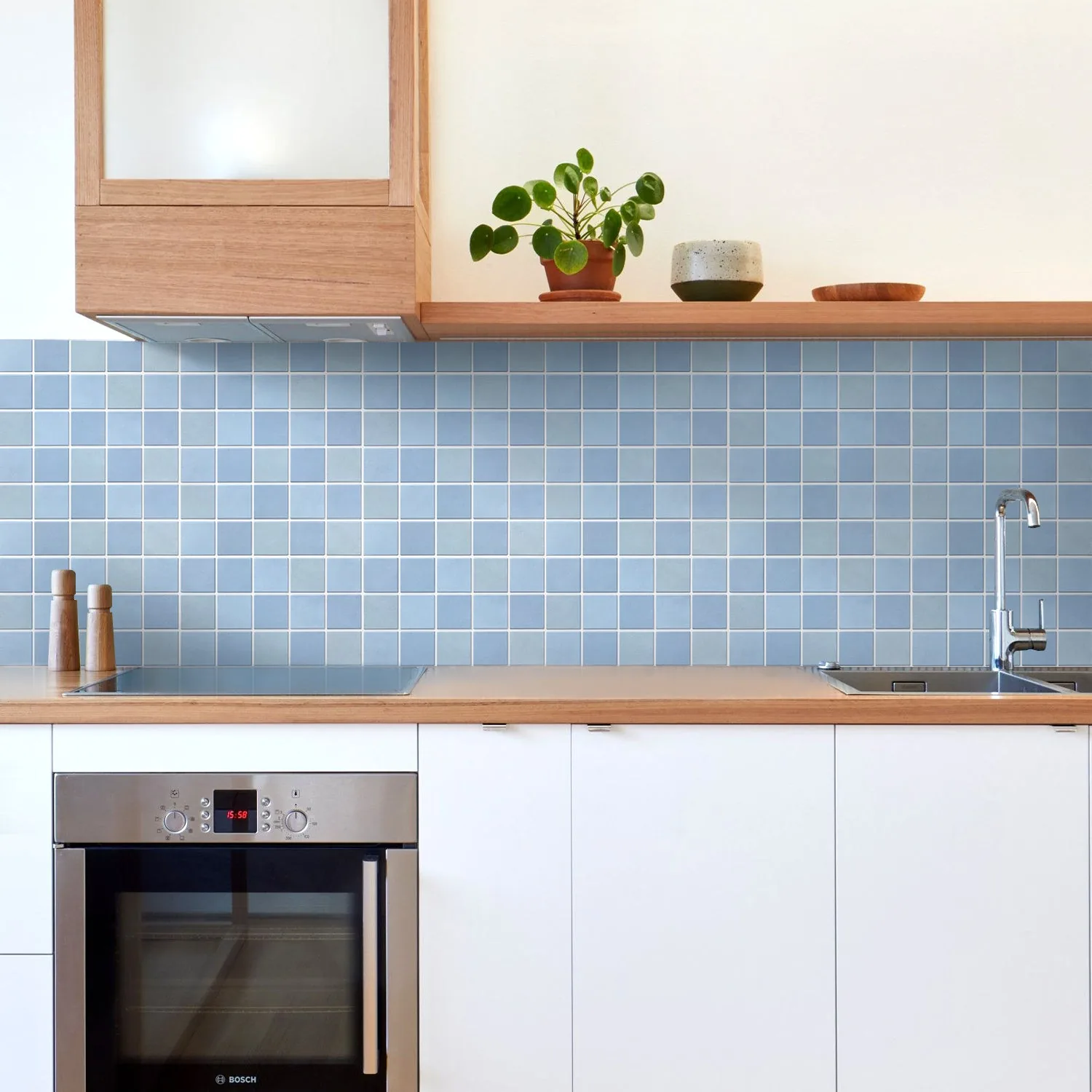
For kitchens with abundant natural light, the 3D Sky Blue Mosaic Peel and Stick Wall Tile offers a way to inject personality while maintaining an airy feel. The mosaic pattern provides visual interest at close range without reading as busy from across the room, and the color variation within the tiles prevents the blue from feeling flat or childish.
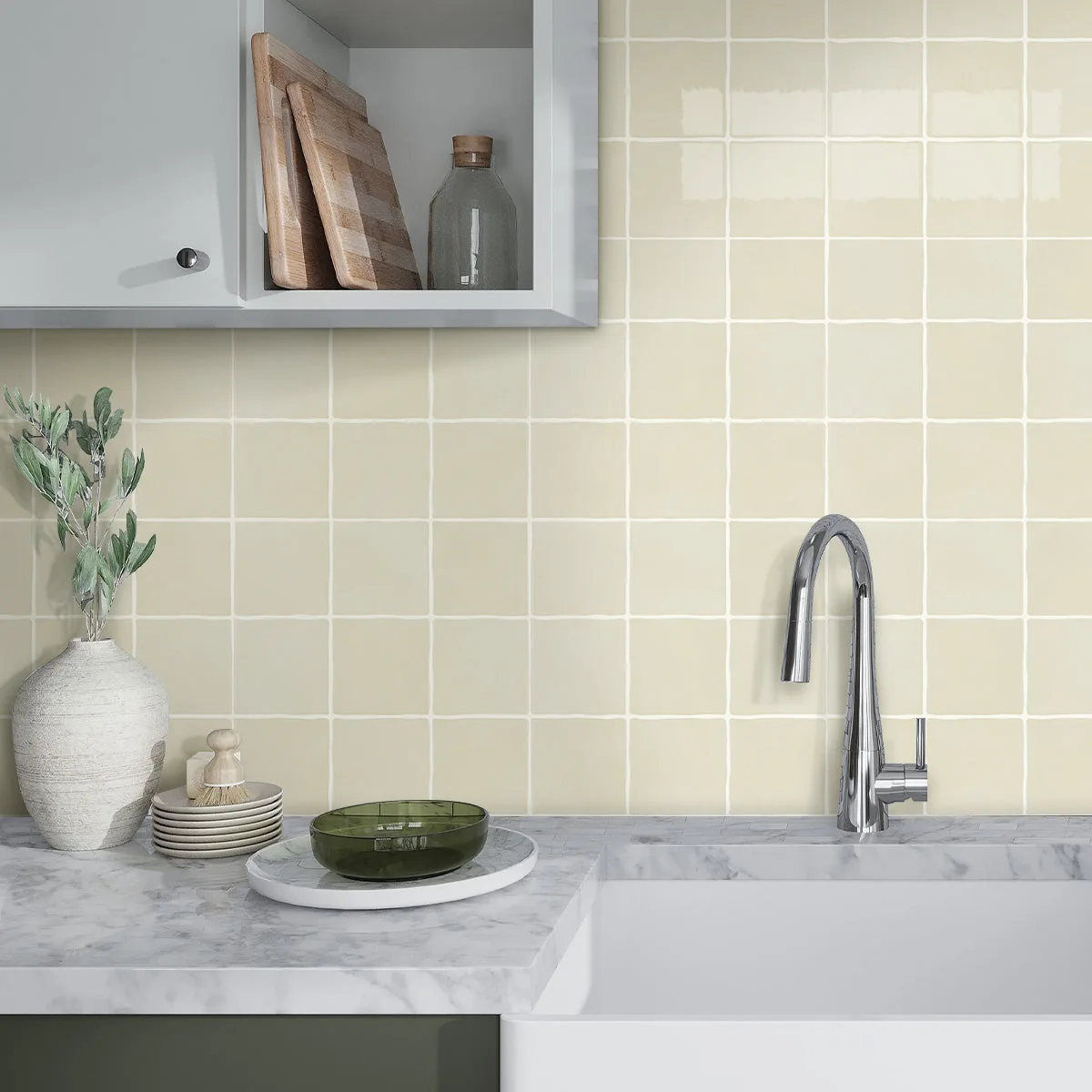
If your kitchen leans traditional or you're working with warm-toned counters, the Beige Ceramic Square Peel and Stick Backsplash Tile - Thicker Design delivers a refined, substantial appearance. The thicker profile catches light differently than standard tiles, creating depth that photographs beautifully and holds its own against blank walls.
Creating Intentional Endpoints and Edges
One of the trickiest aspects of styling backsplash in a cabinet-free kitchen is deciding where it should stop. Unlike traditional installations that simply end where cabinets begin, you're creating freestanding design elements that need to look finished from all angles.
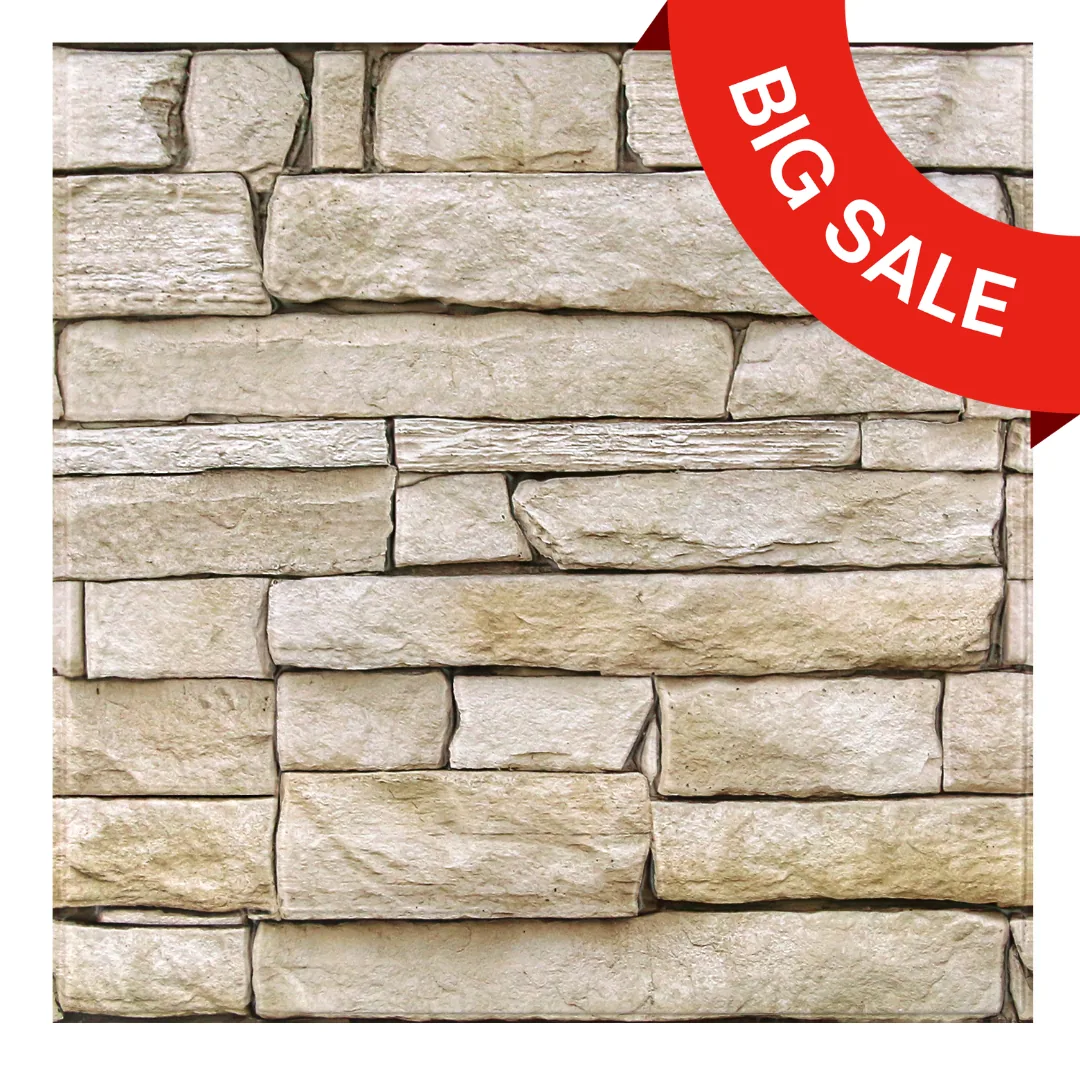
3D Stacked Stone Peel and Stick Wall Tile
PARTB Curated · Featured in this article
The cleanest approach is often to run your backsplash from edge to edge of your counter run, treating it as a unified panel. If your kitchen has defined zones—say, a cooking area and a prep sink area separated by open wall—consider treating each as its own backsplash moment rather than trying to connect them visually.
When your backsplash ends mid-wall (perhaps at a window or where the counter turns a corner), the edge treatment matters significantly. This is where peel and stick tile has a distinct advantage: you can plan your layout so that full tiles land at the visible edges, avoiding the cut-tile situation that often looks unfinished. Some designers advocate for ending precisely at an architectural feature—a window frame, a wall corner, or even aligned with an appliance edge—so the stopping point feels motivated rather than arbitrary.
Behind ranges or cooktops, there's an argument for extending the backsplash higher and wider than in other areas. This creates a focal point that makes sense functionally (protecting the wall from splatter) and aesthetically (giving the stove area the visual weight it deserves as the kitchen's working heart).
Balancing the Backsplash with What Goes Above
The challenge with open walls is that everything above your backsplash becomes part of the composition. If you've chosen to end your tile at 30 inches, you now have several feet of blank wall to consider. The backsplash and this upper wall space need to work together rather than compete.
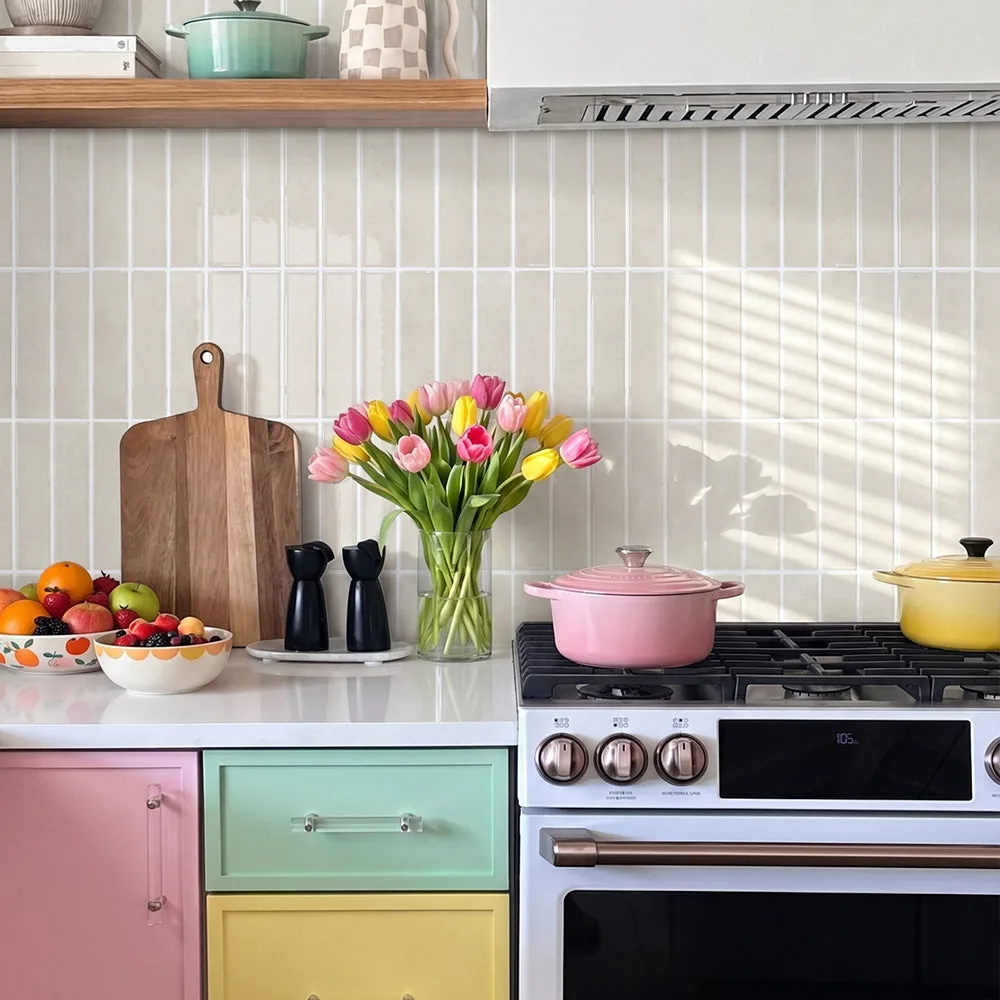
This is where restraint with the backsplash often pays off. If you're planning to hang art, display plates, or install open shelving above your counter area, a more neutral backsplash allows these elements to shine. The Beige Cream Color Linear Peel and Stick Backsplash Tile, with its subtle striping, provides enough visual interest to keep the backsplash area from feeling plain while remaining quiet enough to support styling above.
Conversely, if you're committed to keeping walls mostly bare—maybe you love the minimalist look or you're in a rental where hanging things is complicated—your backsplash can be bolder. This is your opportunity to bring in color, pattern, or strong texture without worrying about it clashing with wall décor.
Consider the sight lines from your main living spaces. In open-plan homes, the kitchen wall is often visible from the living or dining area. Your backsplash becomes part of the whole-room aesthetic, not just a kitchen element. This doesn't mean it needs to match your living room exactly, but it should feel like a coherent part of the home's overall story.
Addressing the Practical Side: Seams and Maintenance
Peel and stick installations in cabinet-free kitchens require slightly different thinking about seams and protection. With more tile visible and no cabinet doors to obscure imperfect corners, precision matters more.
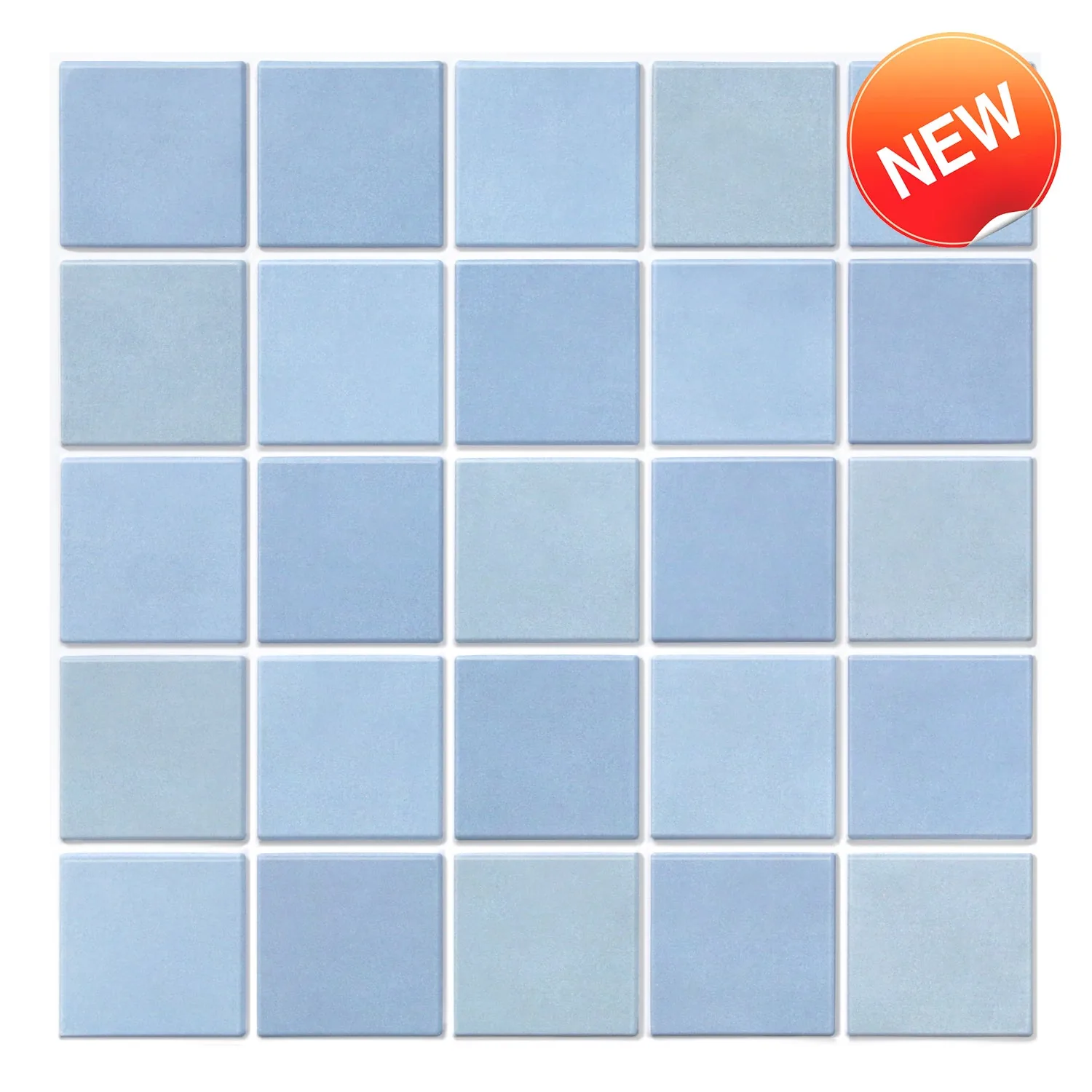
3D Sky Blue Mosaic Peel and Stick Wall Tile
PARTB Curated · Featured in this article
Plan your layout so that seams fall in less visible locations—avoid having a seam directly behind the faucet or at eye level where you'll notice it every time you wash dishes. Many people start their installation from the center of the backsplash area and work outward, ensuring symmetry in the most visible zones.
Without upper cabinets, your backsplash is more exposed to kitchen activities—you'll brush against it while reaching for things on open shelves, and it won't have the overhang protection that cabinet bottoms provide. This makes proper installation critical. Ensure walls are completely clean and smooth before applying tiles, and take the time to firmly press each tile, especially at the edges, to prevent lifting over time.
For areas that will see more moisture or contact—around sinks or especially busy prep zones—consider extending the backsplash higher than strictly necessary for function. This gives you a buffer zone and prevents the need for touch-ups where the tile meets bare wall.
Working with Existing Architectural Features
Kitchens without upper cabinets often have windows, and backsplashing around them requires thought. Rather than treating a window as an interruption, consider using it as a natural focal point. Run your backsplash beneath the window sill, and you create a framed moment that highlights the view and natural light.
If you have multiple windows at different heights, you might use the lowest sill as your backsplash endpoint throughout the kitchen, creating a consistent horizontal line. Alternatively, each window section can have its own backsplash treatment, particularly if they're separated by significant wall space.
The 3D Rose Whitewash Brick Peel and Stick Wall Tile works particularly well in kitchens with strong architectural character—exposed beams, original molding, or vintage details. The brick texture feels cohesive with older homes while the whitewash keeps it from competing with existing features. In a kitchen with no uppers, where architectural details are fully visible rather than obscured, this kind of sympathetic material choice helps everything feel unified.
For completely open walls without windows or doors, you have the freedom to create your own focal point. Some designers create a "backsplash panel" that's wider than the counter itself, extending a few inches past the counter edge on each side. This turns the backsplash into an intentional design feature rather than something that looks like it's simply filling space.
Styling Open Shelves and Counters to Complement Your Backsplash
The backsplash doesn't exist in isolation. What you place on your counters and any open shelving directly interacts with your tile choice. If you've chosen a busy mosaic or heavily textured stone, keep countertop styling minimal—a few beautiful pieces rather than a collection of items. Let the backsplash provide the visual interest while your surfaces remain relatively calm.
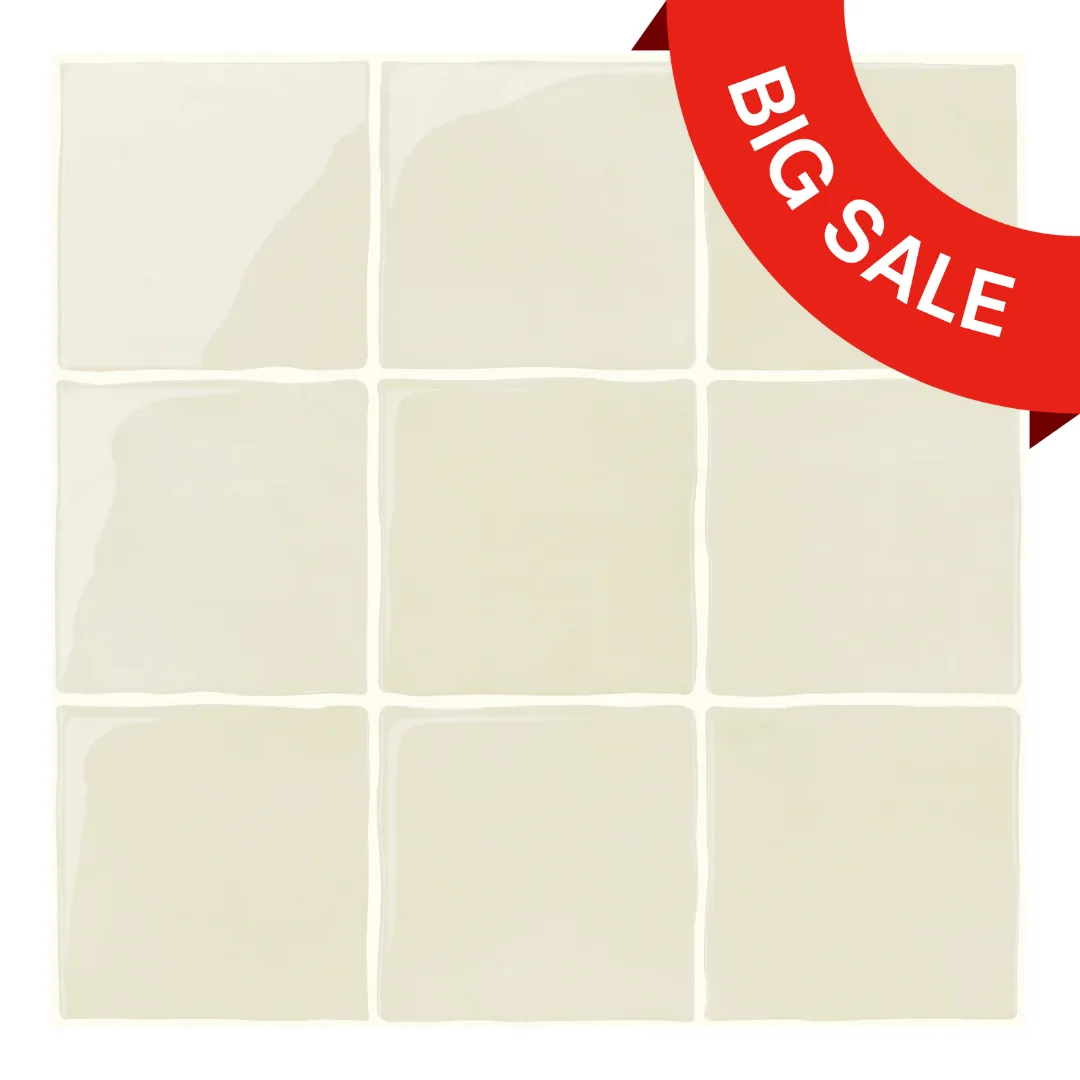
Beige Ceramic Square Peel and Stick Backsplash Tile - Thicker Design
PARTB Curated · Featured in this article
With a more subdued backsplash, you have freedom to be expressive with what's displayed. Colorful ceramics, plants, or stacked cookbooks can pick up accent colors from the tile, creating a curated rather than chaotic feeling.
Think about the vertical composition: backsplash, countertop, wall space, and any shelving form distinct horizontal bands. Varying the visual weight of each band keeps the eye moving in a pleasing way. A heavily textured backsplash might pair with minimalist shelving and quiet walls above, for instance.
Frequently asked questions about styling peel and stick backsplash in kitchens without upper cabinets follow below, addressing common concerns about installation height, material selection for maximum impact, and creating finished edges.
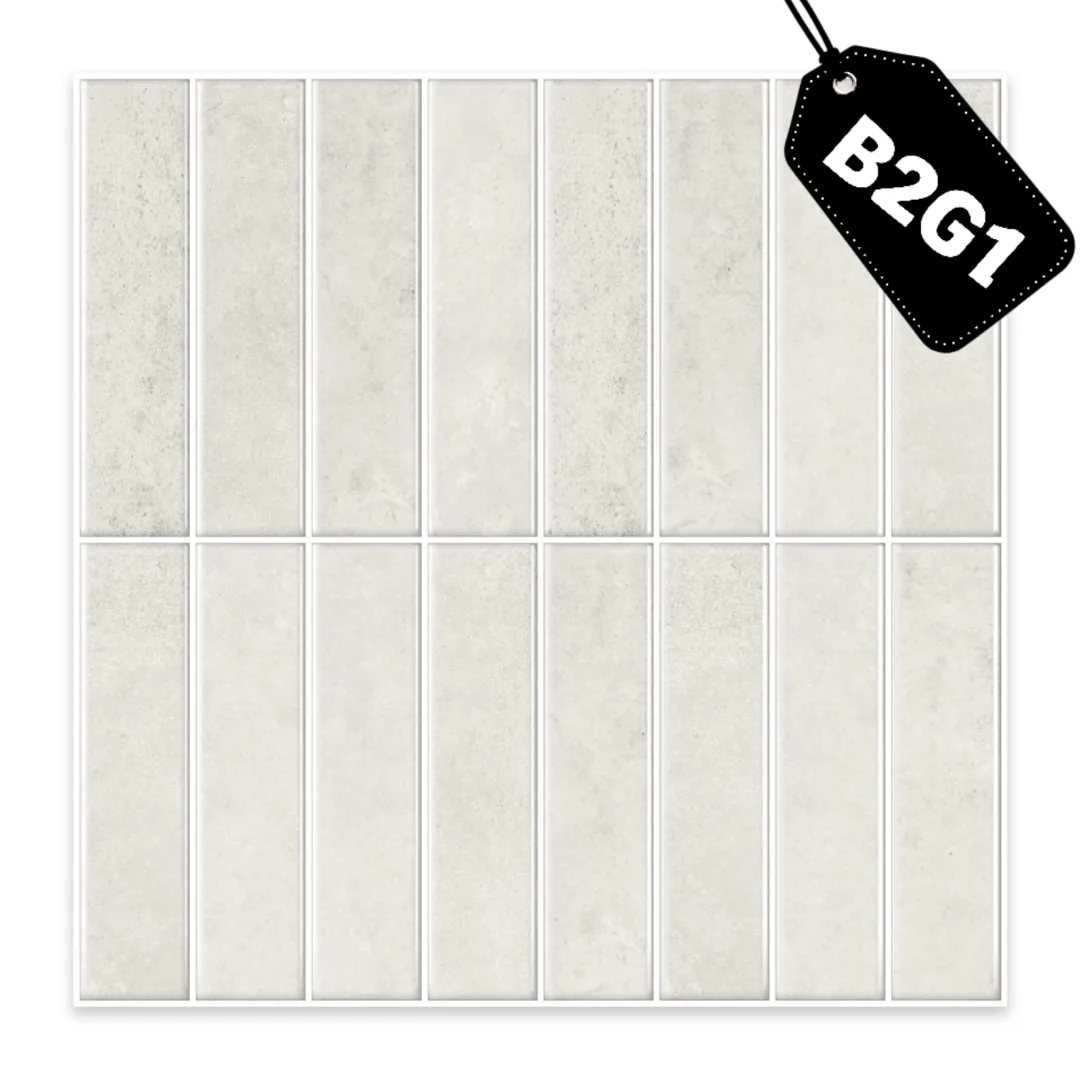
Beige Cream Color Linear Peel and Stick Backsplash Tile
PARTB Curated · Featured in this article
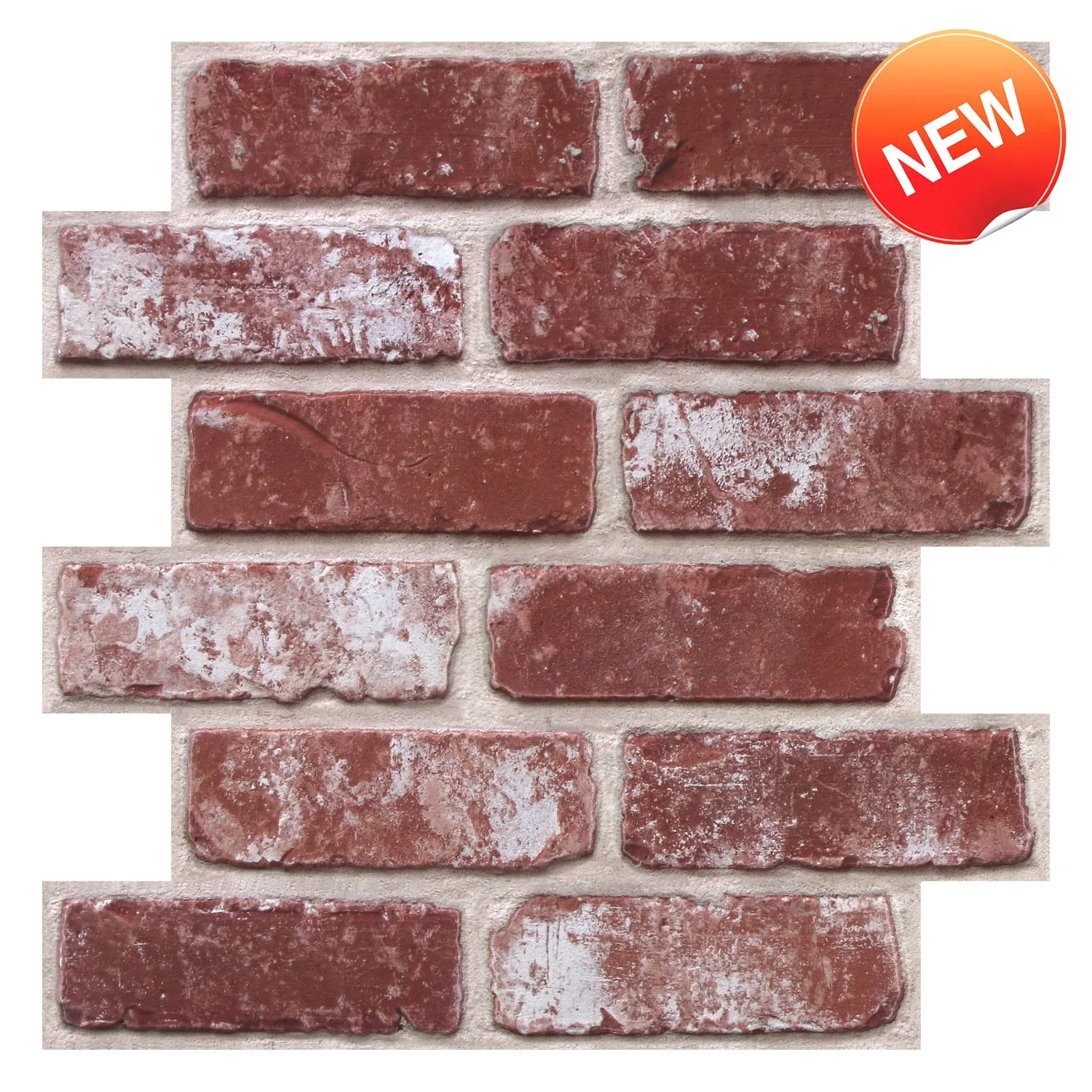
3D Rose Whitewash Brick Peel and Stick Wall Tile
PARTB Curated · Featured in this article