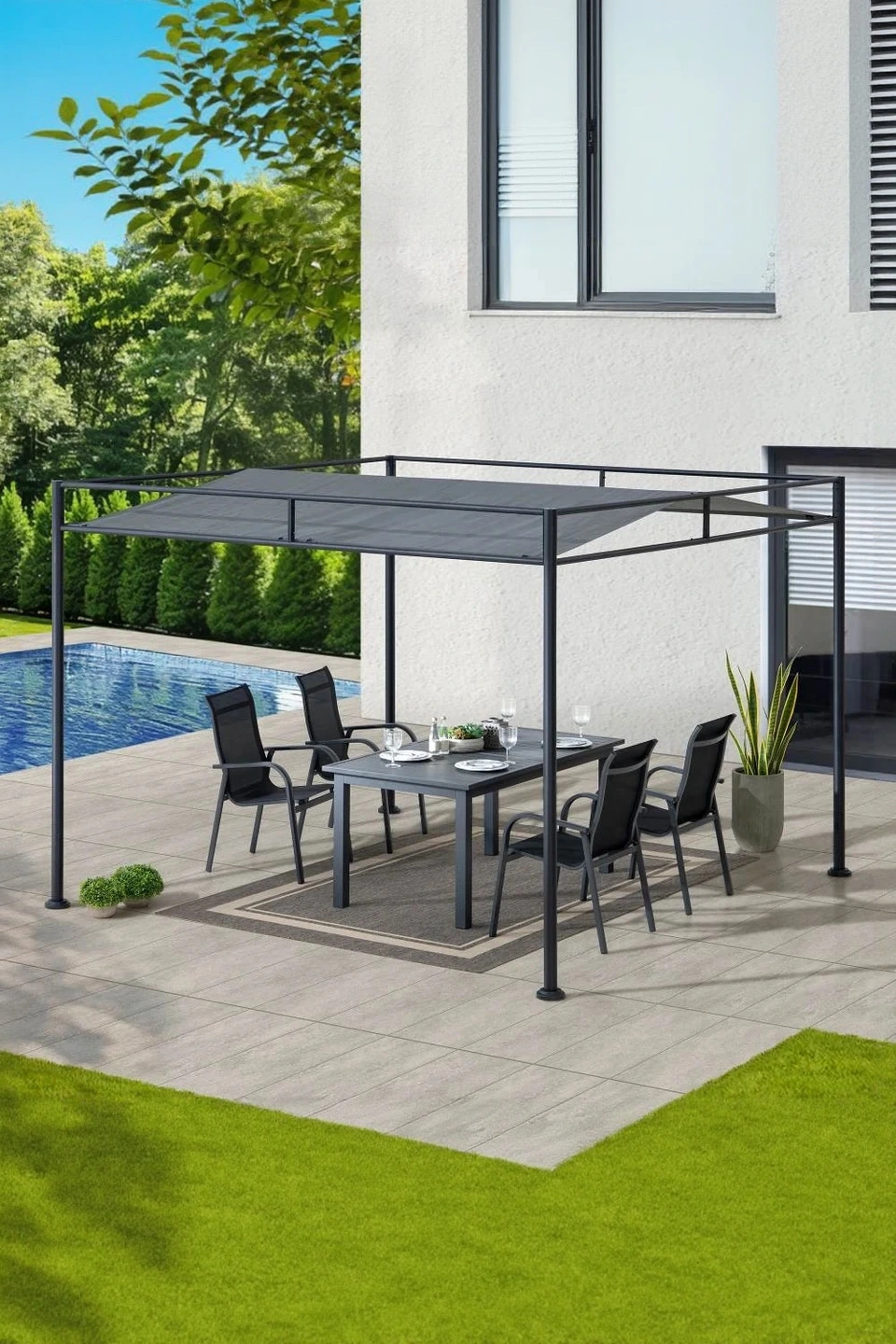
A pergola shouldn't be a fair-weather friend. Too many homeowners install these elegant structures only to watch them gather dust once summer fades, treating them like seasonal decor rather than the architectural anchor they truly are. The best outdoor rooms work hard across all four seasons, adapting to weather shifts without sacrificing their core purpose: creating defined, comfortable space that extends your living area beyond four walls. The secret isn't cramming in every gadget and fabric you can find—it's layering function thoughtfully so your pergola remains equally inviting whether you're seeking shade in July or shelter in November.
Start With a Flexible Canopy System
Your canopy choice dictates everything else about year-round usability. Fixed fabric might look clean, but it leaves you powerless when conditions shift. Instead, look for retractable or adjustable systems that let you control exposure on the fly. The Darkeford Sling Canopy Pergola 10x10 - Shadow Black offers exactly this kind of adaptability, with fabric that moves according to sun position and weather demands rather than forcing you to commit to full coverage or none at all.
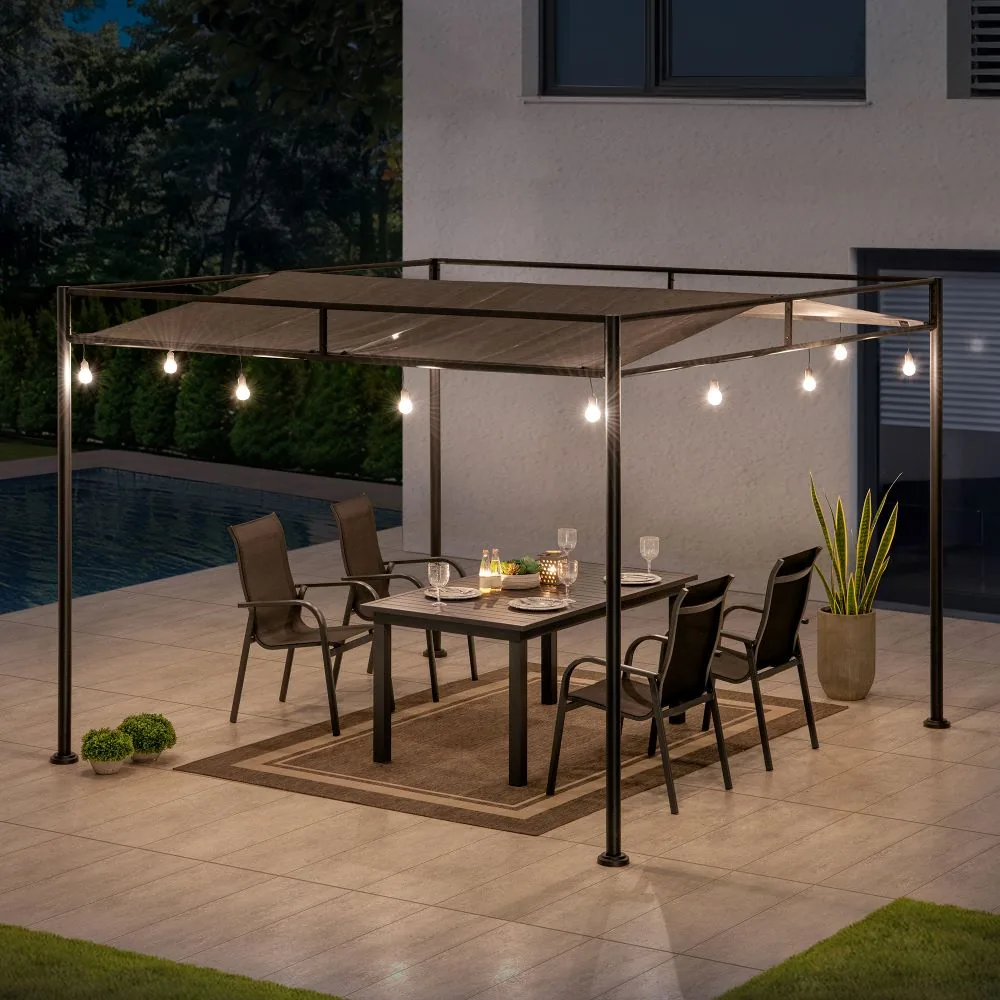
Consider how different seasons demand opposite responses from the same structure. Summer afternoons call for maximum shade, while spring mornings benefit from dappled light. Winter days might need full retraction to capture weak sun, and autumn evenings require just enough coverage to deflect sideways rain without blocking the view. A canopy that adjusts means you're not constantly fighting against your pergola's design—you're working with it.
Material matters here more than most people realize. Textilene and other UV-resistant fabrics hold up to relentless sun exposure while remaining breathable enough to prevent that stuffy greenhouse effect. They also shed water rather than absorbing it, which prevents the mildew issues that plague traditional outdoor fabrics. When you're choosing a canopy system, test the mechanism repeatedly in the store. It should glide smoothly without excessive force, because a cover you struggle to adjust is a cover you'll leave in one position all season.
Create Climate Zones Within the Space
Not every square foot of your pergola needs the same treatment. Smart styling means recognizing that different areas serve different purposes and adjusting accordingly. Establish a core dining or seating zone that receives maximum weather protection, then graduate toward more exposed perimeter areas that flex with the seasons.
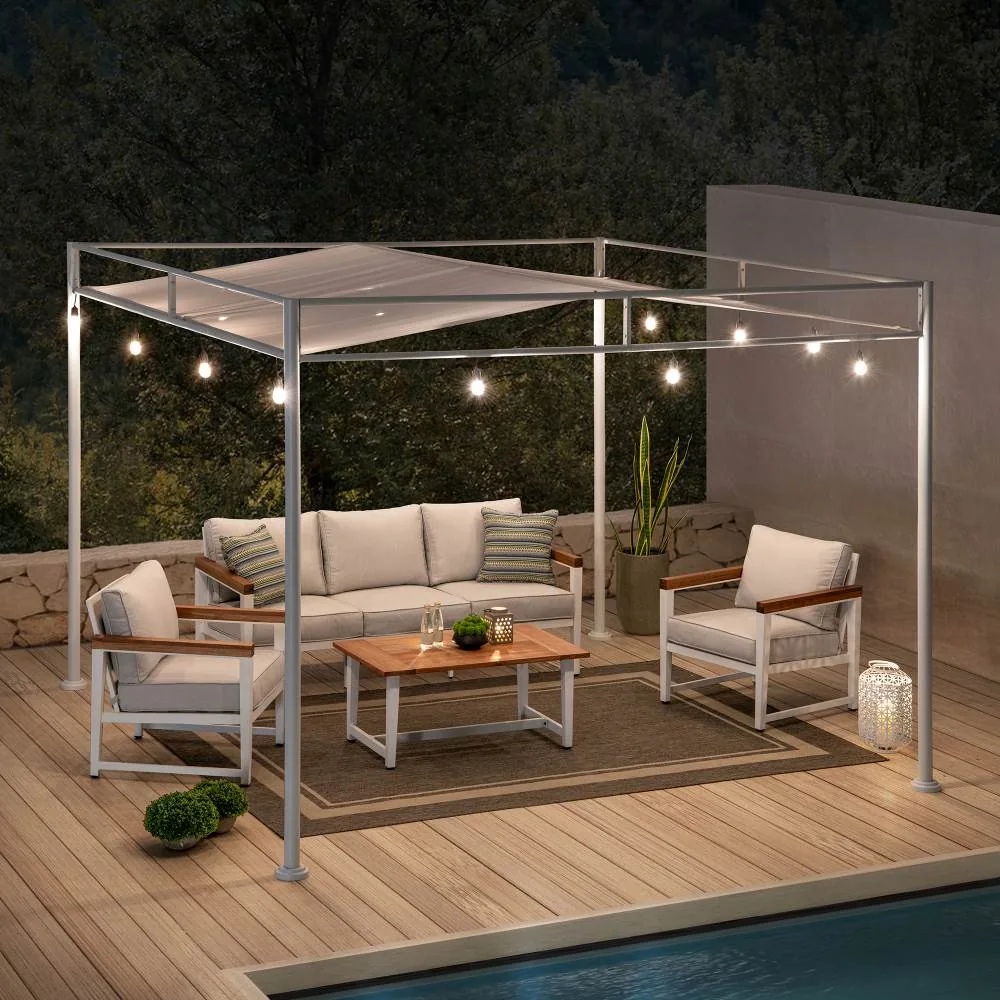
Anchoring furniture placement helps define these zones without requiring permanent construction. A substantial dining table claims the center ground where your canopy provides the most coverage, while lighter seating arrangements can migrate toward the edges during pleasant weather and tuck inward when conditions turn. This fluidity keeps the space from feeling locked into one configuration.
Side panels make the difference between a pergola that works in gentle weather and one that stands up to actual elements. Rather than fully enclosing the structure—which kills the indoor-outdoor connection that makes pergolas worthwhile—consider installing removable panels on the two most vulnerable sides. Clear vinyl maintains sight lines while blocking wind, and you can store them away entirely during mild months. Bamboo or fabric panels offer a softer look that filters wind rather than stopping it completely, reducing the aggressive buffeting that makes outdoor spaces uncomfortable without creating that trapped feeling of full enclosure.
Layer Textiles Strategically for Warmth and Style
Outdoor fabrics have evolved far beyond scratchy, sun-faded cushions. Modern performance textiles handle moisture, resist staining, and provide genuine comfort—but they still require thoughtful rotation across seasons. Treat your pergola textiles like a wardrobe: some pieces work year-round, others come out for specific conditions.
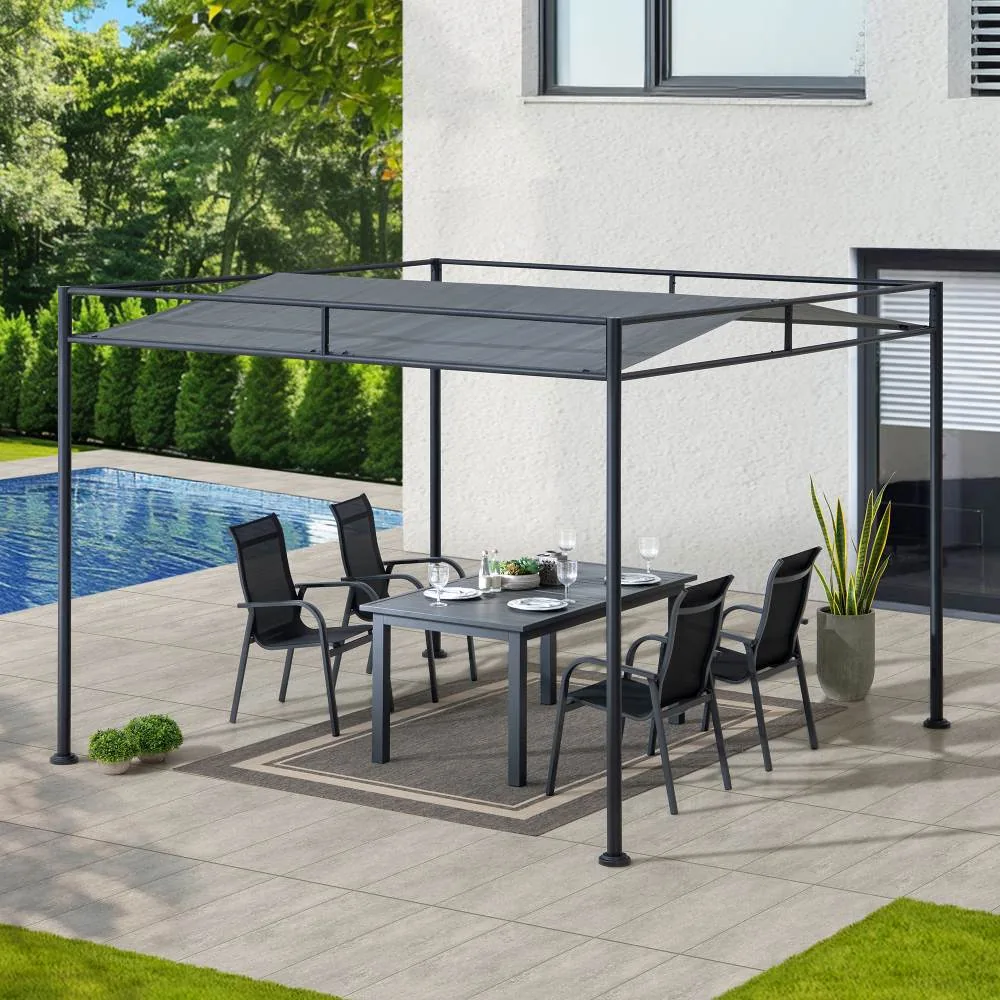
Darkeford Sling Canopy Pergola 10x10 - Shadow Black
Sunjoy · Featured in this article
Start with a base layer of all-weather cushions that live outside permanently. These should be truly outdoor-rated, with quick-dry foam and solution-dyed acrylic covers that won't fade or grow musty. They're your everyday essentials that require zero fuss.
Then layer seasonally. Lightweight linen-look throws and pillows add summer elegance without excessive warmth, while chunky knit blankets and faux fur accents make fall evenings actually cozy rather than merely tolerable. The key is storage—you need a weather-tight bench or nearby indoor closet where off-season textiles live. A beautiful pergola setup falls apart quickly when you're scrambling to rescue soggy pillows during an unexpected downpour.
Color strategy matters more outdoors than in. While interiors can embrace dark, moody palettes, pergolas benefit from lighter neutrals that don't visually recede in bright sunlight. Taupe, warm gray, and natural linen tones provide sophistication without competing with your garden's seasonal shifts. Save bold color for accent pillows you can swap easily—burnt orange for fall, deep blue for summer, forest green for winter if you're feeling festive.
Address Lighting for Short Days and Long Nights
A pergola that only functions during daylight is fundamentally incomplete. Lighting transforms the structure from architectural feature to actual living space, extending usability into evening hours across every season—especially crucial during winter when daylight disappears by 5 PM.
String lights remain popular because they work, but installation height matters enormously. Draping them too low creates a canopy of light that's pleasant from outside but harsh from underneath—you end up staring directly into bulbs rather than enjoying ambient glow. Instead, run them along the upper beams where they cast light downward, or weave them through lattice work if your pergola includes it.
Layered lighting provides real flexibility. Bright task lighting over dining areas lets you actually see your food and companions, while softer accent lighting around perimeter posts creates atmosphere without overwhelming the space. Solar options have improved dramatically—modern solar path lights and post caps now provide genuine illumination rather than feeble glowing, and they eliminate the extension cord tangle that plagues many outdoor setups.
Don't forget practical considerations like weatherproofing and control. Lights labeled "outdoor safe" still aren't meant to hang fully exposed to driving rain—look for covered mounting positions or truly weatherproof housings. And install dimmer controls if you're running hardwired lighting. The ability to dial brightness up for dinner parties and down for quiet evenings makes the space feel responsive rather than fixed.
Choose Furniture That Transitions Seasons Gracefully
Furniture selection separates pergolas that work year-round from those that become lawn storage between uses. The temptation is choosing pieces that make a statement in June, but those wicker loungers and delicate metal chairs tend to photograph better than they live.
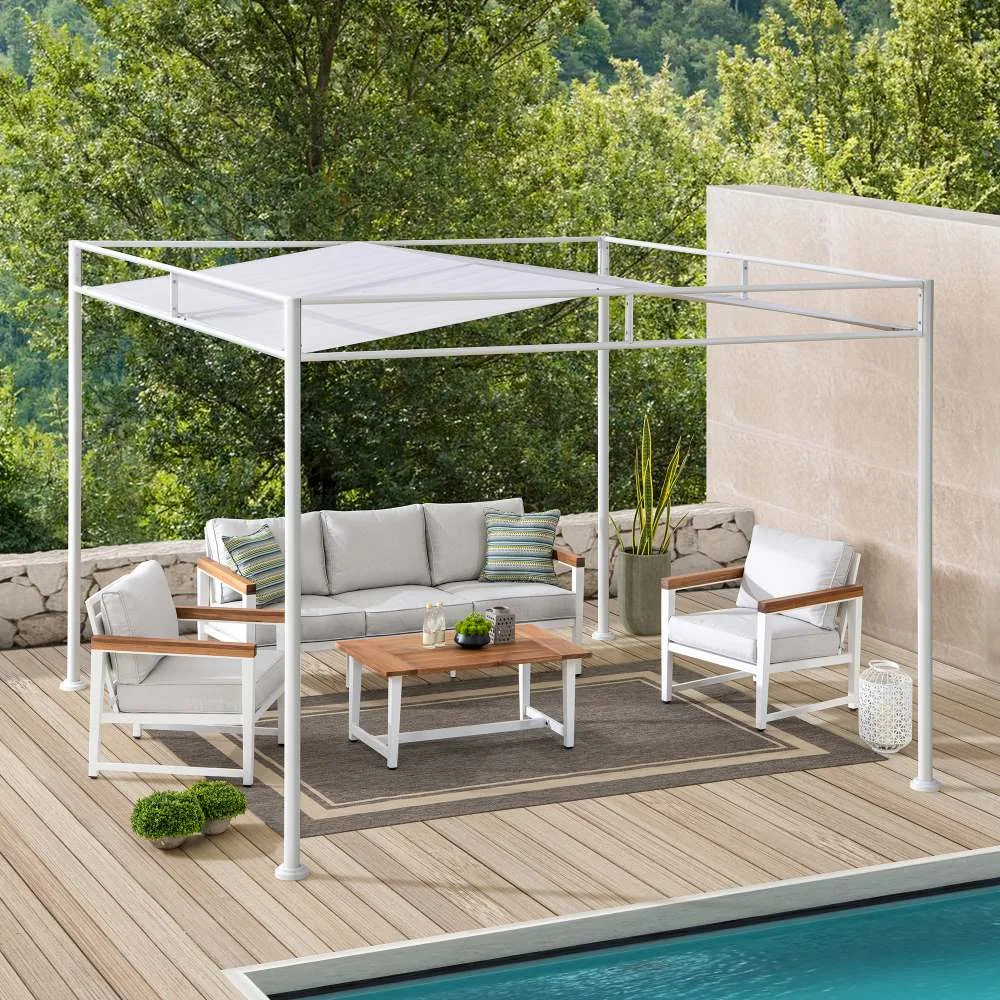
Darkeford Sling Canopy Pergola 10x10 - White
Sunjoy · Featured in this article
Prioritize materials engineered for outdoor exposure. Powder-coated aluminum resists rust while remaining surprisingly comfortable in both heat and cold—unlike wrought iron, which becomes painfully hot in summer and freezing in winter. Synthetic wicker (resin wicker or PE rattan) mimics natural materials without the deterioration, and it wipes clean after months of neglect.
Scale matters more outdoors than in. Furniture that feels appropriately sized for your pergola when you position it often shrinks visually once greenery fills in and fabric accents pile on. Err toward slightly larger pieces that can hold their own against the structure's vertical elements and won't get lost under throws and pillows.
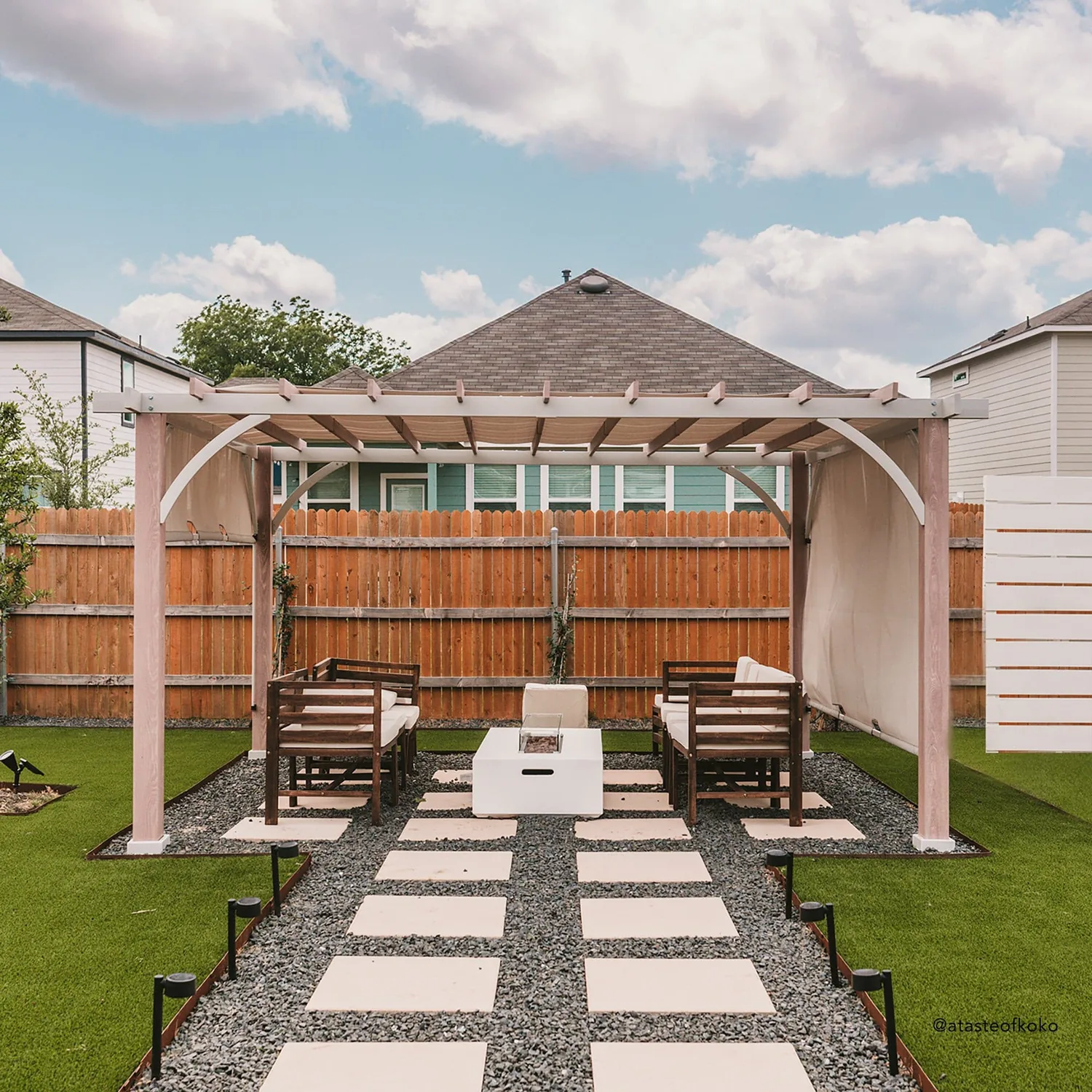
Consider investing in a quality pergola structure that supports your furniture vision from the start. The SUNJOY 12x14 Pergola with Sliding Shade Roof & Woodgrain Steel Frame provides enough space to accommodate substantial furniture groupings while maintaining clear circulation paths—a common failing in smaller structures where you're constantly squeezing between table and post. The sliding roof also means you're not fighting a fixed canopy when you need to reposition furniture seasonally.
Modular seating systems earn their keep by adapting to different gathering sizes and weather conditions. Sectional pieces can cluster together for cozy winter groupings or spread apart for summer mingling. Ottomans that function as extra seating, footrests, or side tables provide flexibility without requiring dedicated storage space.
Build in Practical Storage Solutions
Year-round function collapses without proper storage. All those seasonal textiles, lighting adjustments, and weather-responsive accessories need a home—preferably one that doesn't require you trekking through the house constantly. Integrated storage keeps your pergola self-sufficient and prevents that cluttered look that undermines careful styling.
Weather-resistant storage benches serve double duty, providing seating while hiding cushions, throws, tools, and entertaining supplies. Choose versions with fully waterproof interiors rather than merely water-resistant—there's a significant difference when serious storms roll through. Cedar or resin construction holds up better than most alternatives, though powder-coated metal works if aesthetics call for it.
Wall-mounted solutions work beautifully on pergolas attached to homes or those with solid fence-backing. Narrow shelving holds often-used items like citronella candles, drink coasters, and entertainment supplies without claiming valuable floor space. Hooks for hanging throws and removable side panels keep them accessible but out of the way when not needed.
Consider storage placement carefully. Items you need constantly—coffee for morning pergola breakfasts, blankets for evening chill—should sit closest to seating areas. Seasonal transition pieces like winter panels or summer sun shades can live in less accessible spots since you're only pulling them once every few months.
Embrace Seasonal Decor Without Overdoing It
The line between festive and tacky is thinner outdoors than in. While your pergola should acknowledge seasons rather than remaining static year-round, restraint separates curated style from craft-fair explosion. Choose one or two seasonal nods rather than attempting full transformation.
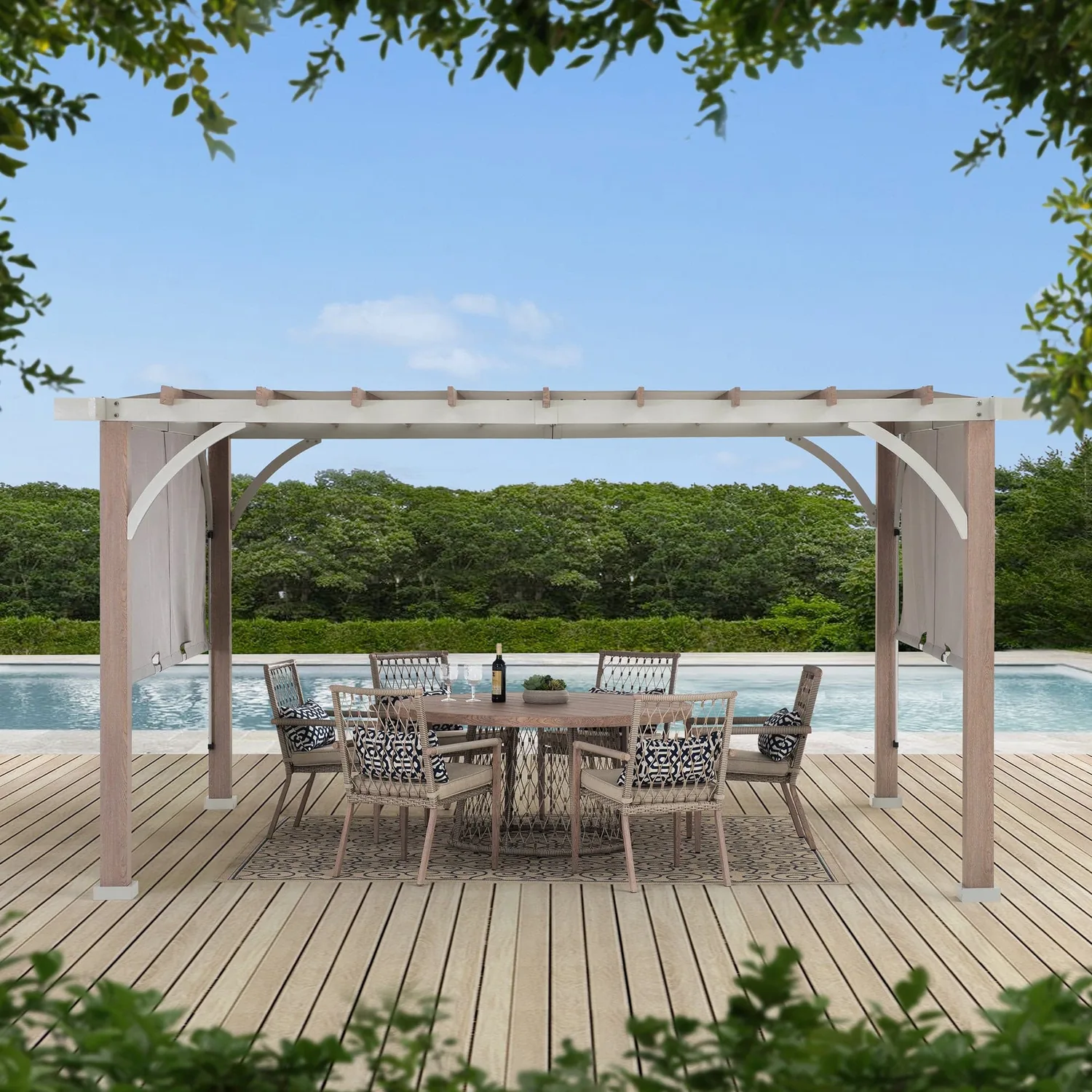
SUNJOY 12x14 Pergola with Sliding Shade Roof & Woodgrain Steel Frame
Sunjoy · Featured in this article
Fall benefits from natural elements—pumpkins and gourds, dried corn stalks, branches with changing leaves. These feel appropriate to the outdoor setting without screaming Halloween or Thanksgiving specifically. Winter can embrace subtle evergreen touches and warm lighting without full holiday takeover, unless that's genuinely your style (in which case, commit fully rather than half-attempting it). Spring calls for fresh flowers in simple containers, while summer often needs no help beyond lush surrounding growth.
Permanent features that read differently across seasons provide continuity. A substantial planter with evergreen shrubs anchors the space year-round, with underplanting that can shift seasonally—pansies in fall, tulips in spring, coleus in summer. Architectural elements like decorative screens or trellises attached to posts provide visual interest regardless of season while supporting climbing plants when weather permits.
The Darkeford Sling Canopy Pergola 10x10 - White demonstrates how a neutral structure actually enhances seasonal flexibility. White framing provides a clean backdrop that works with any color palette you introduce, whereas a boldly colored pergola limits your options. The canopy adjusts to optimize conditions, but the structure itself remains elegantly consistent—exactly the kind of foundation that supports year-round styling without constant overhauls.
Integrate Heating and Cooling Options Thoughtfully
Climate control separates aspirational outdoor rooms from actually usable ones. You don't need to replicate indoor comfort exactly—some temperature variance is part of the outdoor appeal—but extending the comfortable range by even 10-15 degrees in either direction dramatically increases how often you'll use the space.
Heating solutions range from portable propane heaters to permanent infrared installations, each with tradeoffs. Propane patio heaters provide flexible positioning and require no installation, but they consume fuel, demand regular tank replacement, and aren't particularly efficient. Mounted infrared heaters target heat at people rather than trying to warm air, making them far more effective in open structures, though they require electrical work and occupy permanent positions.
Fire features deliver both warmth and ambiance, but they need appropriate clearance from overhead structures. A fire pit positioned near but not directly under your pergola provides warmth without concerning roof clearances. Tabletop fire features work better for pergolas with lower canopies, offering flame interest without requiring significant clearances.
Cooling matters too, especially in regions where summer heat lingers into evening. Ceiling fans designed for outdoor use generate remarkable air movement in a covered space, making 85 degrees feel tolerable rather than oppressive. Position fans in the center of your pergola where they'll move air throughout the footprint—corner mounting creates uneven circulation. Look for models specifically rated for damp or wet locations depending on your canopy coverage.
Misting systems provide another cooling option, though they work best in low-humidity regions where evaporative cooling actually works. In humid climates, you're just adding moisture to already-saturated air, creating stickiness rather than relief. Test before committing to permanent installation.
Consider Vertical Space for Maximum Flexibility
Most pergola styling focuses on the horizontal plane—furniture, canopy, flooring—while neglecting the vertical opportunities that truly maximize function. The posts and beams defining your pergola's edges are architectural assets that can hold lighting, plants, storage, and privacy elements without consuming floor space.
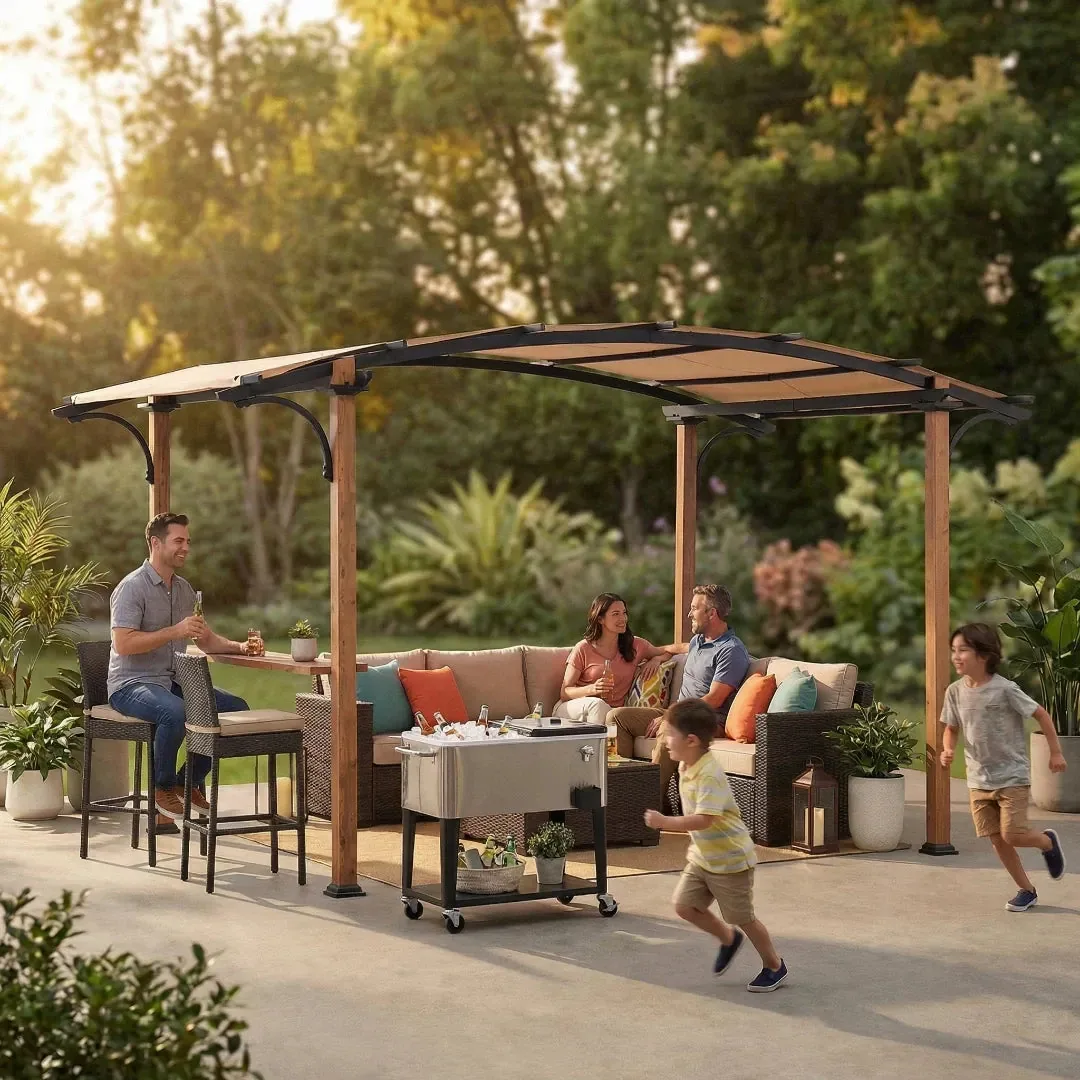
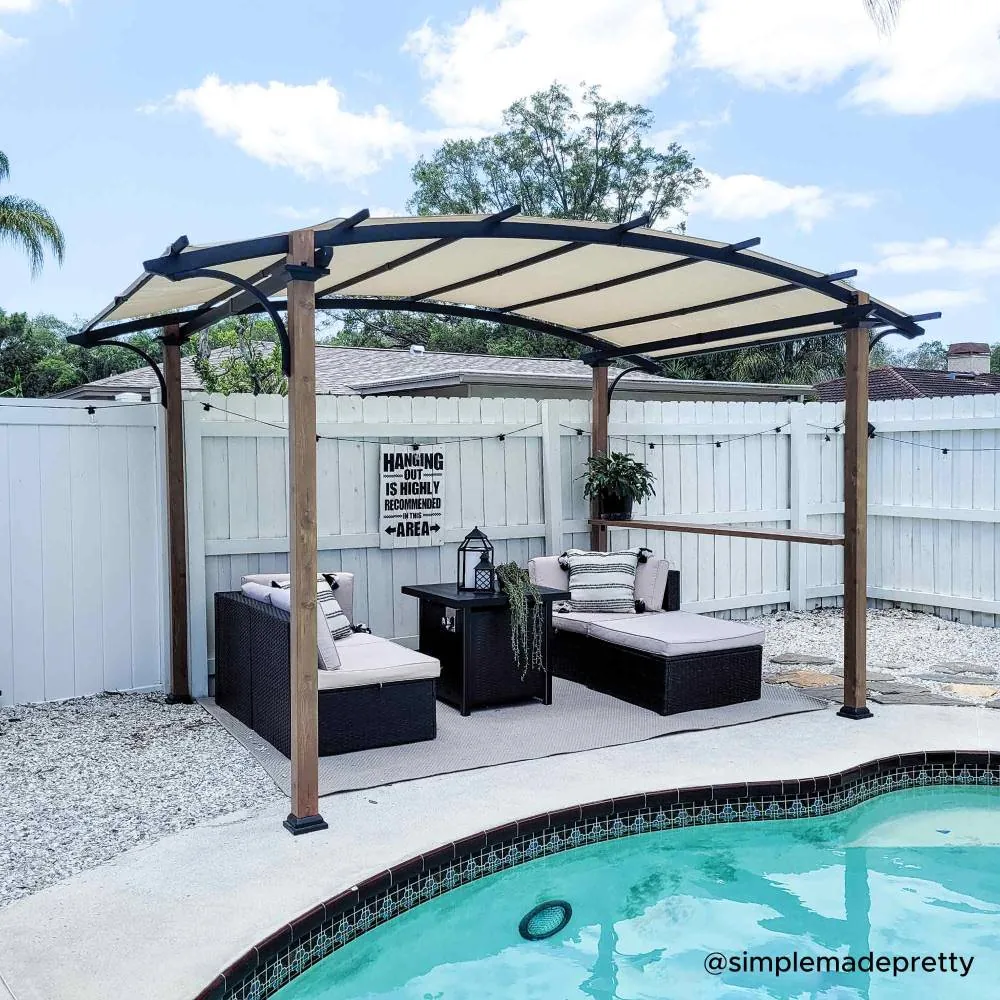
SUNJOY 9x13 Modern Arched Metal Pergola with Tan Heavy-duty Textilene Fabric Canopy and Bar Shelf
Sunjoy · Featured in this article
Climbing plants trained on posts create natural seasonal variation. Clematis and jasmine provide summer bloom and fragrance while dying back in winter, automatically lightening the structure when maximum light penetration matters. Evergreen options like star jasmine maintain year-round coverage if privacy or wind-blocking is your priority. The growth pattern matters—some climbers twine around supports while others need training on installed wires or trellises.
Hooks and brackets installed at varying heights along posts support hanging planters, lanterns, or seasonal decor without requiring new hardware each time you want to refresh the look. Use hefty brackets rated for outdoor exposure and actual weight—a hanging plant and soaked soil weigh considerably more than most people anticipate.
Removable panels deserve another mention here because they're truly transformative. Rather than committing to permanent sides that close off your pergola, install a track system that accepts panels you can slide in during wind or cold and remove when they're unnecessary. Clear acrylic maintains sight lines, while fabric or slatted wood panels provide softer definition. The SUNJOY 9x13 Modern Arched Metal Pergola with Tan Heavy-duty Textilene Fabric Canopy and Bar Shelf includes a built-in bar shelf that exemplifies this kind of thoughtful vertical integration—taking advantage of structural elements to add function without claiming floor space.
---
A frequently asked questions section follows below to address common concerns about year-round pergola styling and maintenance.
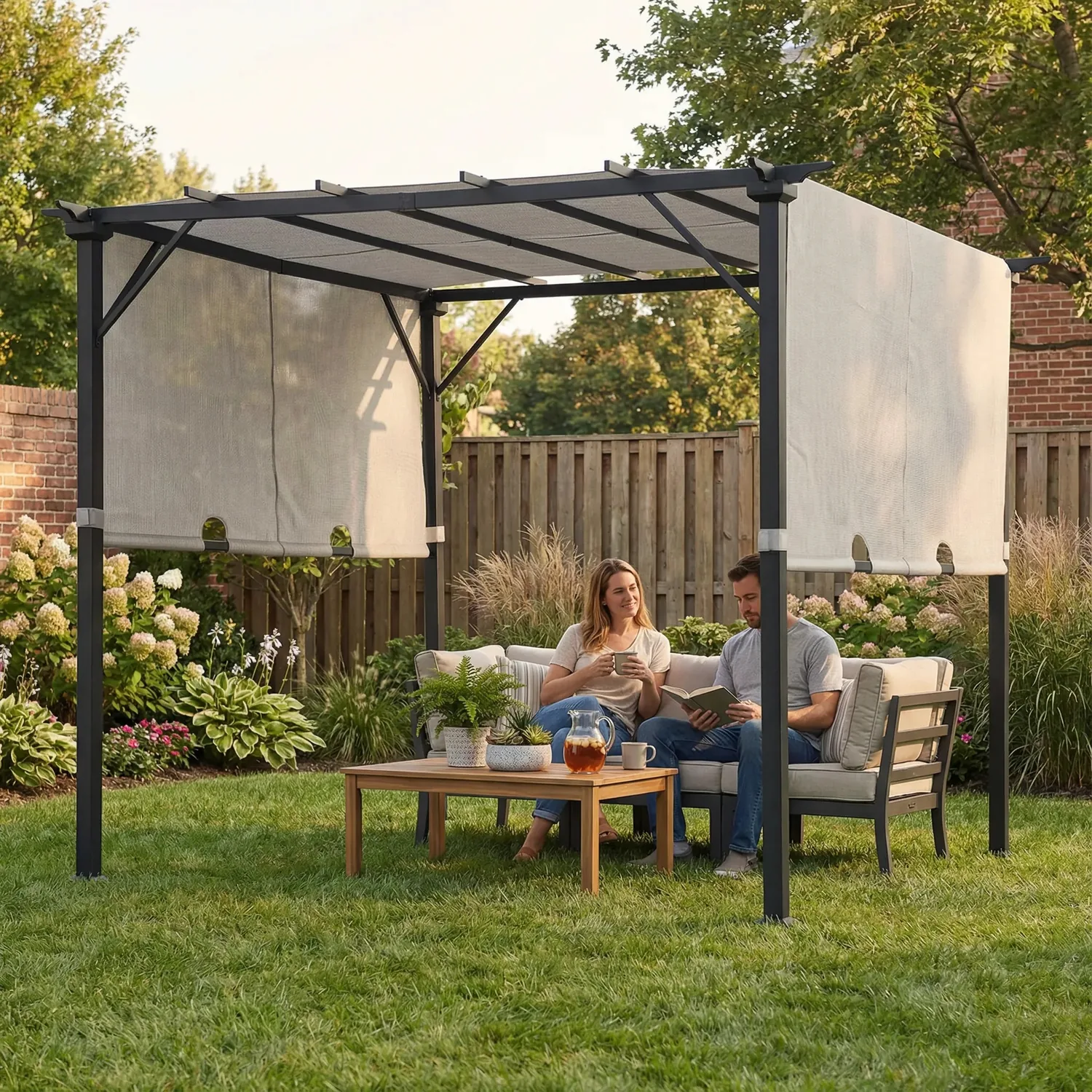
SUNJOY 9x9 Matte Black Steel Frame Pergola with Adjustable Canopy Roof - White
Sunjoy · Featured in this article