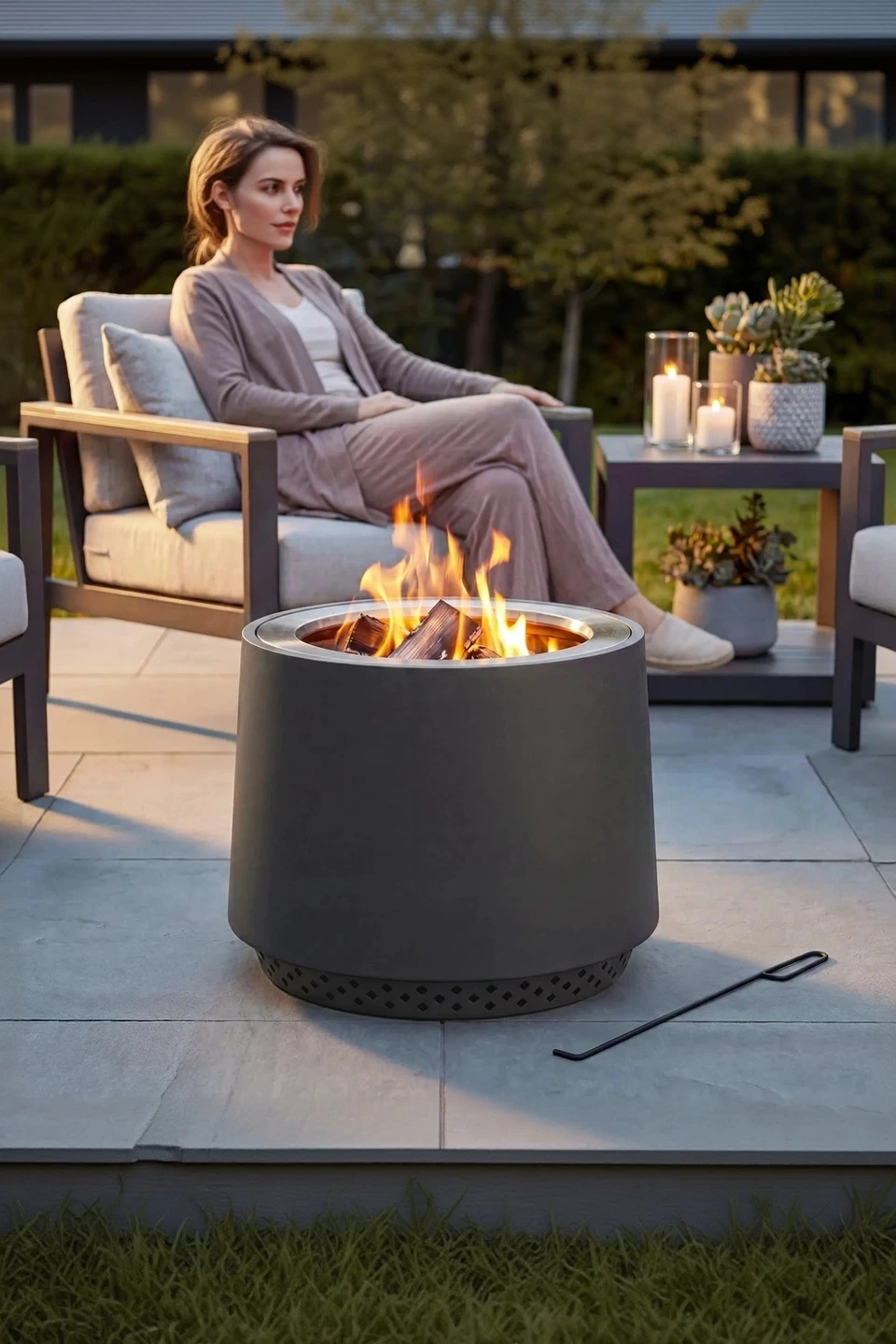
A fire pit doesn't need to hibernate when summer ends. In fact, treating it as a static seasonal accessory is a missed opportunity—your fire pit can anchor your garden's design year-round, evolving with the seasons while maintaining its status as the spot everyone gravitates toward. Whether you've invested in a statement piece or opted for something more understated, the key lies in how you dress the area around it, not just how you light it. Think of your fire pit zone as a garden room that simply changes its function and mood as the calendar turns.
Establishing the Footprint and Foundation
Before you layer in seasonal styling, you need to define the fire pit's territory. This isn't just about safety clearances (though those matter)—it's about creating a visual boundary that signals "this is a destination." A gravel bed, pavers, or decomposed granite creates both a practical fireproof surface and a design element that reads clearly across seasons, even when the pit isn't lit.
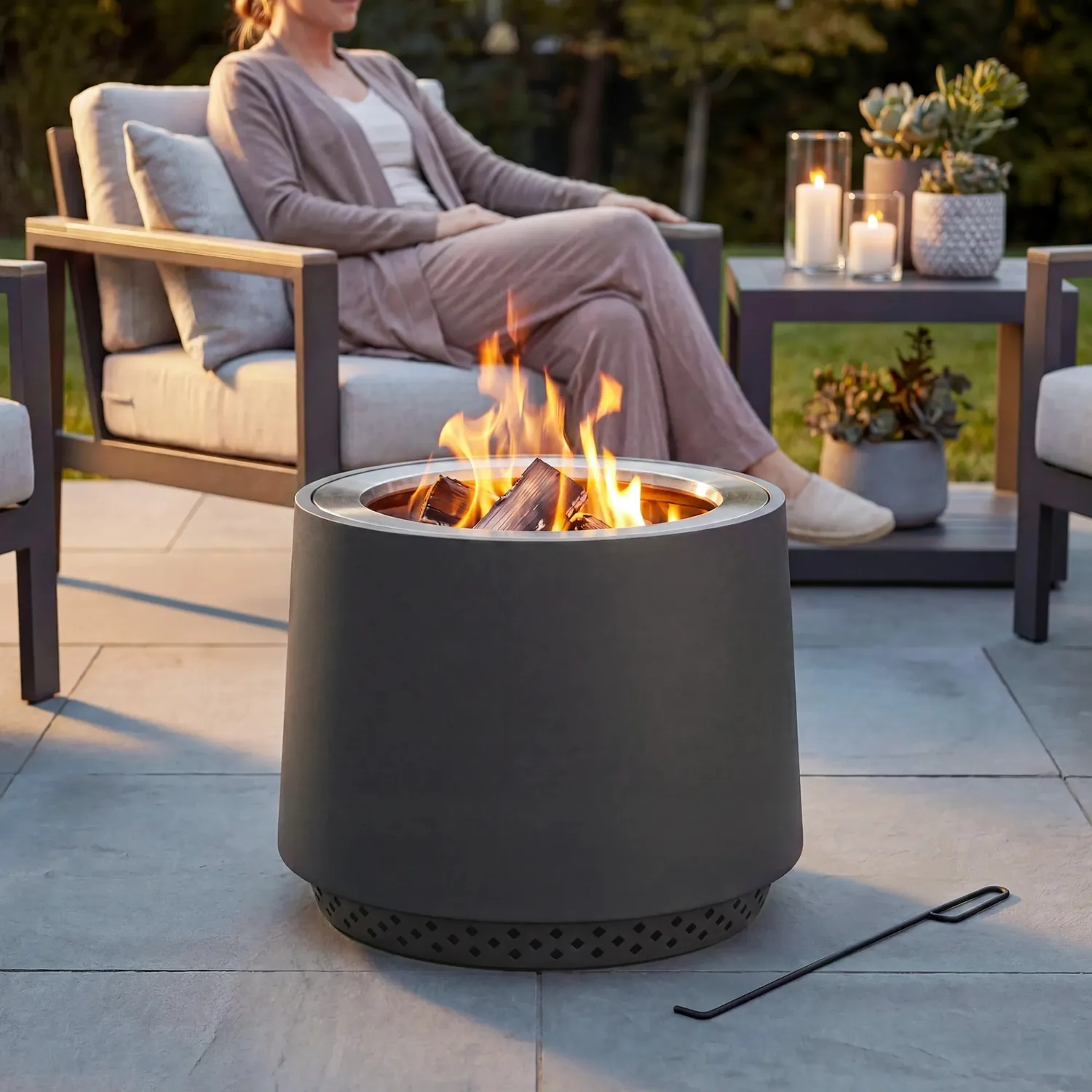
The radius of this zone should extend beyond the fire pit itself. For a standard 24-30 inch diameter pit, consider a hardscaped area at least six to eight feet across. This gives you room to position seating, allows for safe movement, and creates enough visual weight that the area doesn't disappear when spring perennials grow tall or autumn leaves scatter. If you're working with something more compact like a tabletop option, you can scale this down, but the principle remains: the fire pit needs its own defined footprint that persists regardless of what's blooming or dormant around it.
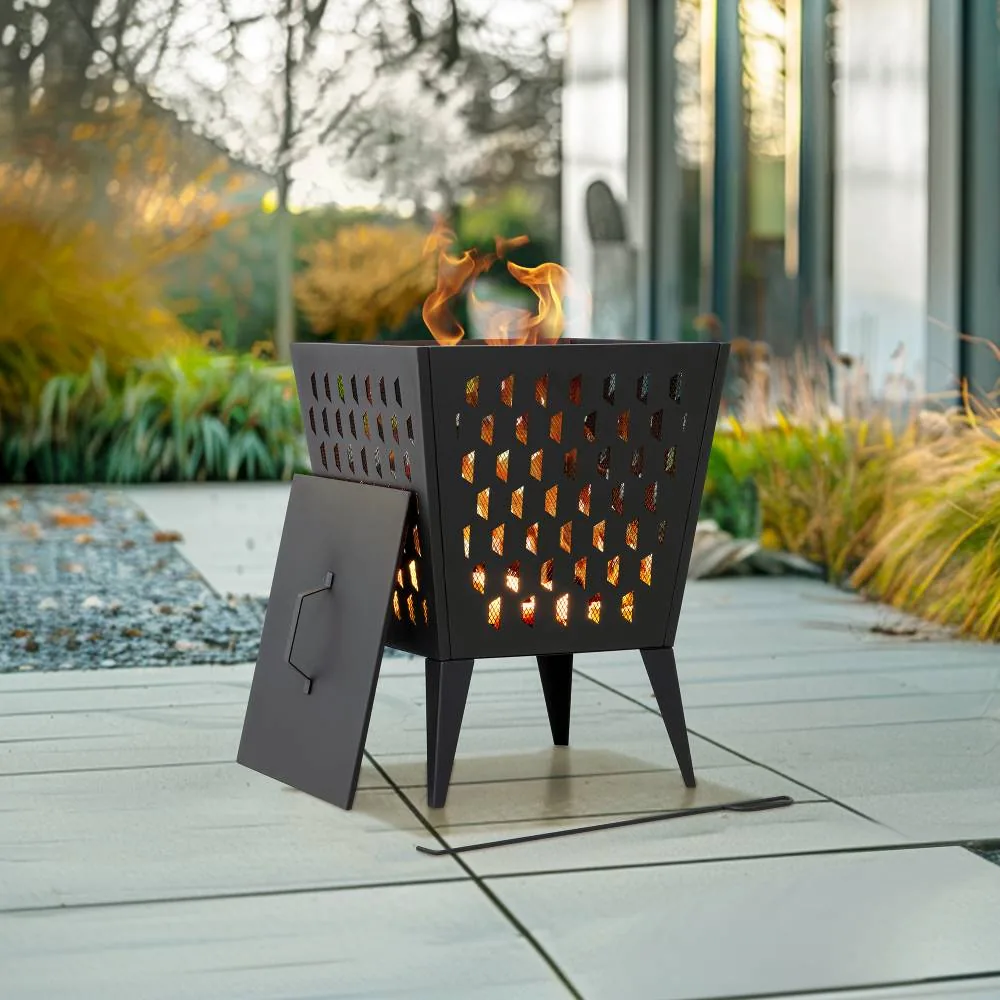
Edging makes this boundary permanent and intentional. Steel edging offers clean lines and longevity, while stacked stone creates a more organic transition into surrounding plantings. The SUNJOY 18 Inch Backyard Wood Burning Fire Pit with Fire Poker and Lid works beautifully in these bounded spaces—its classic bowl shape reads as sculptural even when cold, and the included lid means you can cap it during rainy seasons without compromising the visual composition.
Building the Seating Arc
Seating arrangement determines whether your fire pit becomes a true focal point or just another garden feature. The strongest configurations create an arc or three-quarter circle rather than a full ring—this keeps sightlines open to the rest of the garden and prevents the claustrophobic feeling of being trapped in a circle. Even when the fire isn't burning, this arrangement creates clear intentionality.
For year-round flexibility, choose seating that can weather the elements or be easily moved. Teak benches age gracefully outdoors, developing that silvery patina that actually enhances their presence through winter. Metal chairs with outdoor cushions you can swap seasonally give you color flexibility—jewel tones in fall, crisp whites in summer, evergreen plaids in winter. The key is maintaining the arc shape consistently. Your eye should always read the fire pit as the centerpiece, with seating as the supporting frame.
In winter, when you might not be using all the seating, resist the urge to scatter chairs elsewhere. A partially occupied seating arc still reinforces the focal point. Drape a weatherproof throw over one chair, let another collect a photogenic dusting of snow—these small compositions keep the area visually active even in dormancy.
Seasonal Layering Without Clutter
The mistake many people make is treating seasonal styling as an exercise in addition rather than substitution. Your fire pit area shouldn't accumulate decorative layers like sediment—it should transform. Each season gets its moment, then steps aside for the next.
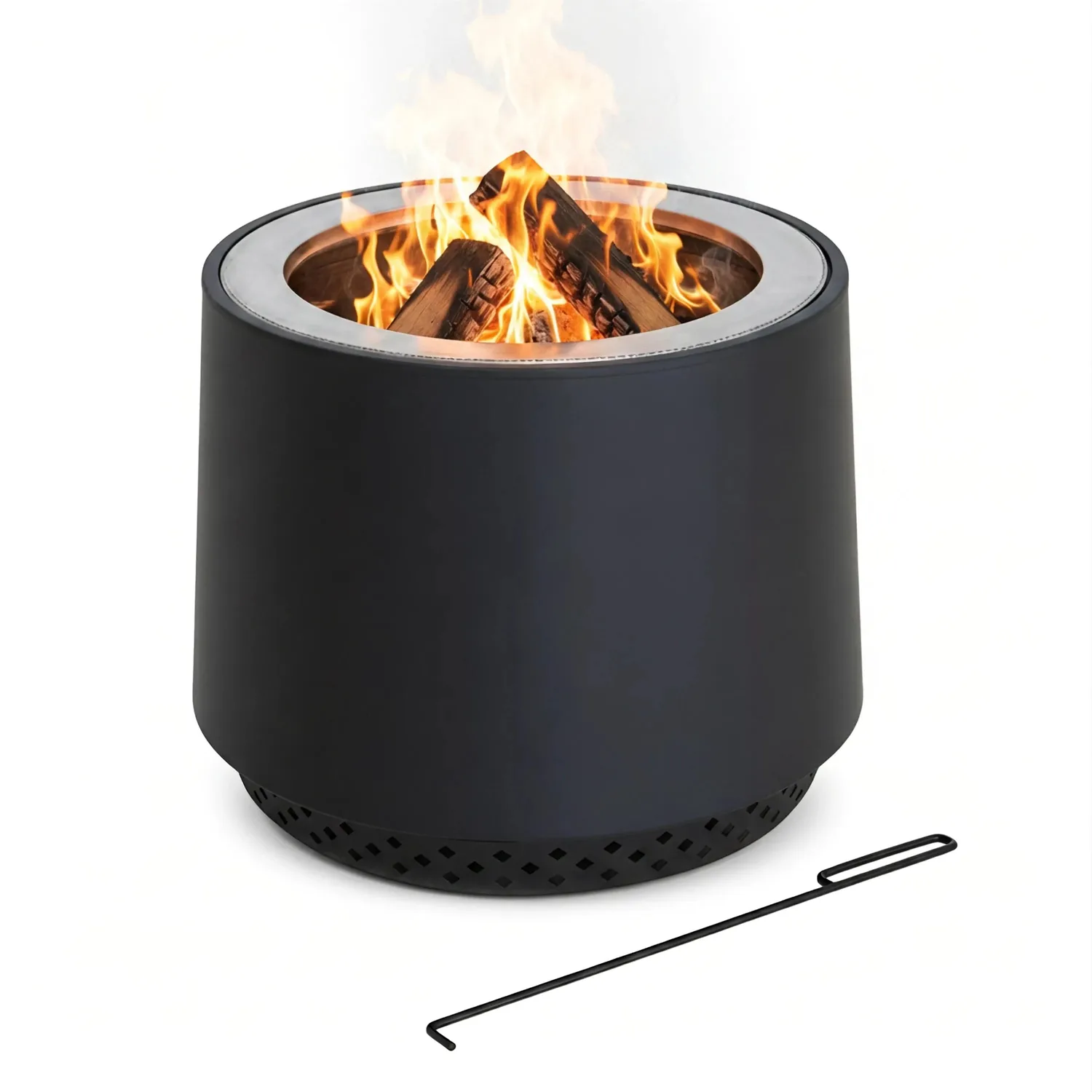
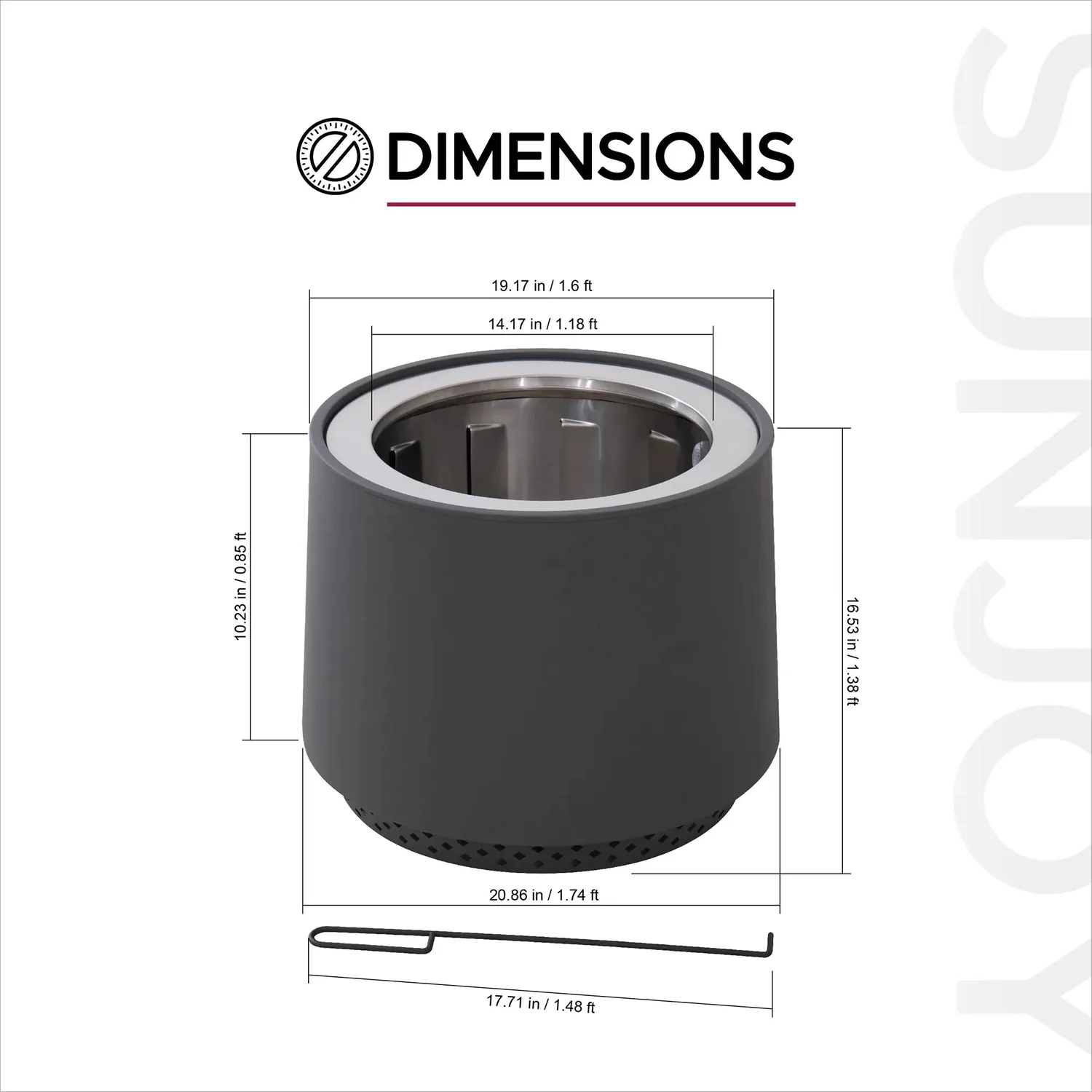
SUNJOY 21 Inch Cylindrical Stainless Steel Smokeless Fire Pit with PVC Cover and Poker - Gray
Sunjoy · Featured in this article
Spring calls for restraint. Let the fire pit stand quiet while early bulbs and flowering branches do the heavy lifting nearby. A single urn with forced branches positioned asymmetrically in the seating area provides vertical interest without competing. This is the season to clean the fire pit thoroughly, oil any metal components, and let its structure shine unadorned.
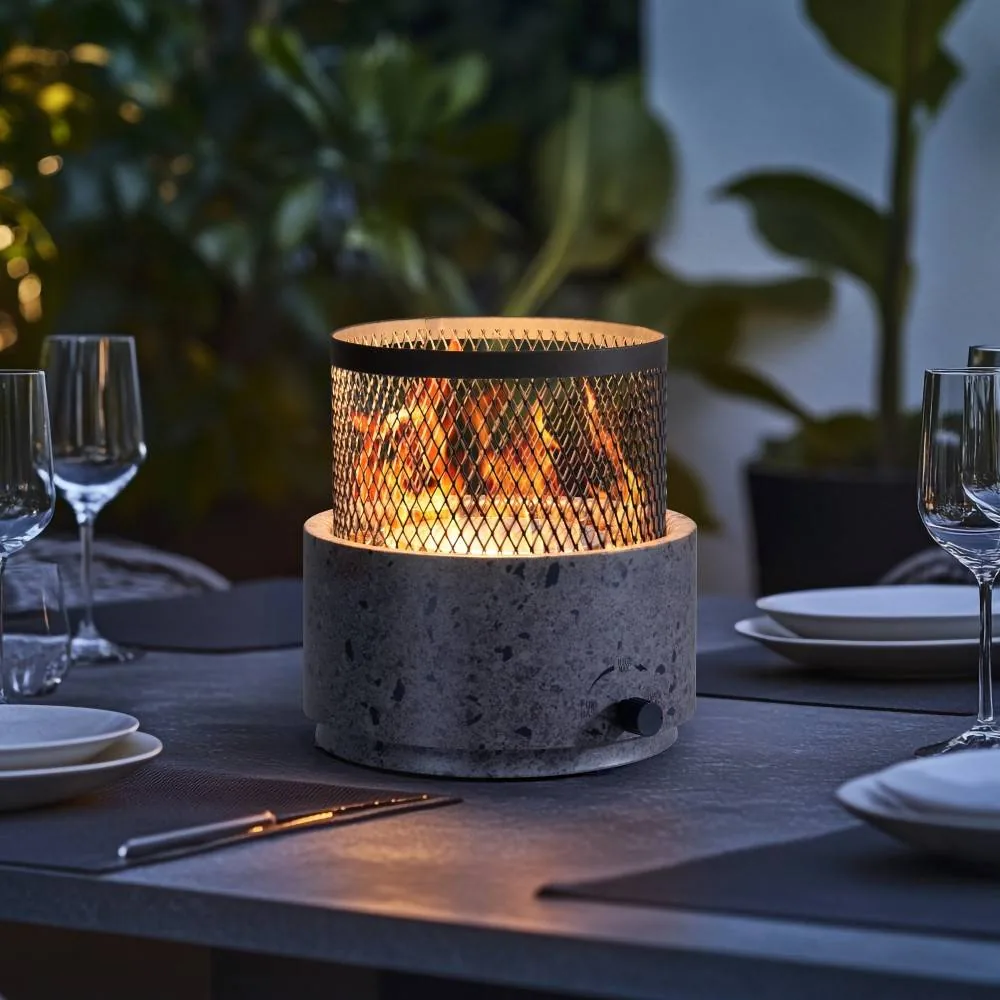
Summer invites pattern and textiles. Outdoor rugs define the seating zone with color and pattern—go bold here, since the surrounding garden is likely lush and can handle the competition. Cushions with global prints, ceramic garden stools as side tables, perhaps a large lantern (unlit, since you're likely lighting the fire pit itself on cool evenings). The SUNJOY Smokeless Tabletop Fire Pit with Stainless Steel Burner and Two Adjustable Flames makes an excellent addition to a summer coffee table near the main fire pit, extending the flame motif at a more intimate scale for twilight gatherings.
Autumn is peak fire pit season, and your styling should lean into that richness. This is when you can embrace the cozy clichés—woolen throws, hurricane lanterns with pillar candles, perhaps a stack of split wood positioned as a sculptural element even if you're using your fire pit for ambiance more than heat. Mums in rustic containers, ornamental grasses in the surrounding beds catching late-afternoon light, maybe a bowl of seasonal branches and seedpods on a side table. The fire pit earns its keep now, and the styling should celebrate its function.
The Winter Presence
Here's where most people falter—they assume a cold fire pit in a dormant garden has no role to play. Wrong. Winter is when your fire pit proves its worth as sculpture. The SUNJOY 21 Inch Cylindrical Stainless Steel Smokeless Fire Pit with PVC Cover and Poker exemplifies this beautifully—its stainless steel construction catches winter light, and when covered, maintains crisp geometry against snow or frost-touched grasses.
Style for winter by emphasizing structure over softness. Evergreen branches in tall containers flank the fire pit, providing vertical elements when perennials have died back. If you have a covered pit, arrange pinecones, birch logs, or preserved botanicals on top—the flat surface becomes a seasonal vignette. When you do light winter fires (and you should—they're magical), keep a dedicated storage bin nearby for fire tools and covers so the area stays tidy between uses.
The winter garden benefits from focal points that remain visually active, and a well-styled fire pit delivers this. Its horizontal plane contrasts with vertical evergreens, its circular shape offers relief from the linear severity of bare branches, and its very presence promises future warmth—a psychological comfort during the coldest months.
Lighting Layers Beyond the Flame
A fire pit that only glows when burning is underutilized. Strategic supplemental lighting keeps the area relevant even when the fire isn't lit and extends usability into shoulder seasons when you want ambiance without full-fire commitment.
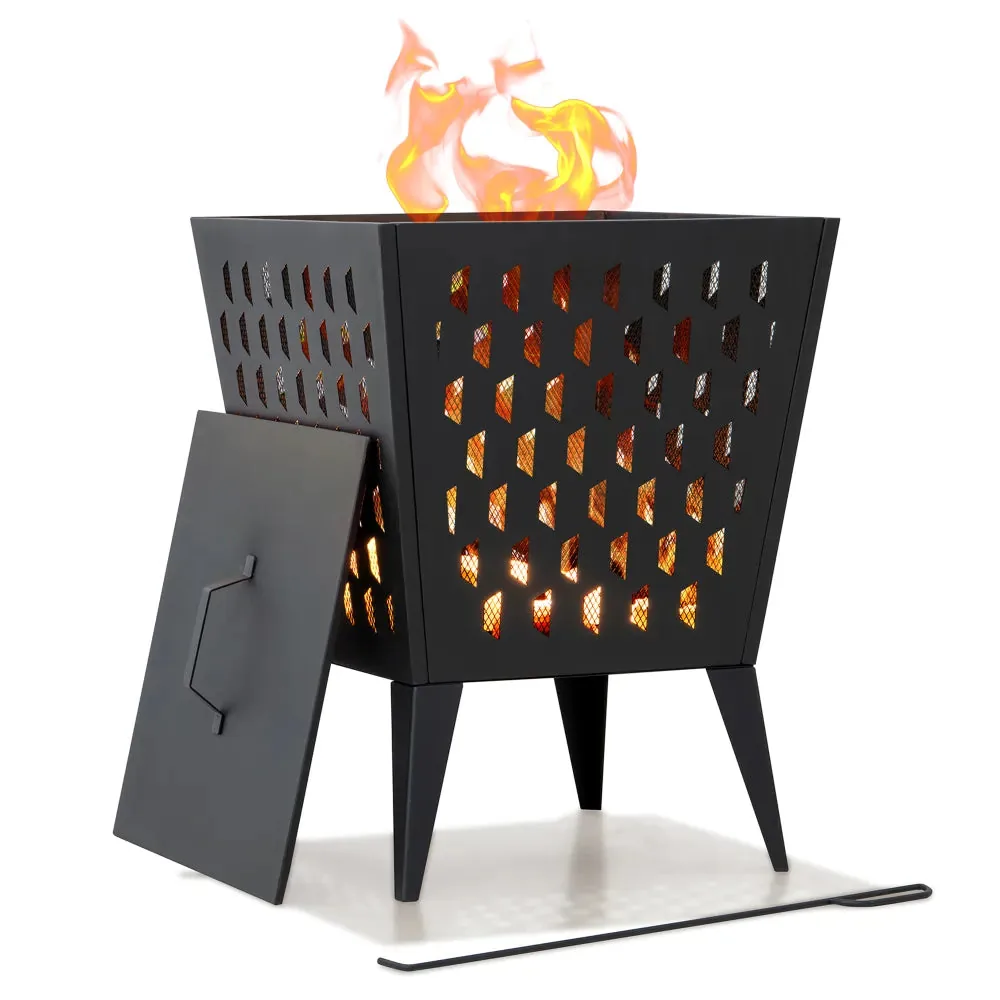
SUNJOY 18 Inch Backyard Wood Burning Fire Pit with Fire Poker and Lid
Sunjoy · Featured in this article
String lights overhead—but not the flimsy temporary kind. Invest in commercial-grade cafe lights with Edison bulbs on a dimmer. String them in a canopy pattern radiating from a central pole or tree, with the densest concentration over the fire pit area. This creates a room-like enclosure after dark and looks intentional even in daylight.
Ground-level path lights leading to the fire pit zone turn it into a destination that draws people through the garden. Solar stake lights work, but hardwired LED spots with brass or copper fixtures integrate better with a year-round design strategy. Position them to uplight nearby trees or architectural plantings—the fire pit area becomes a illuminated garden scene, not just a functional fire zone.
Lanterns and candle holders on surrounding surfaces provide flexibility. In summer, you might skip them entirely, letting the fire provide all the light. In spring or fall, when evenings are cool but you don't want a full fire, clusters of candles create sufficient ambiance. Choose lanterns substantial enough to stay put in wind—nothing undermines a sophisticated setup like lightweight lanterns toppling over.
Connecting to the Broader Garden
Your fire pit shouldn't float in isolation—it needs visual and physical connections to your garden's larger circulation and design. Paths matter, obviously, but so do sightlines. From your main seating area or kitchen windows, can you see the fire pit? Does its placement create a sense of discovery as you move through the garden, or is it awkwardly visible all at once?
The most successful fire pit zones maintain some selective screening. A low hedge, ornamental grasses, or a strategically placed garden sculpture or planter creates a soft visual barrier that makes the fire pit area feel like a room while keeping it accessible. This partial enclosure also provides wind protection, making cool-season fires more practical.
Consider how the fire pit relates to seasonal blooms and foliage. Spring bulbs and early perennials can naturalize around the hardscaped fire pit area, softening its edges when you're likely not using it frequently. Summer perennials might frame views toward it. Fall grasses create movement and texture that enhances the fire pit's stillness. In winter, the fire pit's warm metal or stone contrasts beautifully with frost-touched evergreens.
Maintenance access matters too—you need to be able to remove ash, sweep the surrounding area, and occasionally move seating without navigating an obstacle course. The best fire pit installations balance visual enclosure with practical accessibility, making the area easy to refresh between seasons.
---
This article connects to our broader journal coverage of garden design and seasonal outdoor styling. For additional inspiration and practical solutions, explore our curated garden decor collection, where you'll find fire pits, planters, and architectural elements that anchor your garden year-round.
Frequently asked questions about fire pit styling, seasonal transitions, and safety considerations are addressed in the section below.
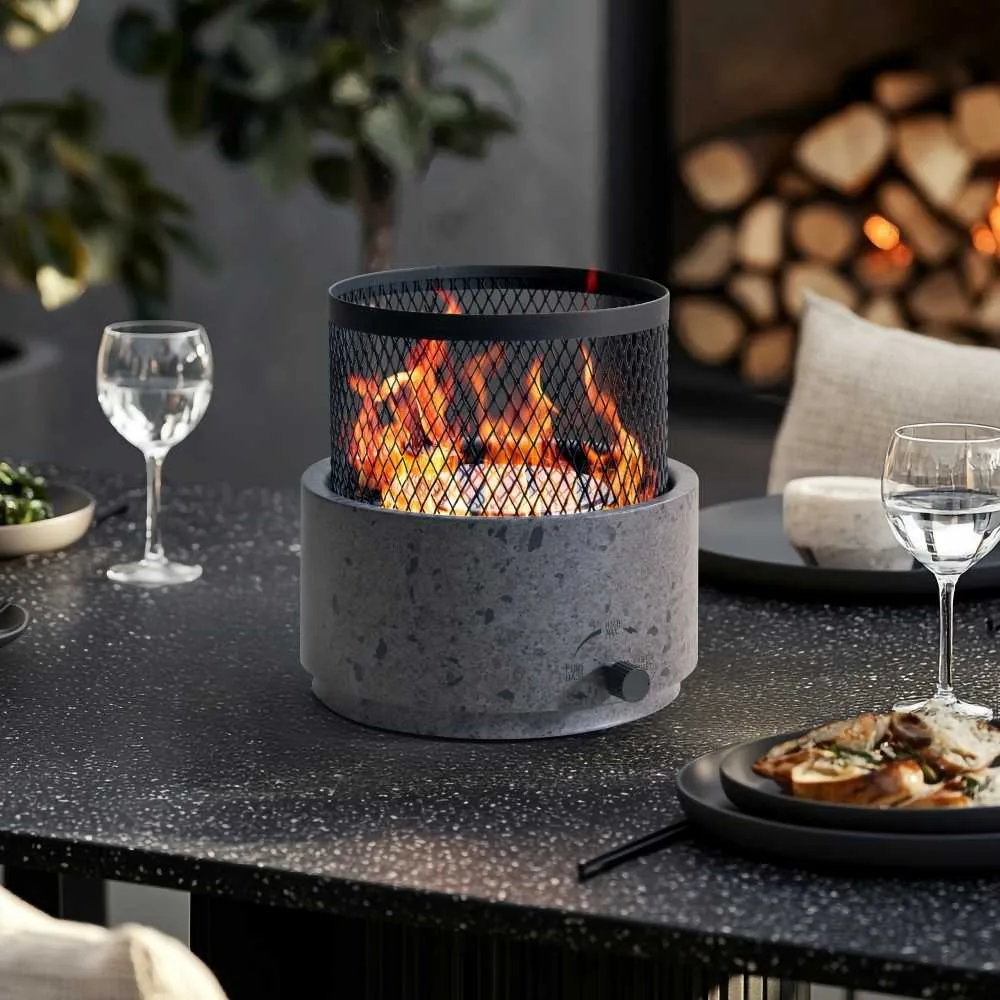
SUNJOY Smokeless Tabletop Fire Pit with Stainless Steel Burner and Two Adjustable Flames
Sunjoy · Featured in this article