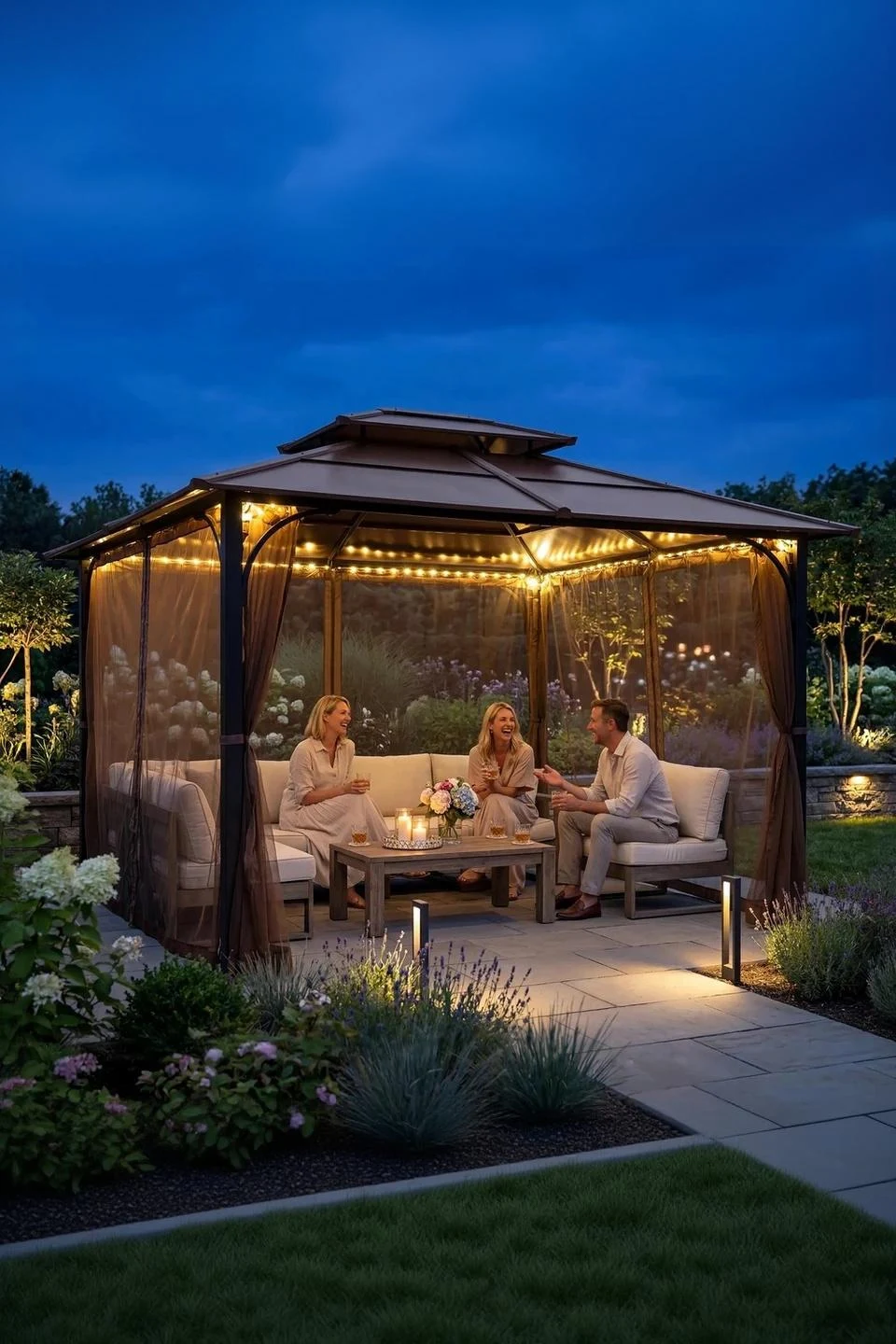
There's something magical about a gazebo after sunset—the way it becomes a glowing beacon in your backyard, a refuge from the mosquitoes, a place where conversations linger and wine glasses empty slowly. But here's the thing: most gazebos sit far from the house, and running electrical lines means permits, trenching, and a small fortune in contractor fees. The good news? You absolutely don't need hardwired electricity to create beautiful, functional lighting in your outdoor structure. With today's solar technology, battery-powered options, and clever design thinking, you can illuminate your gazebo as effectively as any wired setup—and often with more flexibility and charm.
Understanding Your Lighting Needs Before You Buy Anything
Before you start shopping for solar strings or battery lanterns, spend a few evenings in your gazebo at dusk. Notice when you lose comfortable light levels. Consider what you actually do out there: are you reading, dining, playing cards, or simply enjoying ambient conversation? These activities require vastly different lighting intensities. Task lighting for reading or food prep needs focused brightness—think 400-800 lumens concentrated where you need it. Ambient lighting for atmosphere can be much softer, in the 100-200 lumen range spread across multiple fixtures.
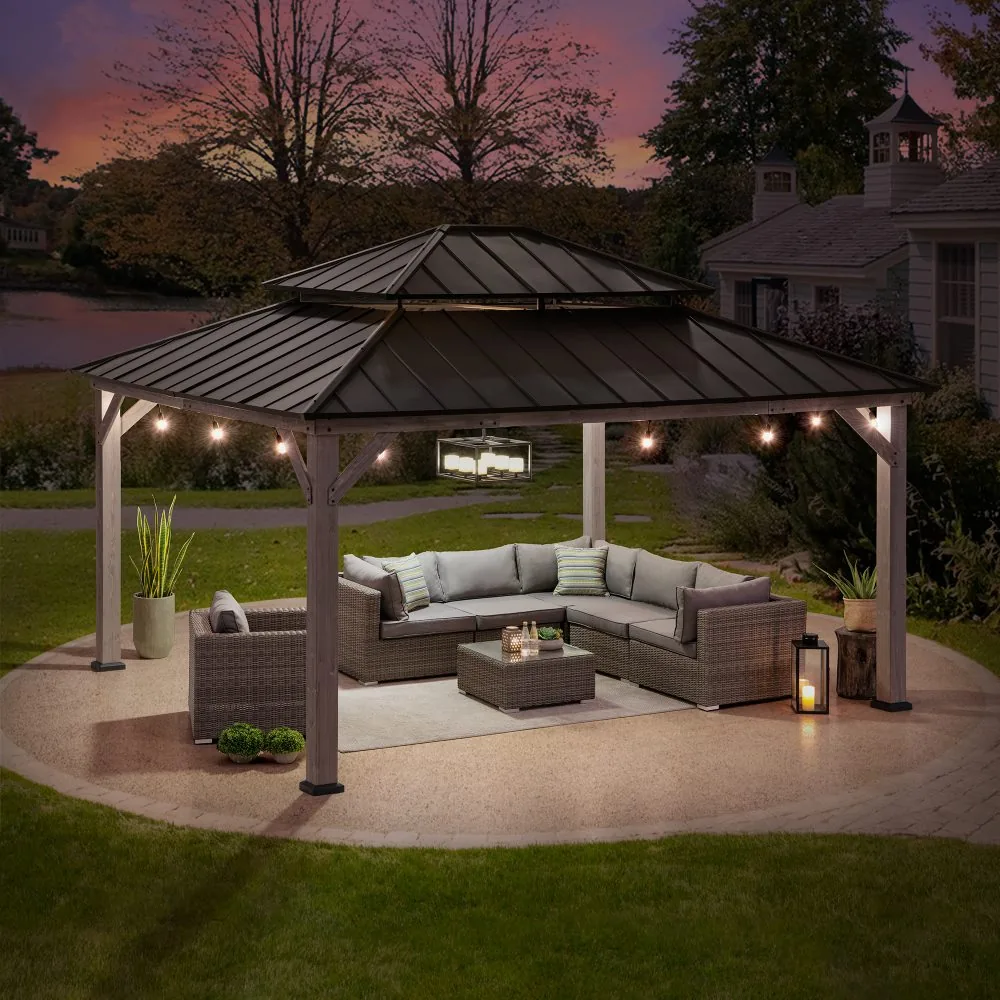
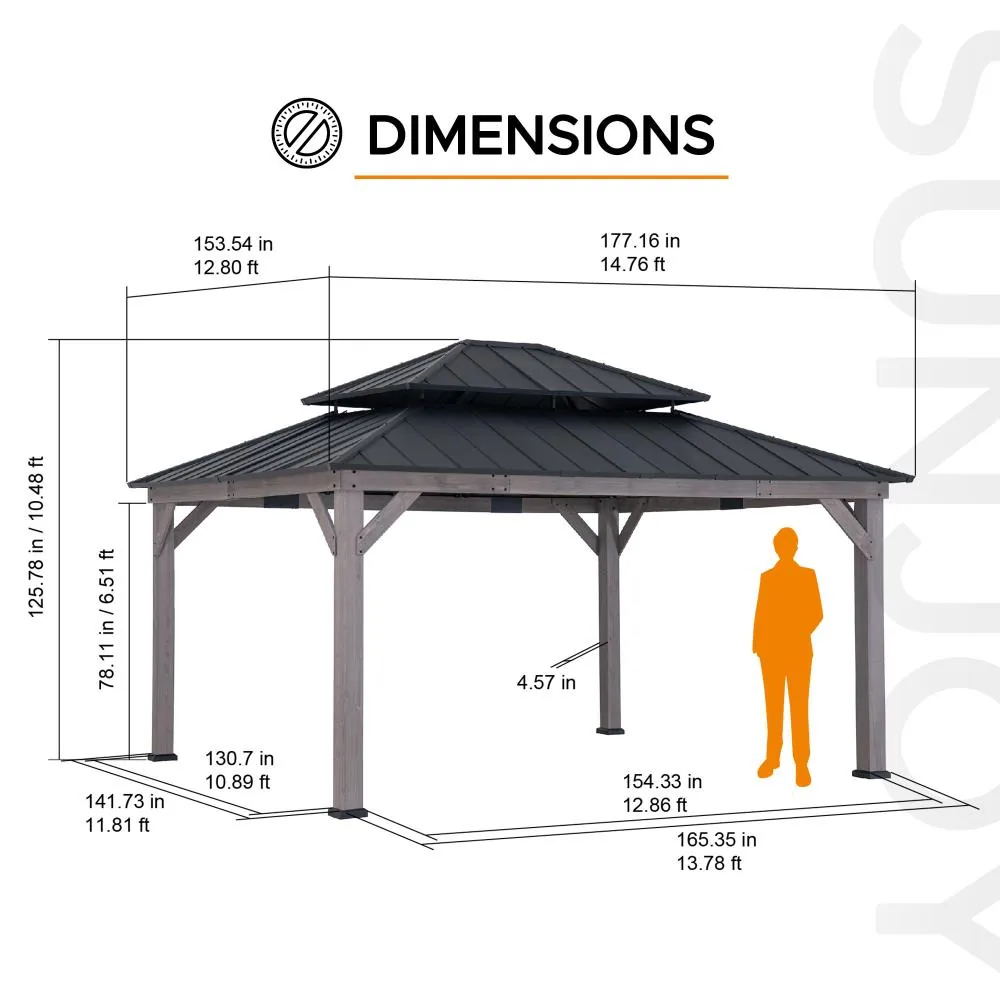
Also consider your gazebo's structure and materials. A 13x15 cedar gazebo with solid roof beams offers different mounting opportunities than an open-air pergola-style structure. Cedar and wood absorb light differently than metal frames, and you'll want fixtures that complement rather than fight your existing materials. Take photos of your space during the day and mark potential mounting points—you'd be surprised how often the perfect spot for a light fixture only becomes obvious when you're looking for it.
Solar String Lights: The Gateway Solution
Solar string lights have come absurdly far in the past five years. Early versions were dim, unreliable, and died by August. Modern solar strings with separate panel placement can deliver genuinely useful illumination for six to eight hours after a full charge. The key is positioning your solar panel where it actually receives direct sunlight—not under the gazebo roof where you want the lights.
Run your solar panel wire to a south-facing location (north-facing if you're in the Southern Hemisphere) at least ten feet from any tree cover. Most quality solar string sets include 15-20 feet of wire between panel and first bulb, giving you flexibility. Mount the panel on a shepherd's hook, fence post, or even the side of your house if it gets good sun exposure. The lights themselves can drape from rafter to rafter, wrap around support posts, or outline the gazebo perimeter.
For actual usable light—not just decoration—look for solar strings with Edison-style bulbs rated at least 15 lumens per bulb, or go with modern LED globes that hit 25-30 lumens each. You'll want a minimum of 400 total lumens for a standard 10x12 gazebo to feel genuinely lit rather than merely decorated. Yes, this costs more than the $19.99 big-box special, but the difference between "visible" and "useful" is worth the investment.
Battery-Powered Options That Don't Feel Temporary
Rechargeable battery lighting has become sophisticated enough that it no longer screams "camping trip" when installed properly. Look for fixtures with lithium-ion batteries that hold charge for 8-12 hours and can be recharged via USB-C. Many higher-end options now include motion sensors and dimming functions, letting you extend battery life significantly.
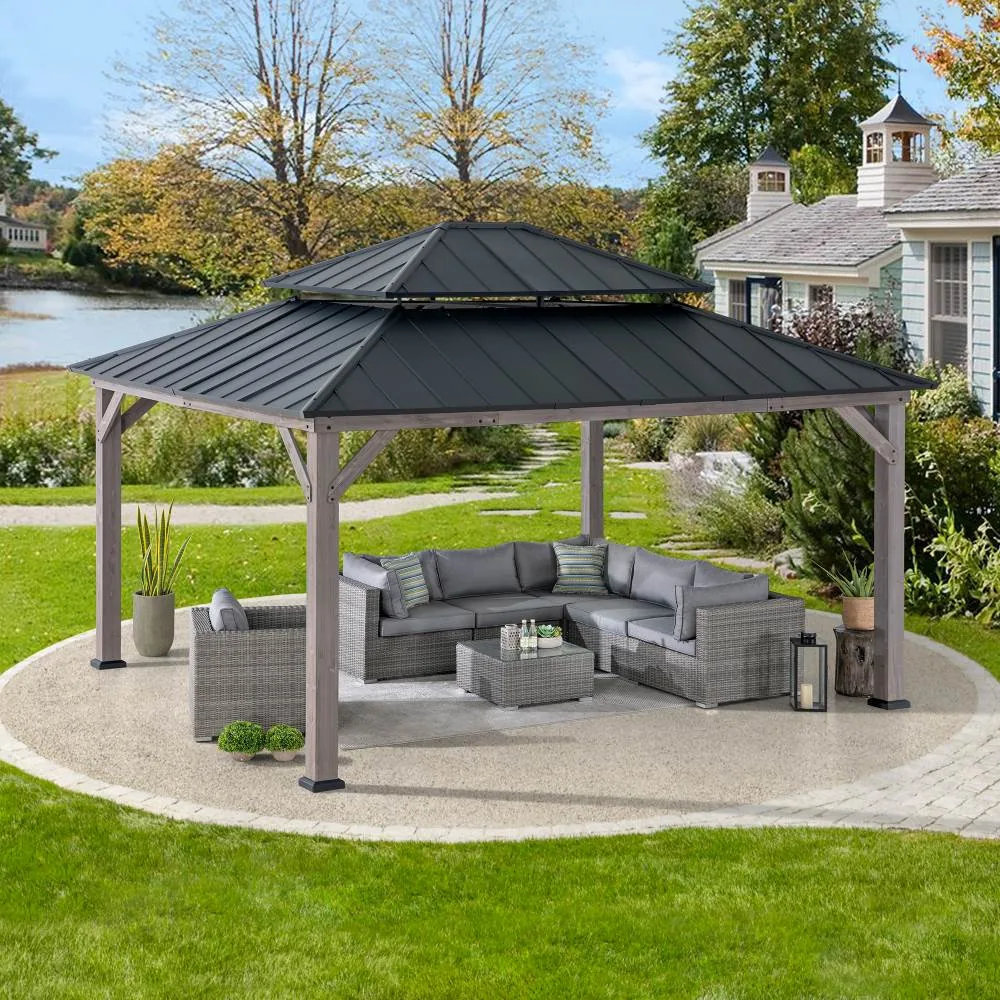
Transform Your Backyard with a Stunning 13x15 Cedar Gazebo - Elegant Outdoor Living Space
Sunjoy · Featured in this article
Puck lights with remote controls work beautifully under gazebo roof beams, casting light upward to bounce off the ceiling and create soft, indirect illumination. Install four to six around the perimeter, and you've got adjustable, shadow-free light that feels professionally installed. The remotes typically control on/off, brightness, and color temperature—switching from warm 2700K for evening ambiance to cooler 4000K when you need to see what you're eating.
For something with more presence, consider battery-powered lanterns designed for outdoor use. The category has evolved beyond Coleman camp lights into genuinely attractive fixtures with brass, copper, or powder-coated finishes. Hang two or three from ceiling hooks at varying heights for visual interest. The best part? You can bring them inside during winter or severe weather without leaving empty junction boxes behind.
Creating Layers with Multiple Light Sources
Professional lighting designers rarely rely on a single source, and neither should you. Layer your gazebo lighting the same way you'd light an interior room: ambient light for overall illumination, task light for specific activities, and accent light for visual interest. This might mean solar strings for ambient glow, a battery puck light over a side table for task lighting, and a solar spotlight in the garden just outside the gazebo for accent.
This approach also solves the single-point-of-failure problem. If your main solar string isn't fully charged because of three cloudy days, you've still got backup lighting from other sources. It also lets you tune your lighting to the occasion—full brightness for a dinner party, just accent lights for late-night conversations, everything on for game night.
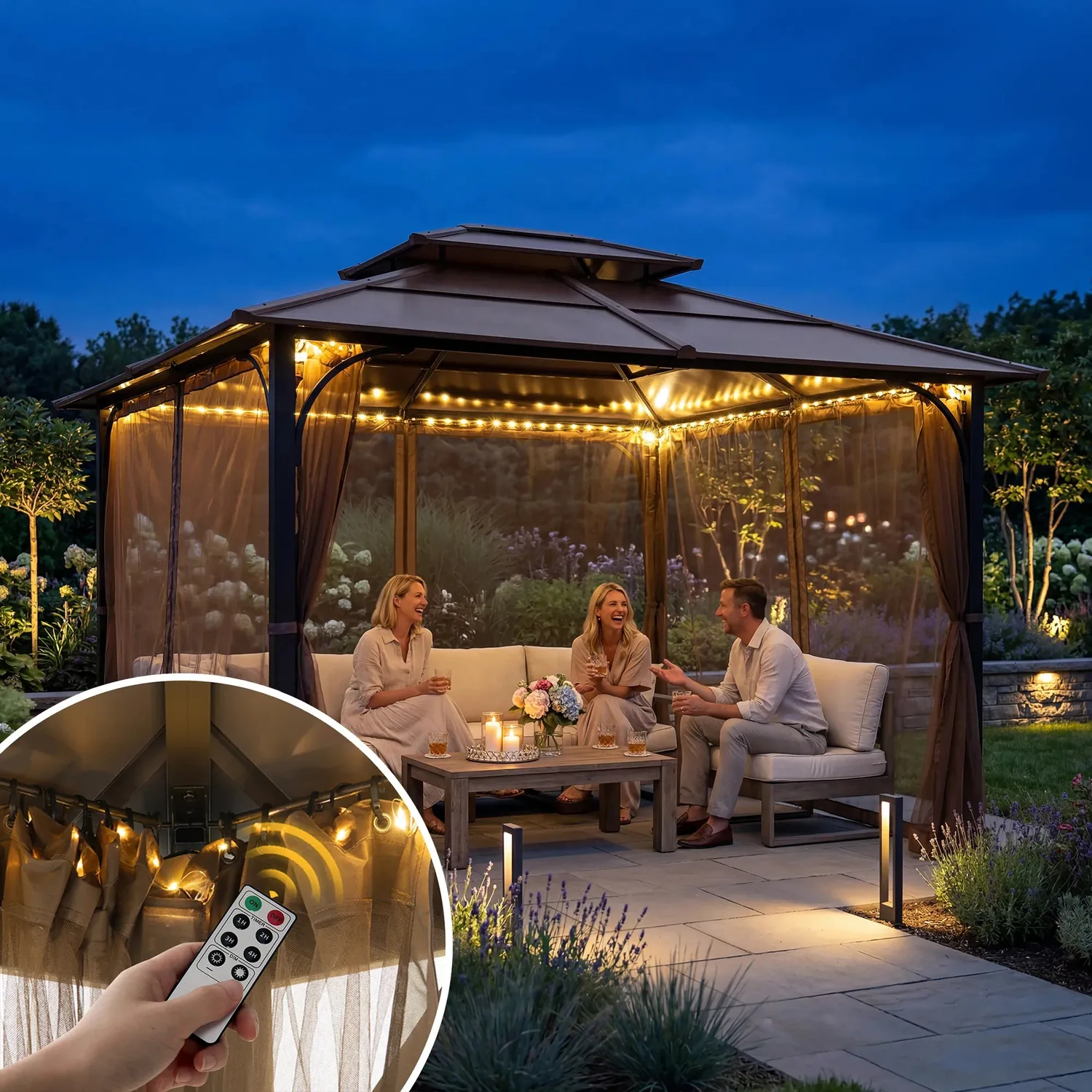
Consider adding mosquito netting with integrated LED lights if you're fighting insects in your region. These dual-purpose accessories solve two problems at once, creating a bug-free zone while adding a warm perimeter glow. The integrated lights are typically solar or battery powered, and because they're woven into the netting structure, they create a beautiful diffused effect rather than harsh points of light.
Practical Installation Without Professional Help
Here's what you actually need to install wireless lighting: a ladder, command hooks or small eye screws, zip ties, and possibly a cordless drill. That's it. Most battery and solar fixtures weigh under two pounds, meaning they don't require structural support—just secure attachment points.
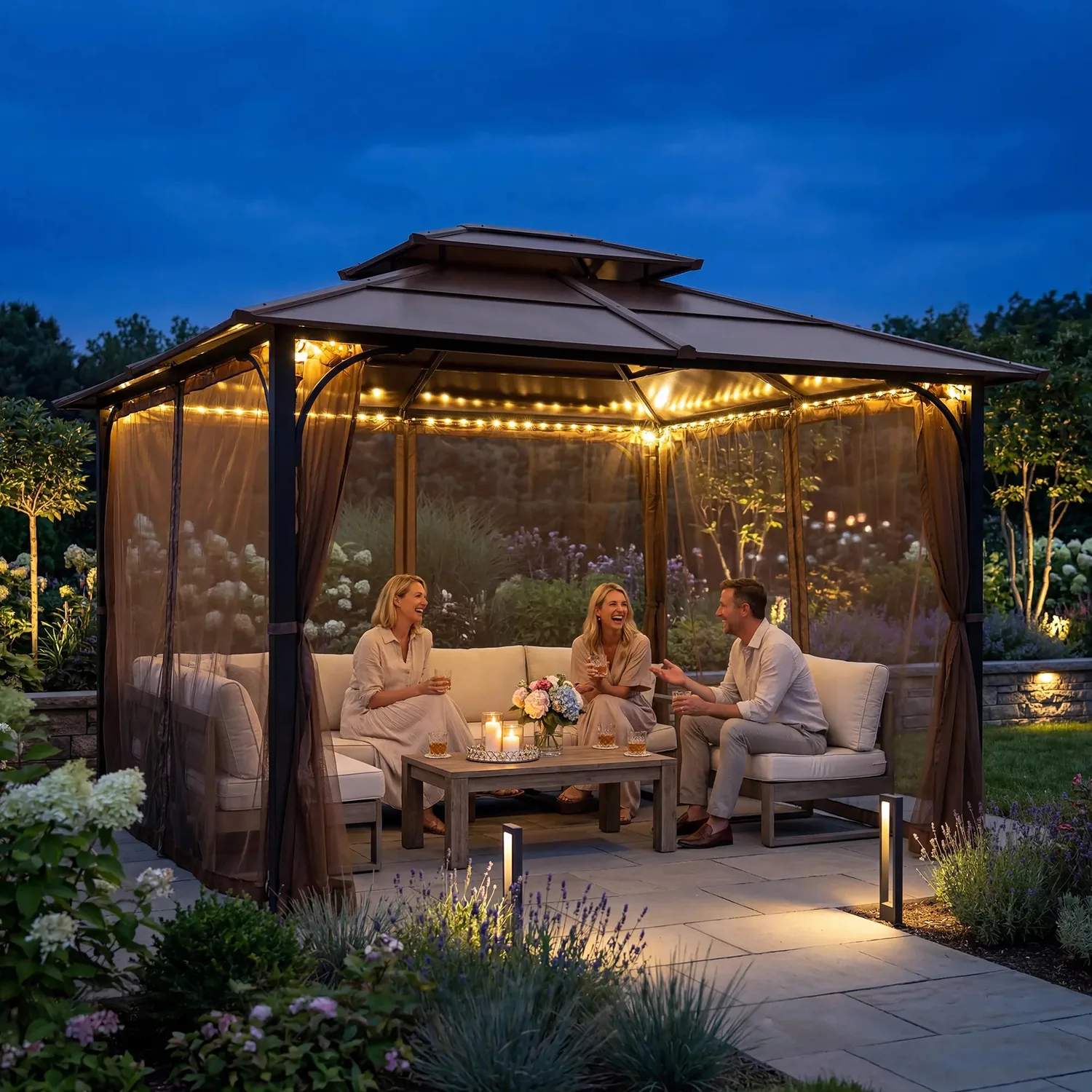
Transform Your Gazebo: Mosquito Netting with Warm LED Lights for 10x12 Hardtop
Sunjoy · Featured in this article
For string lights, eye screws twisted into wooden rafters provide the most secure mounting, but if you're hesitant to drill into your structure, heavy-duty outdoor command hooks (the kind rated for 5+ pounds) work surprisingly well on smooth surfaces. Space them every 18-24 inches along your planned light path, allowing for gentle swoops rather than tight pulls. Zip ties in dark colors can secure wires to posts or beams invisibly from ground level.
When hanging heavier fixtures like lanterns, always use proper hardware rated for outdoor use. Stainless steel eye bolts with locking nuts will outlast your gazebo. Pre-drill slightly smaller than your bolt diameter to avoid splitting wood, and add a dab of silicone sealant around the hole to prevent water intrusion.
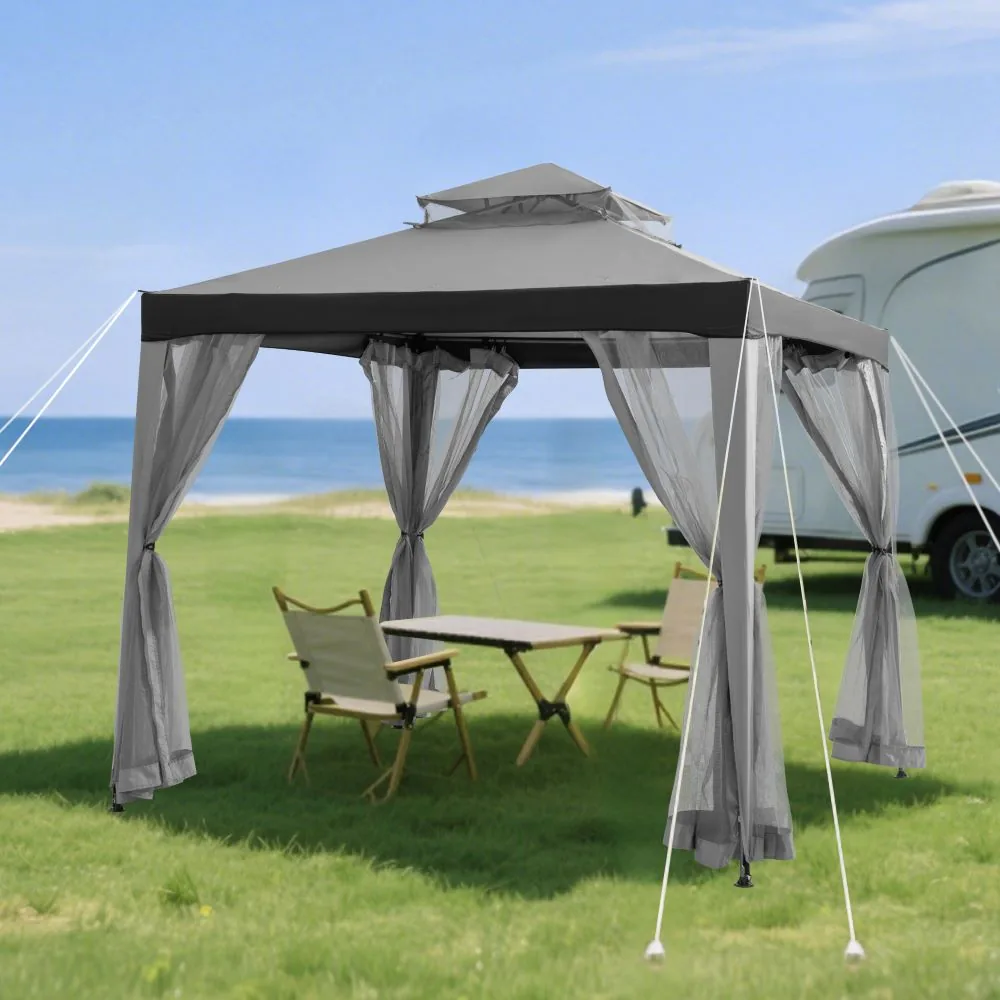
For smaller gazebo structures, you might need to get creative with placement to avoid overwhelming the space. A single statement lantern hung from the center peak can provide ample light in an 8x8 space, supplemented by a couple of solar votives on side tables. The key is proportion—your lighting should enhance the structure, not dominate it.
Maintenance and Seasonal Considerations
Solar panels accumulate dust, pollen, and bird droppings, all of which dramatically reduce charging efficiency. Wipe yours down monthly with a soft cloth and mild soap solution. This single habit can double your effective light output. Similarly, check battery contacts for corrosion every few months, especially in humid climates. A quick scrub with a pencil eraser restores conductivity when you notice dimming.
Before winter, bring battery-powered fixtures inside and store solar panels in a garage or shed. Lithium batteries shouldn't be stored fully depleted, so charge everything to about 50-70% before storage. Solar panels can technically handle freezing temperatures, but ice buildup can damage the photovoltaic surface, and the panels can't charge through snow anyway.
Consider investing in lighting specifically rated for your climate zone. Fixtures marketed as "all-weather" often mean they'll survive light rain, not Minnesota winters or Arizona summers. Look for IP65 rating or higher for true weather resistance—IP65 means dust-tight and protected against water jets, which translates to "actually outdoor-safe."
When to Upgrade Your Power Strategy
After living with wireless lighting for a season, you might decide certain elements justify electrical work. Maybe you've added a hot tub adjacent to the gazebo and running one electrical line suddenly makes sense for multiple uses. Or perhaps you're hosting weekly gatherings and tired of charging batteries. That's fine—start with the hardest-to-wire zones using the methods above, then add electrical where it delivers maximum value.
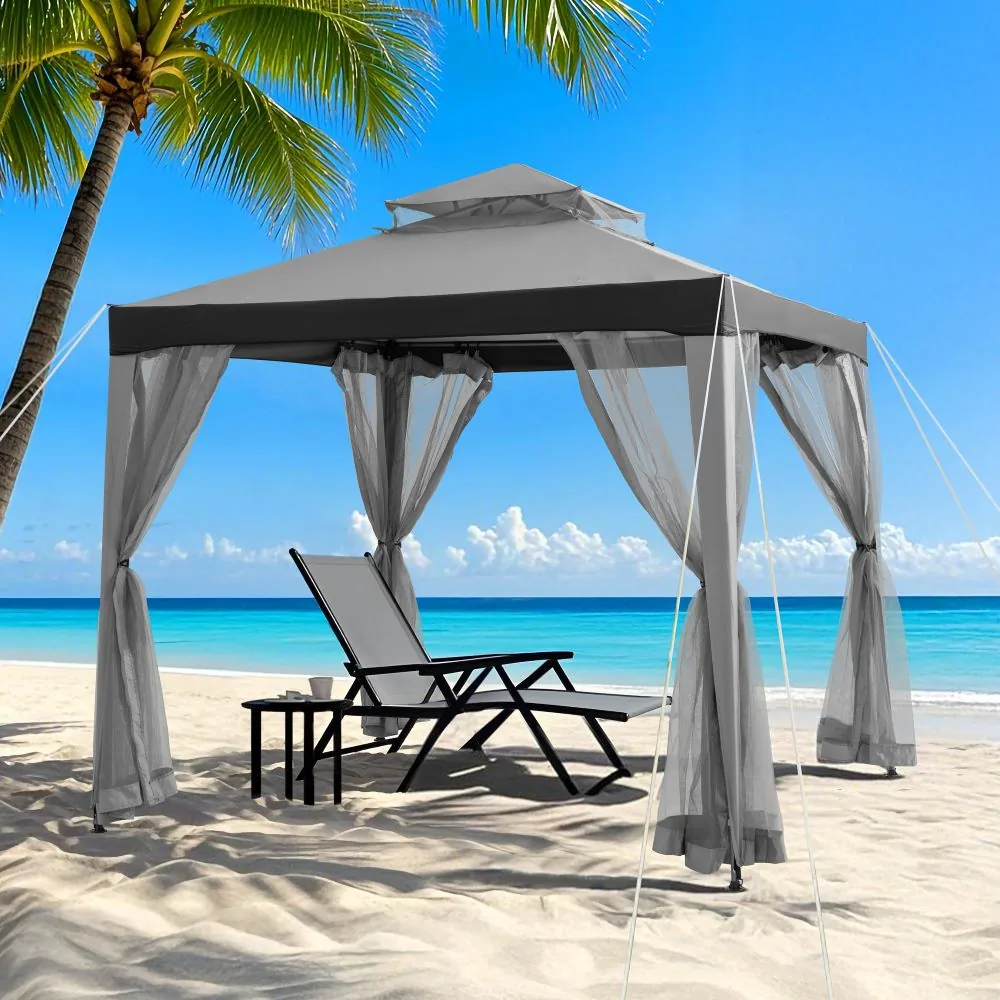
Transform Your Backyard: 8x8 Soft Top Gazebo with Mosquito Netting - Outdoor Living Dreams
Sunjoy · Featured in this article
But here's what we've found: most people who successfully light their gazebos without electrical lines never bother upgrading. The flexibility of moving lights seasonally, the lack of ongoing electrical costs, and the freedom from GFCI trips during rain events makes wireless lighting genuinely preferable once properly implemented. Browse through our full collection of outdoor umbrellas and gazebo accessories to see how modern shade structures and lighting work together seamlessly.
The evening-lit gazebo isn't a compromise on your vision—it's often an improvement. You get light exactly where you want it, changed as easily as moving a lamp, with none of the permanent infrastructure that ties you to decisions made on a random Saturday three years ago.
Frequently Asked Questions
Common questions about gazebo lighting without electrical work are addressed in the FAQ section below.