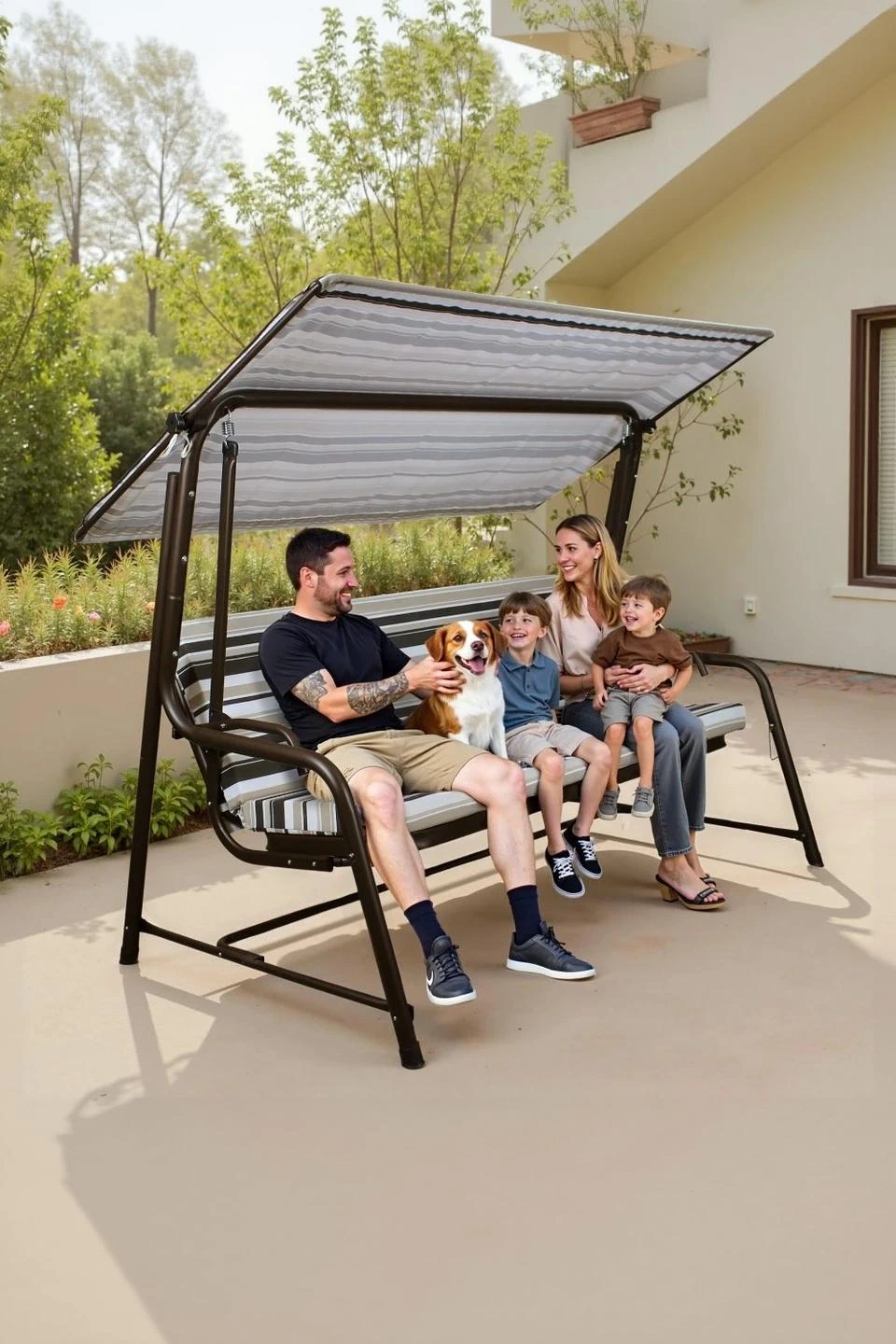
There's something deeply satisfying about finding the perfect patio swing—one that transforms your outdoor space into a retreat where afternoon naps feel luxurious and evening conversations linger. But here's the thing: even the most beautifully designed swing won't work if it's the wrong size for your space. Too large, and it overwhelms your patio or garden, making everything feel cramped. Too small, and it looks lost, leaving you with awkward gaps and wasted potential. The right swing size isn't just about measurements—it's about understanding how you'll actually use your outdoor space and who you'll share it with.
Understanding Swing Capacity and Real-World Comfort
Manufacturers label swings by seat count—2-seat, 3-seat, 4-seat—but these numbers can be misleading. A 2-seat swing doesn't always mean two adults will sit comfortably side by side for hours. It means two people can technically fit, which might translate to cozy (romantic) or cramped (annoying), depending on the actual seat width and your expectations.
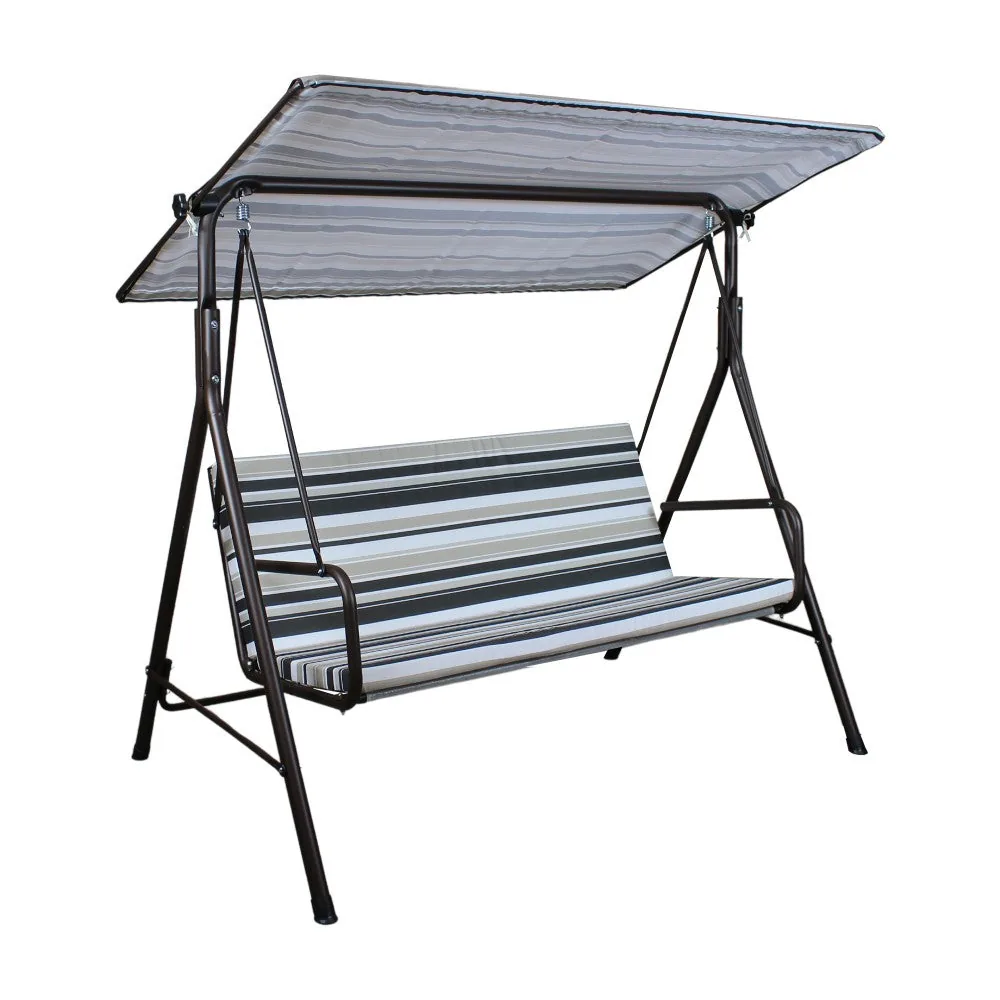
Most 2-seat swings measure between 47 and 52 inches wide. That's reasonable space for two adults who don't mind touching shoulders, or one person who wants to sprawl with a book and a throw pillow. The SUNJOY 2-Seat Italian-Made Patio Swing Chair with Adjustable Canopy and Cushions – Stripe, for instance, hits that sweet spot for couples or solo relaxation without dominating a modest patio footprint.
Three-seat swings typically span 65 to 75 inches, offering genuine room for three people or luxurious space for two. This is the Goldilocks size for many households—versatile enough for family use but not so massive that it demands a sprawling yard. Four-seat swings, meanwhile, can stretch to 80 inches or more, essentially functioning as outdoor daybeds. They're glorious for afternoon naps or entertaining, but they require serious real estate.
Measuring Your Available Space (The Non-Negotiables)
Before you fall in love with any swing, grab a tape measure and get real about your space. You need three critical measurements: total width, clearance depth, and overhead height.
For width, measure the area where you're considering placing the swing, then subtract at least 18 to 24 inches on each side. This buffer isn't optional—it's the minimum clearance you need for safe swinging motion and comfortable movement around the piece. A swing that technically "fits" but leaves only 6 inches on each side will feel oppressive and create traffic flow problems.
Depth is equally crucial. Most patio swings need 6 to 8 feet of clearance from the back of the swing's arc to any wall, railing, or obstacle behind it. Measure from where the swing will hang to the nearest structure, then test the full range of motion. That gentle, soothing swing you're imagining requires real space. If your patio is only 8 feet deep, a large swing will dominate the entire area and limit your ability to arrange other seating or planters.
Overhead clearance matters too, especially if you're installing under a pergola, covered porch, or low-hanging tree branches. Account for the swing's overall height including any canopy, plus an additional 6 to 12 inches for chain or rope length adjustment. Nothing kills the vibe faster than a canopy that scrapes against ceiling beams every time you push off.
Balancing Swing Size with Your Overall Furniture Layout
A patio swing rarely lives alone. It shares space with side tables, planters, grills, dining sets, and pathways. The key to choosing the right size is visualizing your outdoor living setup as a complete ecosystem, not just isolated pieces.
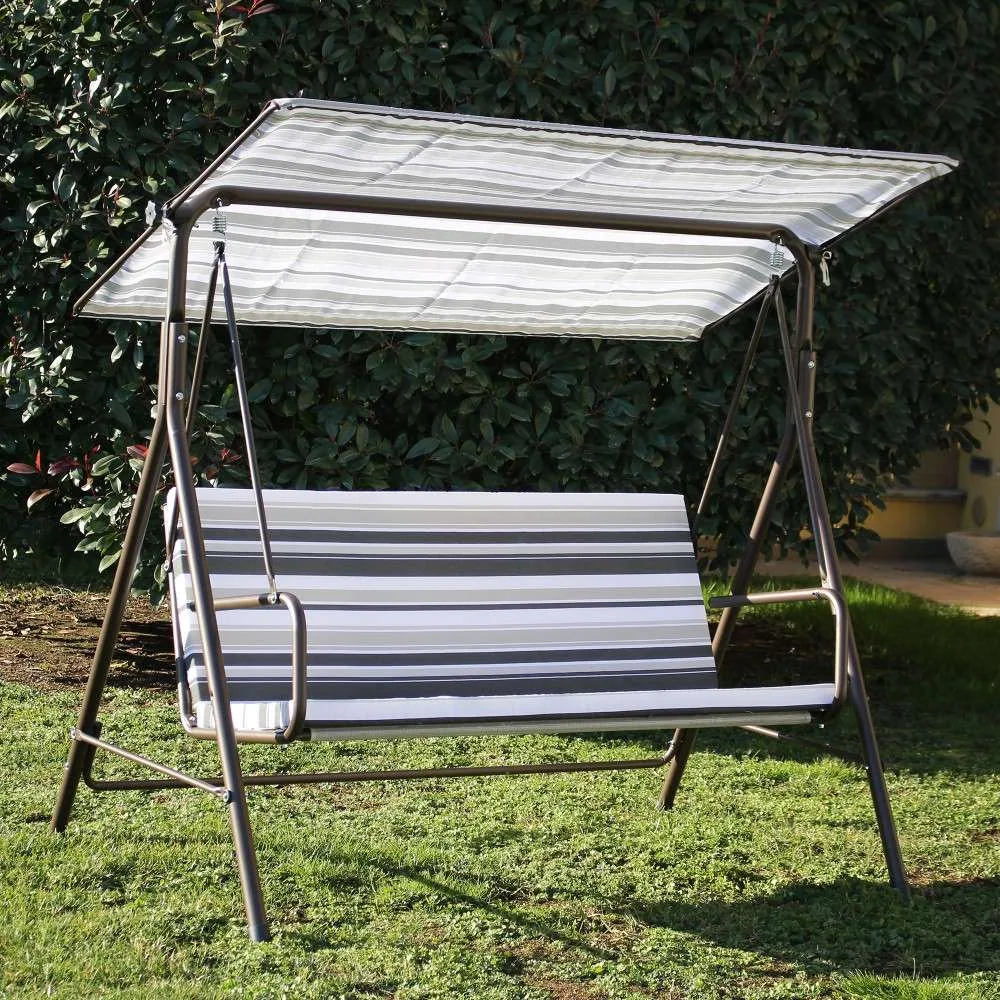
SUNJOY 2-Seat Italian-Made Patio Swing Chair with Adjustable Canopy and Cushions – Stripe
Sunjoy · Featured in this article
If your patio already hosts a dining set or sectional seating arrangement, your swing becomes a supplementary lounging zone. In this scenario, a 2-seat swing often makes more sense than a sprawling 4-seater. It adds functionality without competing for dominance or forcing you to eliminate other pieces you use regularly.
Consider traffic patterns too. People need clear paths to move from the house to the yard, from the grill to the dining table, from the garden to the seating areas. A properly sized swing respects these invisible corridors. Sketch your layout on graph paper or use painter's tape on your patio to mark full-scale footprints before committing. Live with these boundaries for a few days. Do you naturally walk around them comfortably, or do you constantly adjust your path?
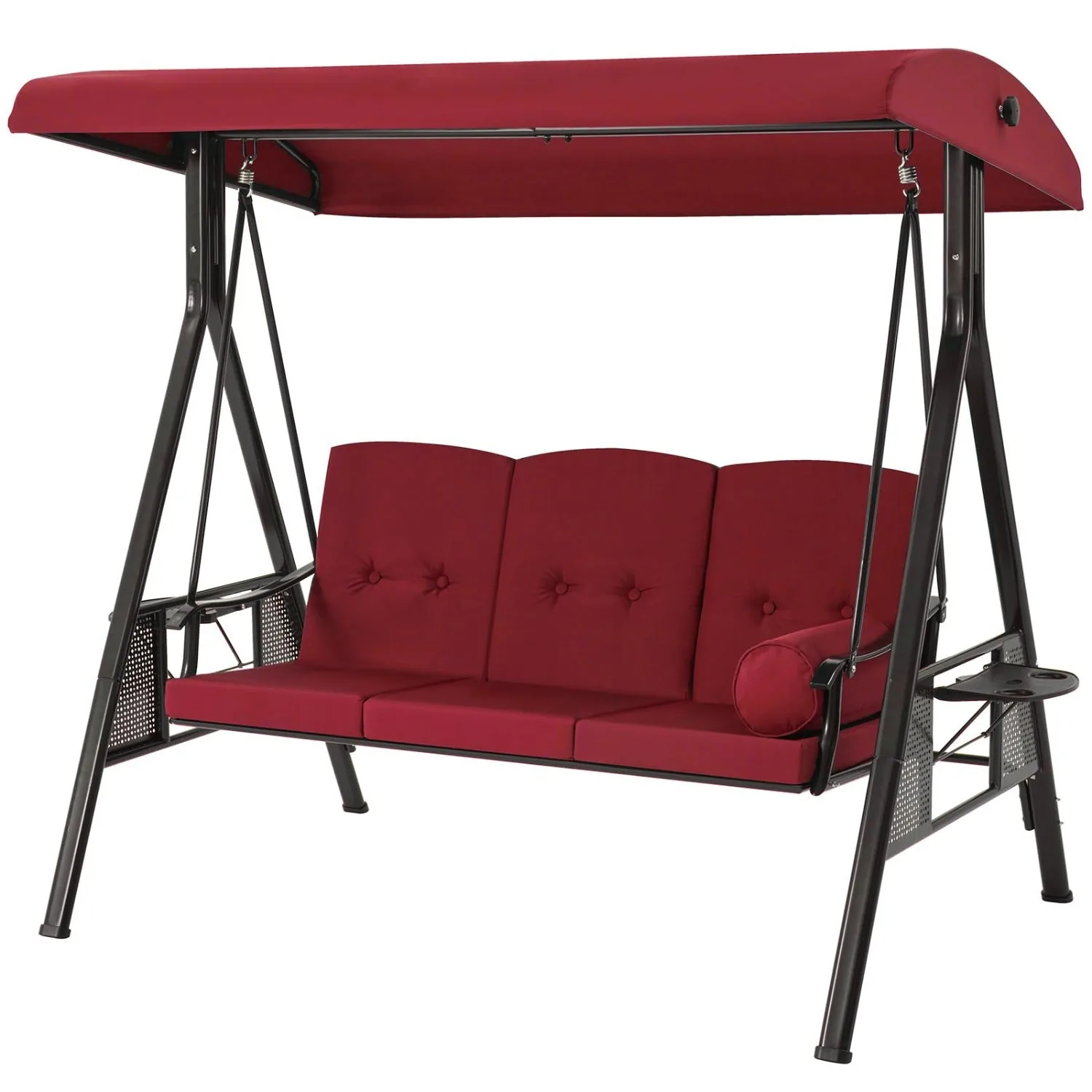
For covered porches, the swing often becomes the primary seating element, which changes the calculation. Here, you might opt for something more substantial—a 3-seat option like the YODOLLA 3-Seat Patio Porch Swing Chair, Red gives you versatility for both intimate conversations and family gatherings without overwhelming a typical 12x8-foot porch footprint.
Matching Swing Size to Your Entertaining Style
How you actually use your outdoor space should drive your size decision more than any other factor. Be honest about your lifestyle. Are you hosting weekly barbecues with extended family, or is this a private sanctuary for morning coffee and sunset unwinding?
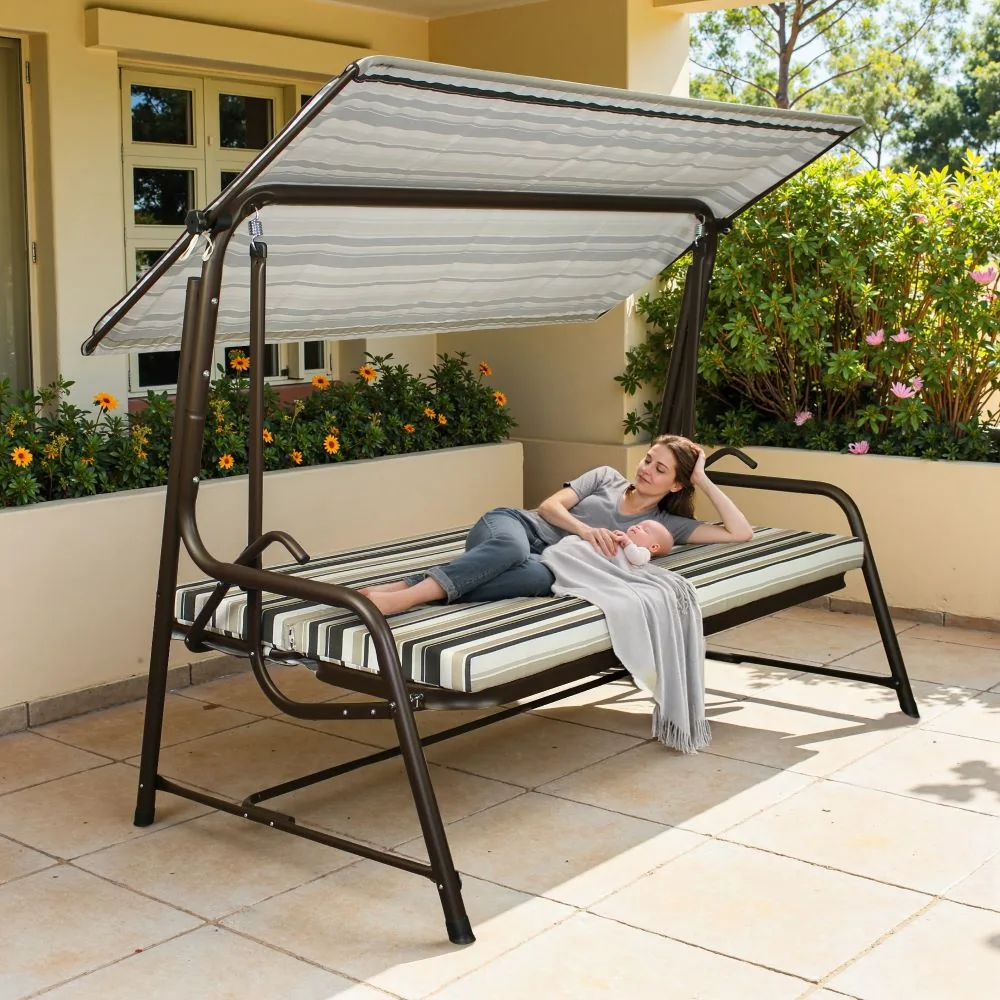
For dedicated entertainers, larger swings function as conversation hubs and statement pieces. A 4-seat configuration becomes an attraction—a place where guests naturally gravitate and linger. The SUNJOY 4-Seat Italian-Made Patio Swing Chair / Bed with Adjustable Canopy and Cushions – Stripe transforms a generous patio into a genuine outdoor room, offering flexible seating that accommodates different group sizes throughout the day.
But if you're more of a quiet mornings and intimate evenings household, resist the temptation to oversize. A smaller swing creates coziness rather than empty space. It invites snuggling rather than spreading out. Two people on a 2-seat swing feel connected; the same two people on opposite ends of a 4-seat swing feel like they're in different zip codes.
Think about seasonal use too. If you're in a climate where outdoor living is truly three-season or year-round, you'll get more value from a size that accommodates various scenarios. If it's primarily a summer-only indulgence, optimize for your most common use case rather than the occasional large gathering.
Special Considerations for Specific Swing Styles
Not all swings are created equal, even within the same seat-count category. Canopied swings add both visual and physical bulk compared to open-frame designs. That overhead shade is wonderful for afternoon comfort, but it makes the entire piece feel larger and requires additional clearance considerations.
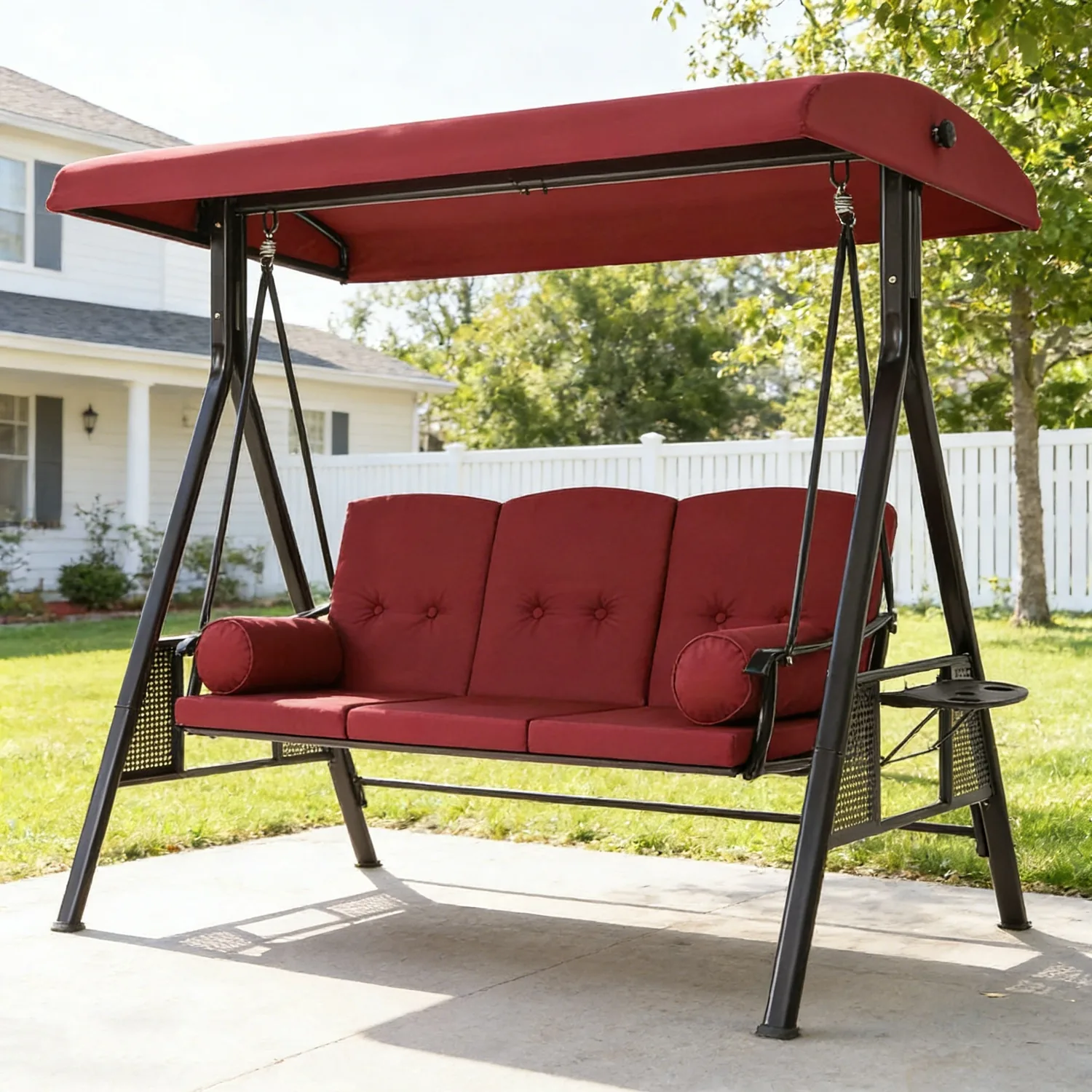
YODOLLA 3-Seat Patio Porch Swing Chair, Red
YODOLLA · Featured in this article
Swings with adjustable canopies offer some flexibility—you can angle them to manage sun exposure throughout the day—but they still add 10 to 15 inches to the total height. If you're working with limited vertical space, this might push you toward a smaller seat capacity to keep the overall footprint manageable.
Some swings, particularly those designed to convert between sitting and lounging positions, need even more space than traditional models. These hybrid swing-beds excel in versatility but require generous clearances for both configurations. Don't measure just for the upright sitting position—test the fully reclined footprint too.
Frame design affects perceived size as well. Powder-coated steel frames with clean lines tend to look more streamlined than bulky wooden frames, even when the actual seat dimensions are identical. If your patio is on the smaller side, visual lightness helps prevent that crowded feeling.
The Setup Space Nobody Remembers Until It's Too Late
Here's what catches people off guard: you need space not just for the swing itself, but for the entire support structure. Freestanding swings—the kind with A-frame or arch-style bases—extend well beyond the seat dimensions. That base typically adds 12 to 20 inches on each side and several feet of depth for stability.
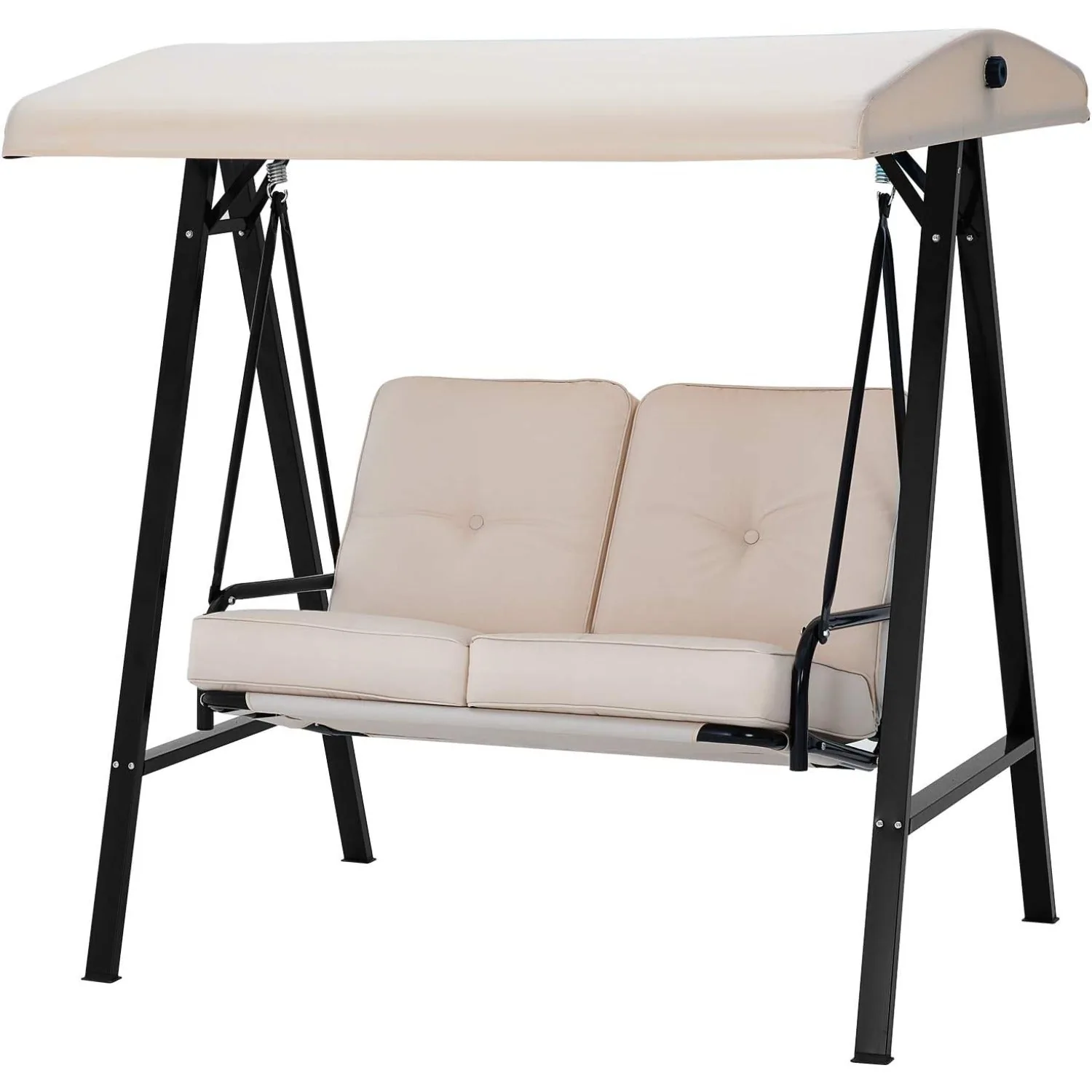
This is particularly relevant for those transitional areas like apartment balconies or townhouse patios where you're working with 6x10 or 8x12-foot spaces. A 2-seat swing might measure 50 inches wide at the seat, but its freestanding frame could have a 72-inch footprint, suddenly consuming most of your usable area.
If you're mounting a swing to an existing structure—porch beams, pergola rafters, sturdy tree branches—you reclaim much of that footprint. But you also need to verify load-bearing capacity and proper installation points. Larger swings with higher seat counts are substantially heavier, especially once you add people, cushions, and that inevitable pile of outdoor pillows.
Weight capacity ratings matter more than you'd think. Most quality patio swings support 450 to 600 pounds, but always verify. A 3-seat swing rated for 500 pounds gives three adults a safe margin; a 2-seat swing with the same rating offers more flexibility for extra cushions, pets, or one person lounging horizontally with their full library collection.
Making the Final Call
After measuring, planning, and visualizing, trust your instincts about scale. The right swing size feels balanced—neither lost in the space nor dominating it. It accommodates your typical use pattern with a little room to spare for occasional variations.
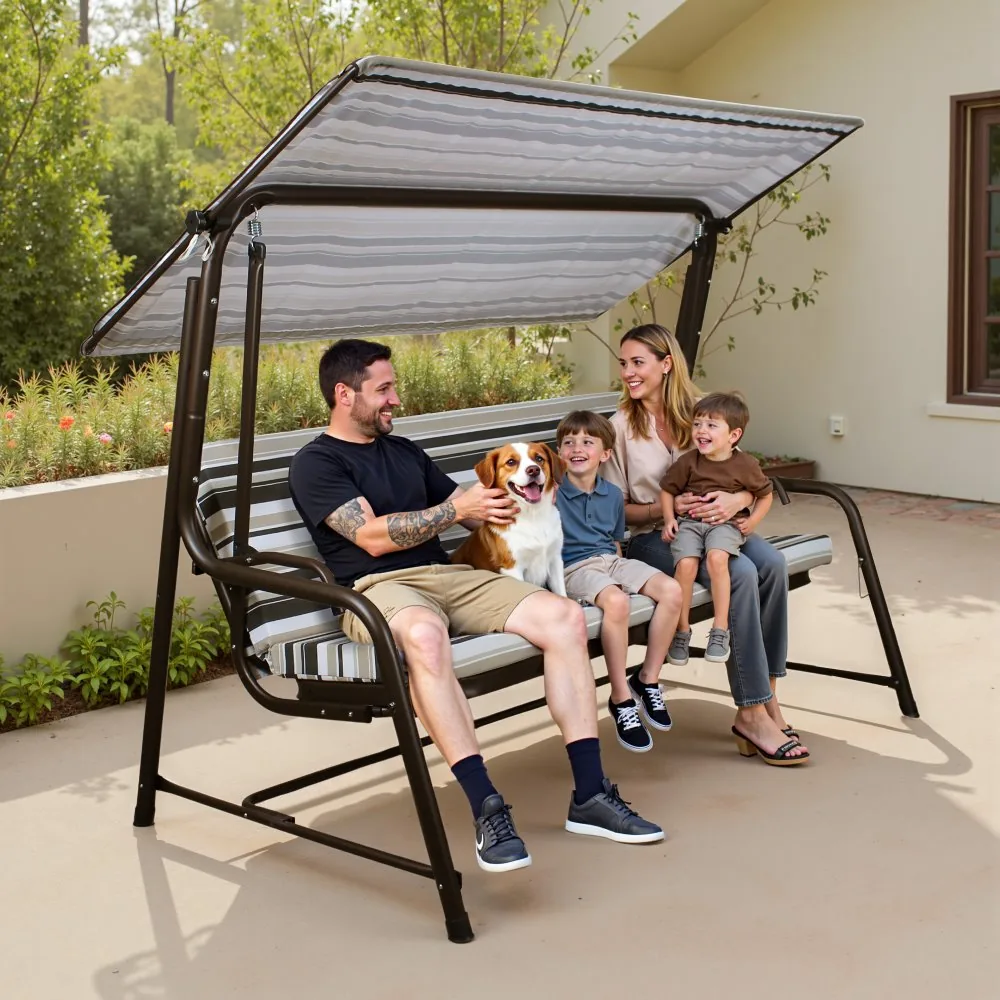
SUNJOY 4-Seat Italian-Made Patio Swing Chair / Bed with Adjustable Canopy and Cushions – Stripe
Sunjoy · Featured in this article
Start by ruling out what definitely won't work. If your measurements eliminate 4-seat options, focus your energy on perfecting the choice between 2-seat and 3-seat swings. If your budget and space can handle multiple sizes, consider which feels most aligned with your actual habits rather than aspirational ones.
Visit showrooms if possible, or use full-scale mockups at home. The difference between a 52-inch and 70-inch swing is substantial in real life, even though it sounds modest on paper. Sit in floor models, test the swing motion, notice how it feels when others join you. These physical experiences reveal comfort truths that specs alone can't convey.
Frequently Asked Questions
The following section addresses common questions about choosing patio swing sizes, offering additional guidance for specific scenarios and concerns.
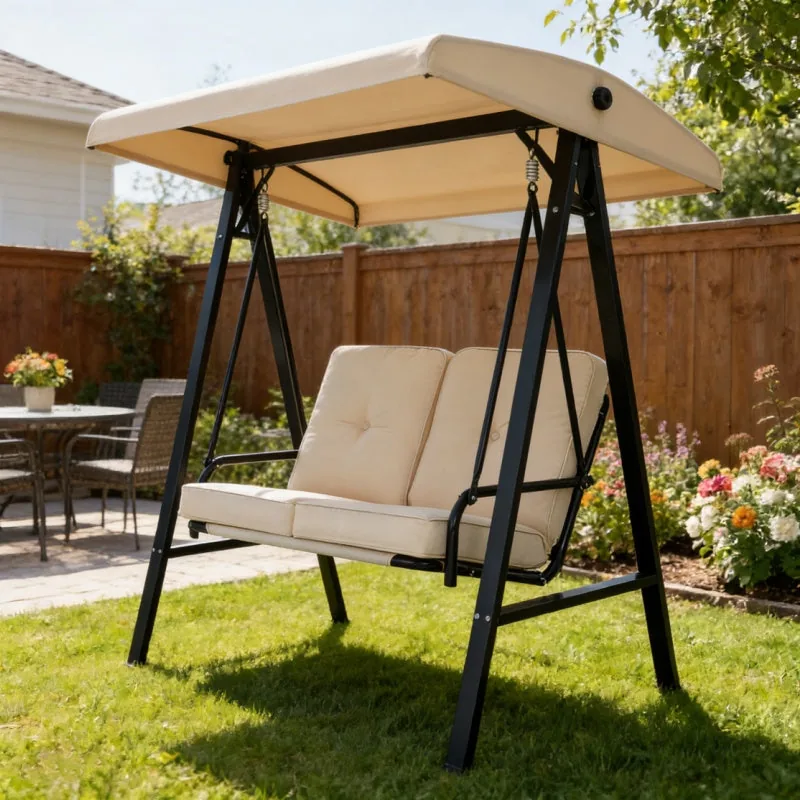
YODOLLA Patio Swing Chair 2-Seat for Adult, Beige
YODOLLA · Featured in this article
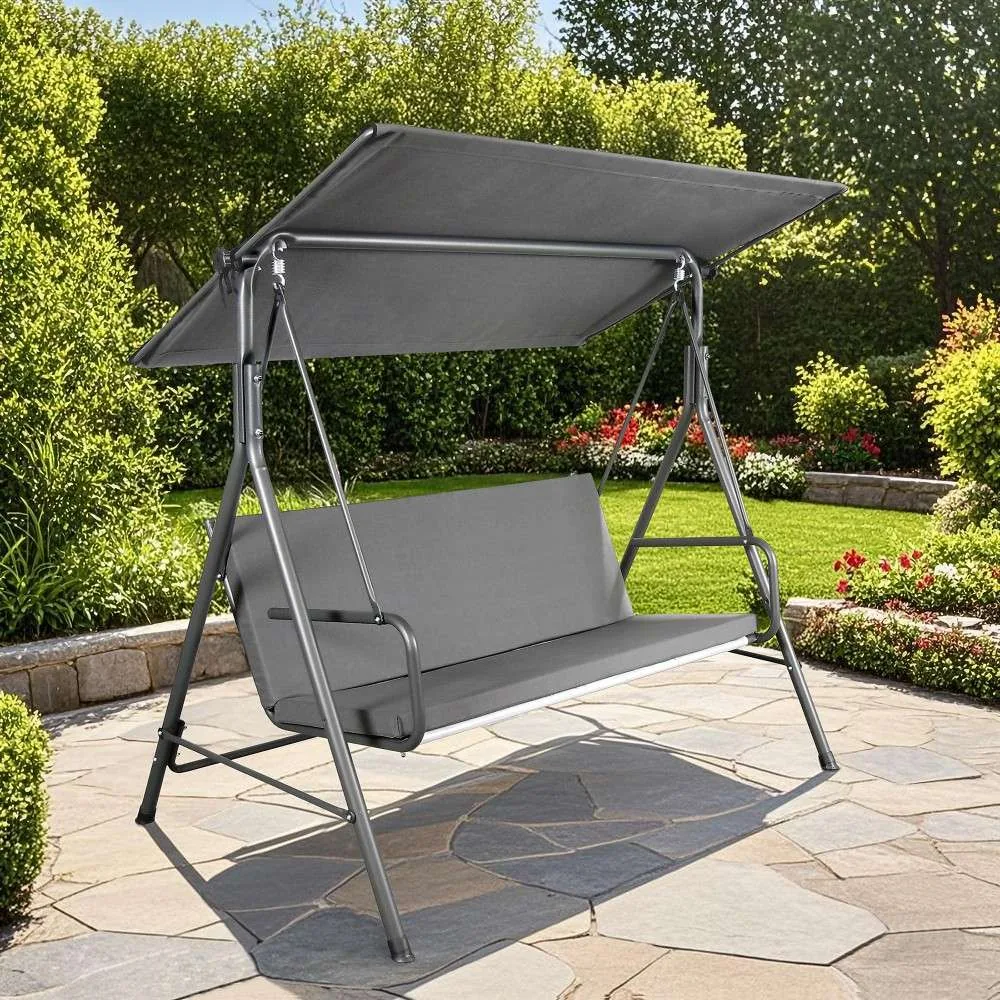
SUNJOY 2-Seat Italian-Made Patio Swing Chair with Adjustable Canopy and Cushions – Gray
Sunjoy · Featured in this article