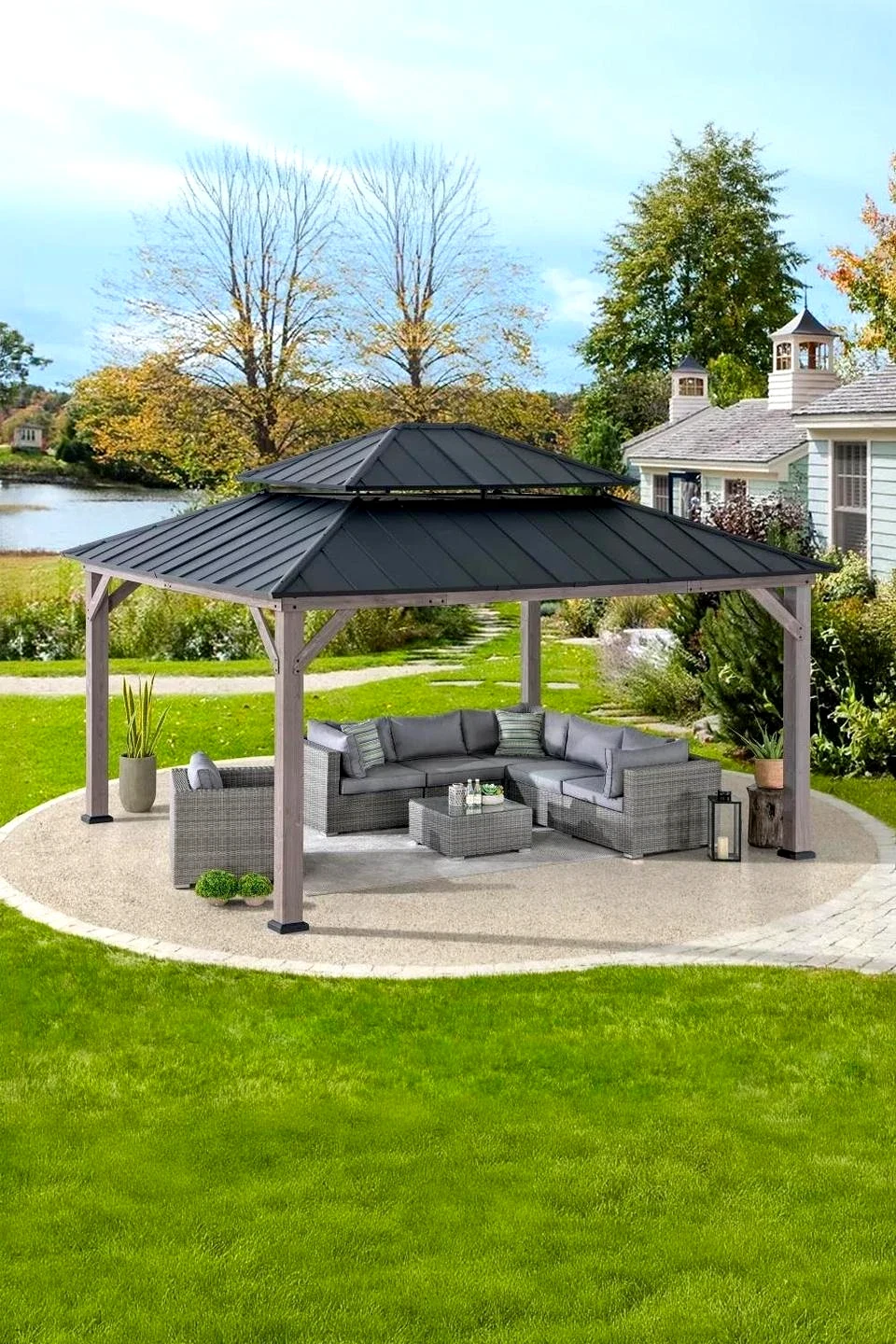
There's something magical about a well-proportioned gazebo—it becomes the heart of the backyard, drawing people in without dominating the landscape. But get the sizing wrong, and you've either created an awkward monument that swallows your yard whole or a structure so timid it feels like an afterthought. The difference between a gazebo that elevates your outdoor space and one that overwhelms it often comes down to just a few feet in either direction.
The mathematics of outdoor proportion aren't as straightforward as measuring square footage and calling it a day. A gazebo needs breathing room around it, sightlines that make sense from your home's windows, and enough presence to justify its existence without blocking every other activity your yard supports. It's a balance that requires you to think beyond the structure itself and consider how it integrates into the full outdoor ecosystem you've created.
Understanding the One-Third Rule and Why It Works
Professional landscape designers often cite the one-third guideline: your gazebo should occupy no more than one-third of your yard's usable space. This isn't arbitrary—it's rooted in how our eyes process outdoor environments. When a structure claims more than a third of the view, it shifts from being a feature within the landscape to becoming the landscape itself. Everything else gets relegated to background status.
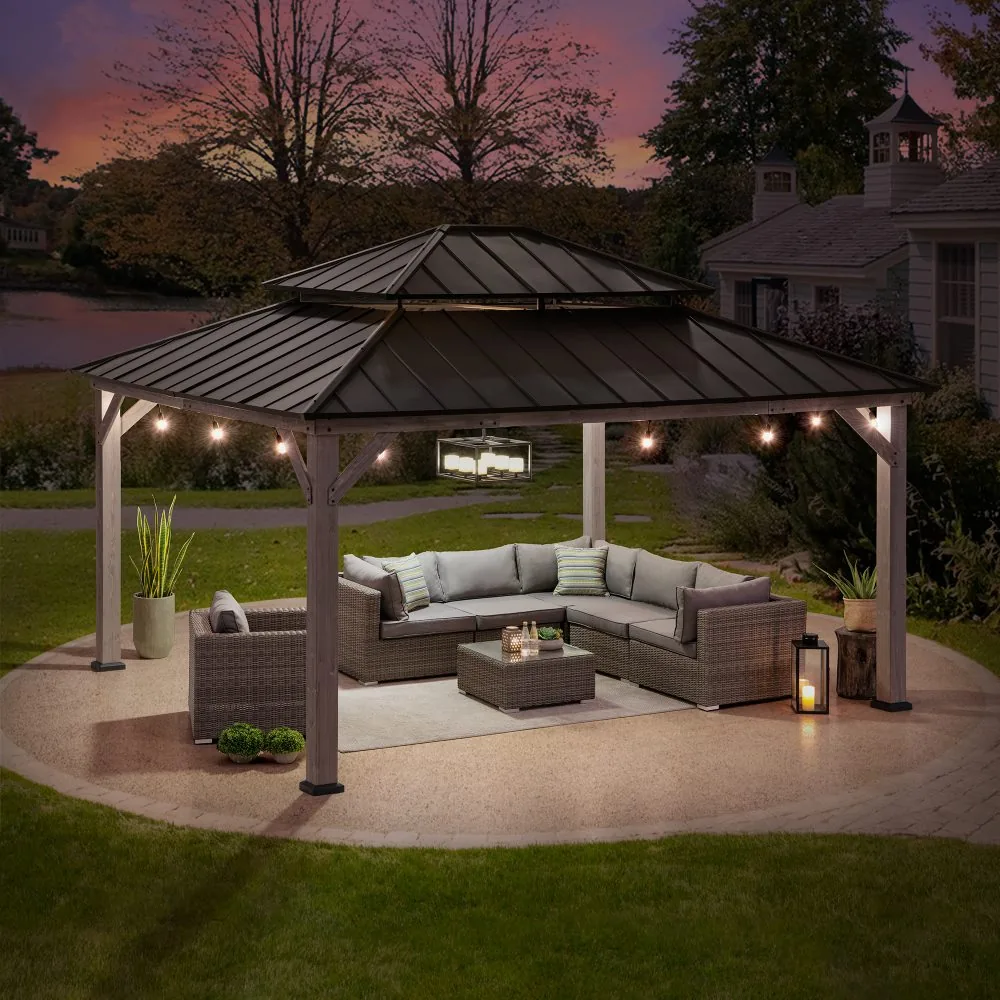
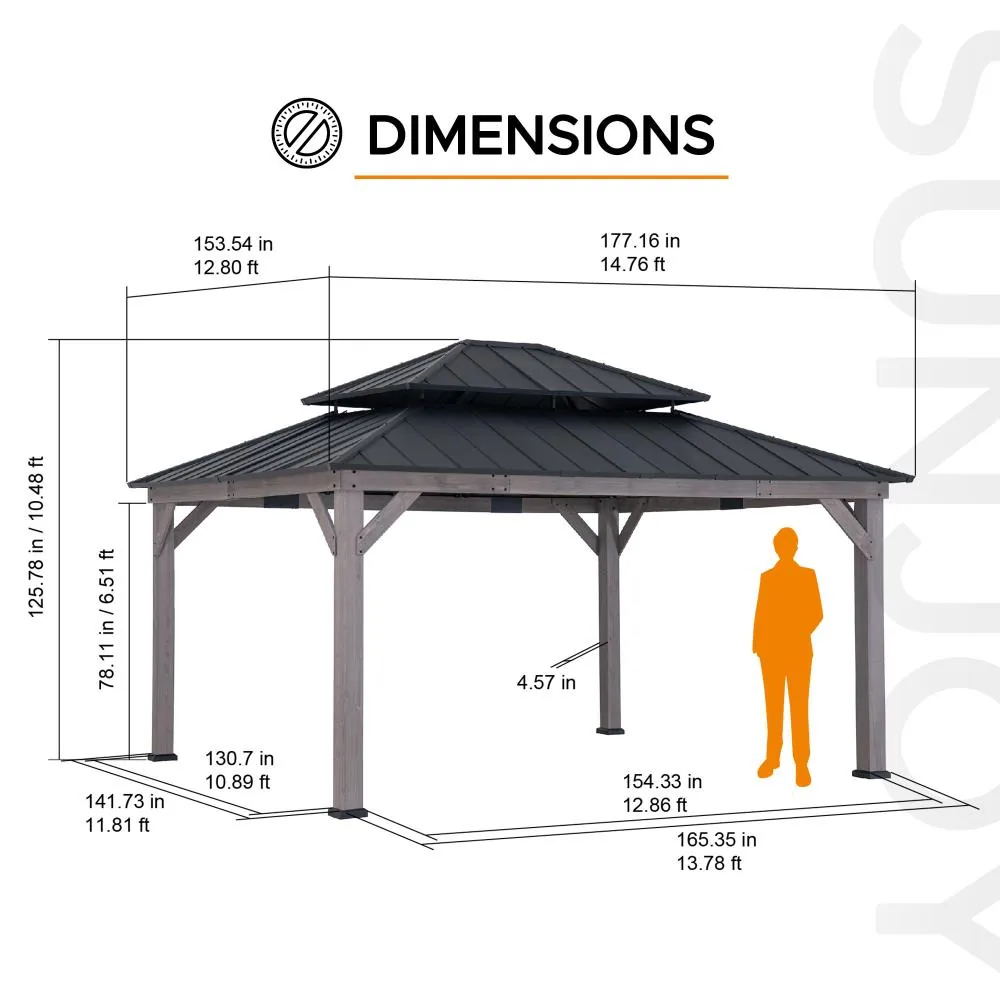
But here's where it gets more nuanced. That "usable space" doesn't mean your entire property line. It means the areas you actually use or see regularly—the visual field from your kitchen window, the section of lawn where kids play, the pathway you take from the deck to the garden. A 13x15 cedar gazebo might be perfectly proportioned for a sprawling half-acre backyard, anchoring a far corner and creating destination space, while that same footprint would utterly dominate a compact urban yard. The structure itself hasn't changed, but its relationship to its environment has.
Consider also the height-to-width ratio. A gazebo that's appropriately sized in floor area but features an unusually tall peaked roof can still feel oversized, especially if your home is a single-story ranch. The vertical dimension matters as much as the horizontal spread when you're calibrating visual weight.
Mapping Your Yard's Activity Zones Before You Commit
The biggest sizing mistakes happen when people fixate on the gazebo as an isolated object rather than as one component in a functioning outdoor system. Before you settle on dimensions, spend a few weeks observing how you actually use your yard. Where do morning shadows fall in summer? Which routes do you walk most often? Where do guests naturally congregate during gatherings?
A gazebo needs clearance—typically at least three to five feet of open space around all sides for comfortable circulation. But it also needs to make spatial sense. If you're working with a narrow side yard, an 8x8 soft top gazebo with mosquito netting might be ideal, creating an intimate breakfast nook without blocking the pathway to your garden shed. In contrast, a rectangular structure would fight against the natural proportions of the space.
Think about functional radius as well as footprint. A 10x12 gazebo doesn't just occupy 120 square feet—it effectively claims the surrounding zone where you'll place chairs that pull out from a table, where you'll walk around the perimeter to hang those mosquito netting panels with warm LED lights, where you'll want planting beds or decorative elements to soften the edges. That functional radius typically adds another two to four feet in all directions, which is why a structure that looks perfect on paper can feel cramped in reality.
For yards with multiple uses, sketch out your activity zones on graph paper. Mark the play area, the grilling zone, the vegetable garden, the dog run. The gazebo should enhance these zones, not cannibalize them. If you find yourself erasing other activities to fit the structure you want, that's your signal to either size down or reconsider placement.
The Sightline Test: What You See From Where It Matters
Here's an exercise that prevents buyer's remorse: stake out your proposed gazebo's footprint with rope or garden hoses, then spend a day looking at it from every angle that matters. Stand at your kitchen sink. Sit in your living room. Walk through your back door. Look from the neighbor's yard (yes, really—curb appeal matters on all sides). If the staked area blocks treasured views, creates awkward dead zones, or just feels off, trust that instinct.
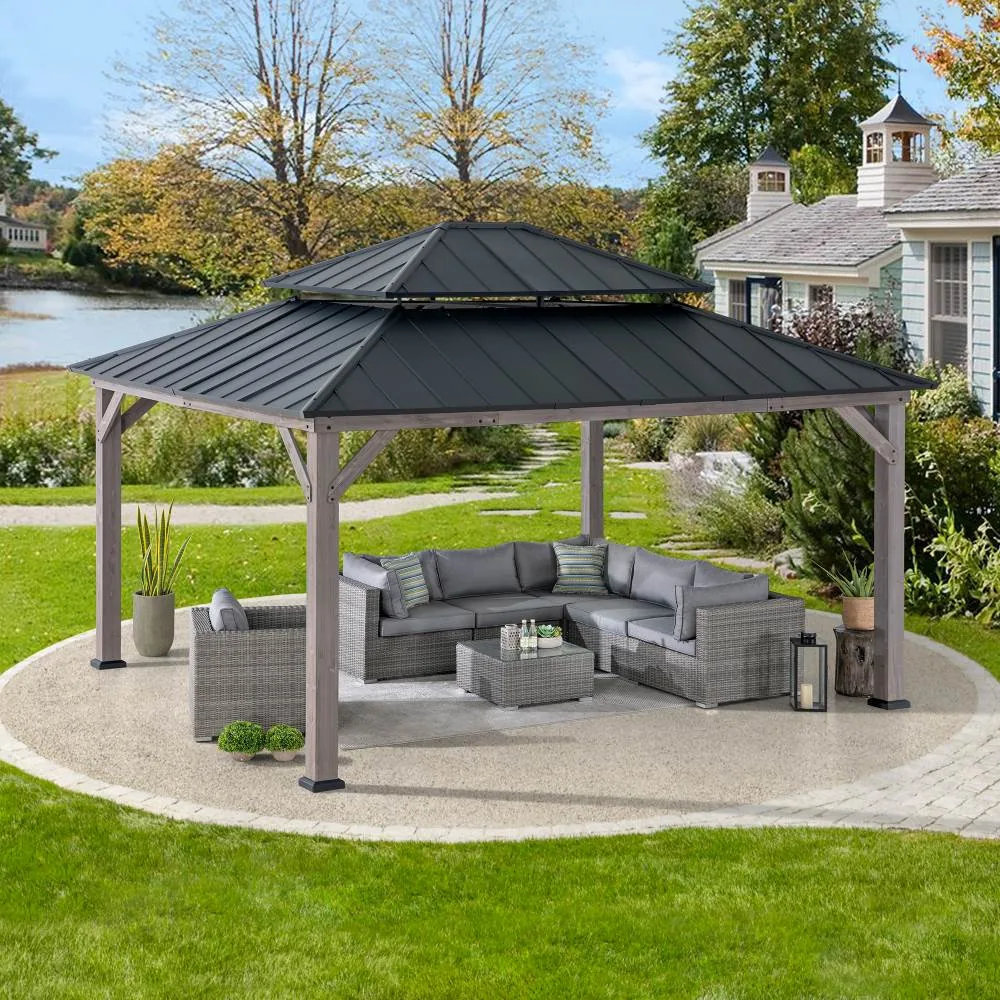
Transform Your Backyard with a Stunning 13x15 Cedar Gazebo - Elegant Outdoor Living Space
Sunjoy · Featured in this article
Pay particular attention to the view from inside your home. A gazebo that's delightful when you're in the backyard but blocks your favorite tree view from the breakfast nook will become a source of daily regret. Similarly, think about seasonal changes. That staked footprint might look perfect with full summer foliage surrounding it, but come November when the leaves drop, will it look like a lonely barn in an empty field?
The best-scaled gazebos create what designers call "borrowed scenery"—they frame views rather than obstruct them. A 10x12 structure positioned to frame your garden beds or capture a sunset view functions very differently than the same structure plunked in the yard's dead center. Orientation and sightlines work together with size to determine whether a gazebo enhances or overwhelms.
Material and Design Choices That Affect Perceived Size
Not all 12x12 gazebos feel equally large. A heavy, solid-roofed structure with enclosed railings and dark staining will read as substantially bigger than an open-design model with lattice panels and light-colored wood—even though they occupy identical footprints. This is where understanding the difference between actual size and visual weight becomes crucial.
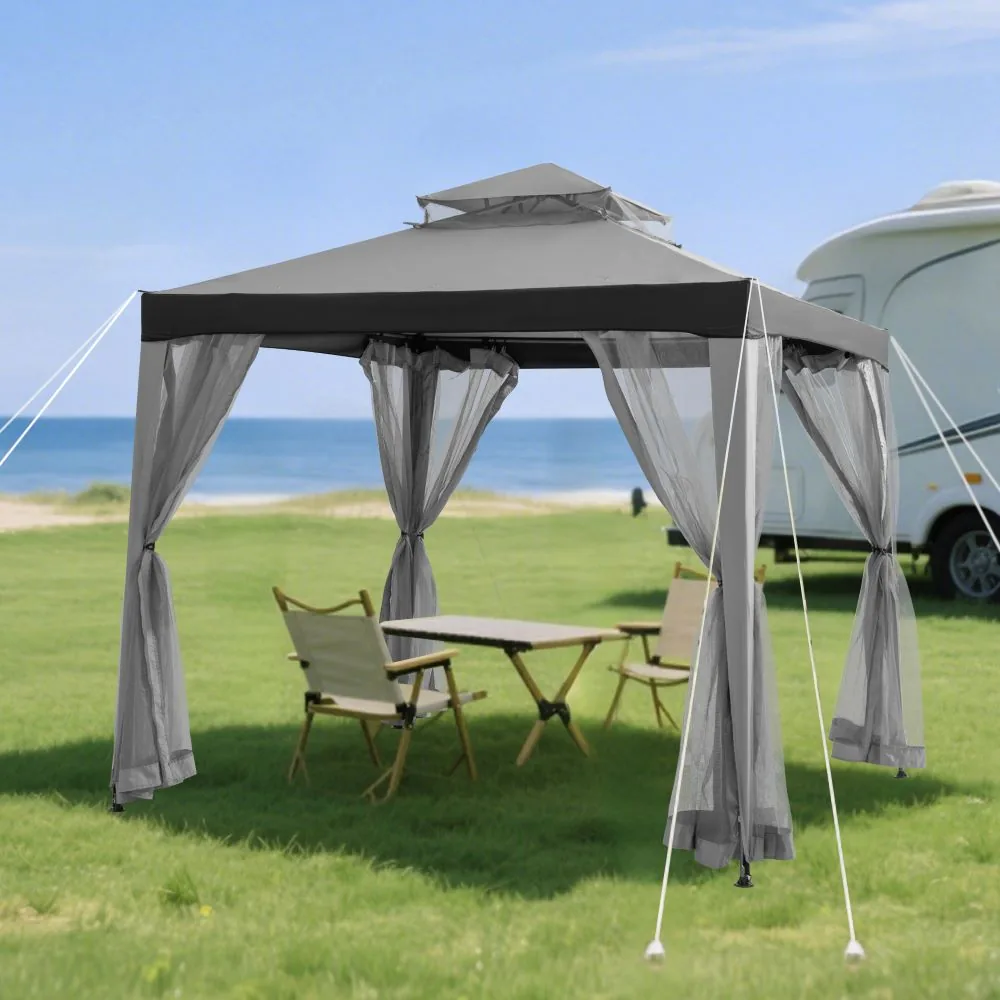
Transparency matters enormously. Those outdoor umbrellas and sunshades work on this principle—they provide coverage without creating visual barriers. The same logic applies to gazebo design. If you're working with limited space but want maximum coverage, look for designs with more open sides, lighter colors, and roof styles that don't add excessive vertical bulk. A simple flat or low-pitched roof will feel less imposing than a dramatic multi-tiered pagoda style, even with the same square footage.
Material weight plays a role too. Cedar gazebos carry a certain elegant presence that works beautifully in established landscapes, but they also read as permanent, substantial structures. Soft-top gazebos with mosquito netting offer flexibility—you can emphasize their presence when you want gathering space and diminish their visual impact during off-seasons. For smaller yards, this adaptability can be the difference between a structure that works year-round and one that only feels right three months a year.
When Bigger Actually Works Better
Contrarian take: sometimes the answer isn't to size down, but to commit fully to a larger structure and let it genuinely define your outdoor space. A wimpy gazebo in a large yard can look apologetic, like you ran out of budget mid-project. If you have the room and the vision, a generous structure like a 13x15 cedar gazebo becomes architectural—a genuine outdoor room that justifies its footprint by being truly useful.
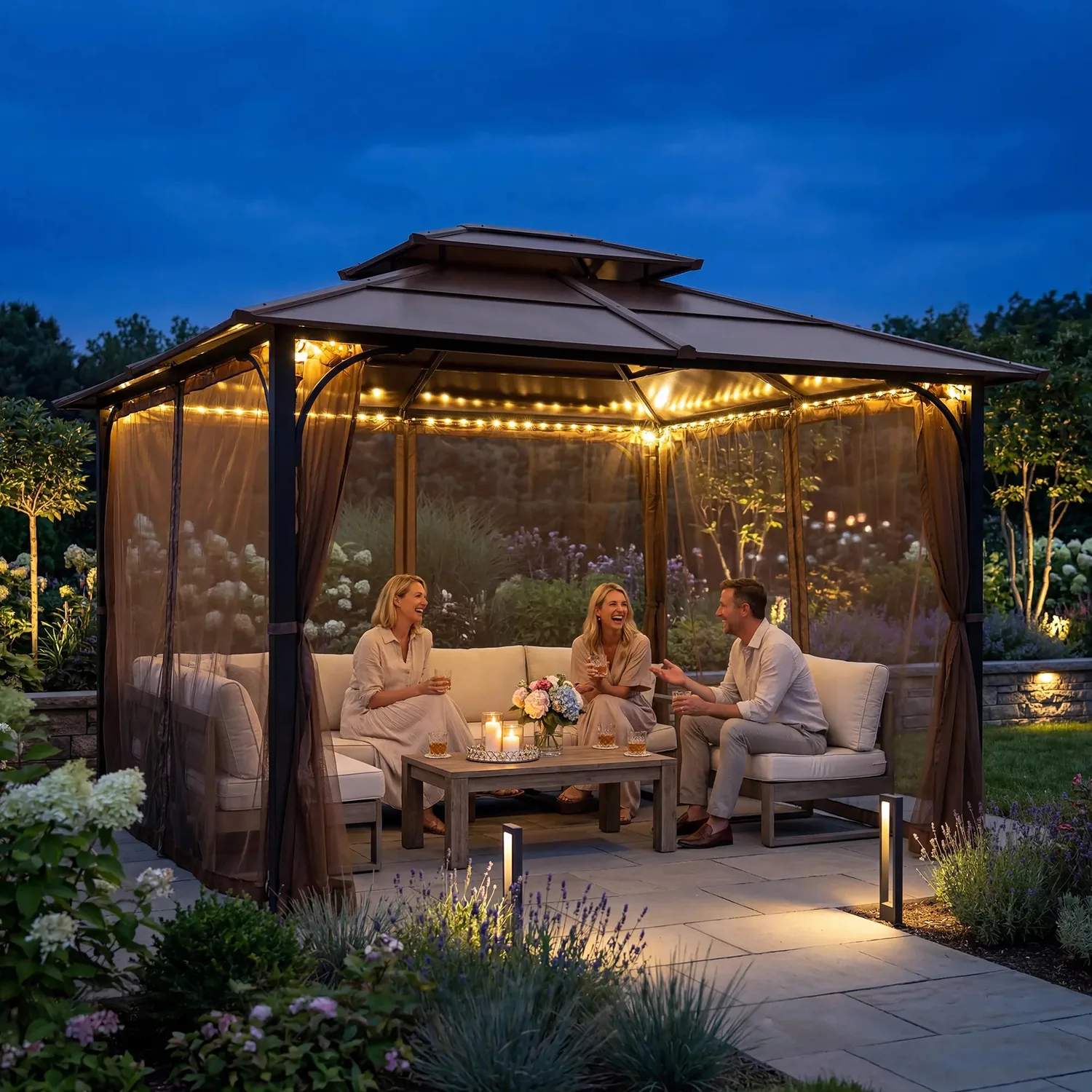
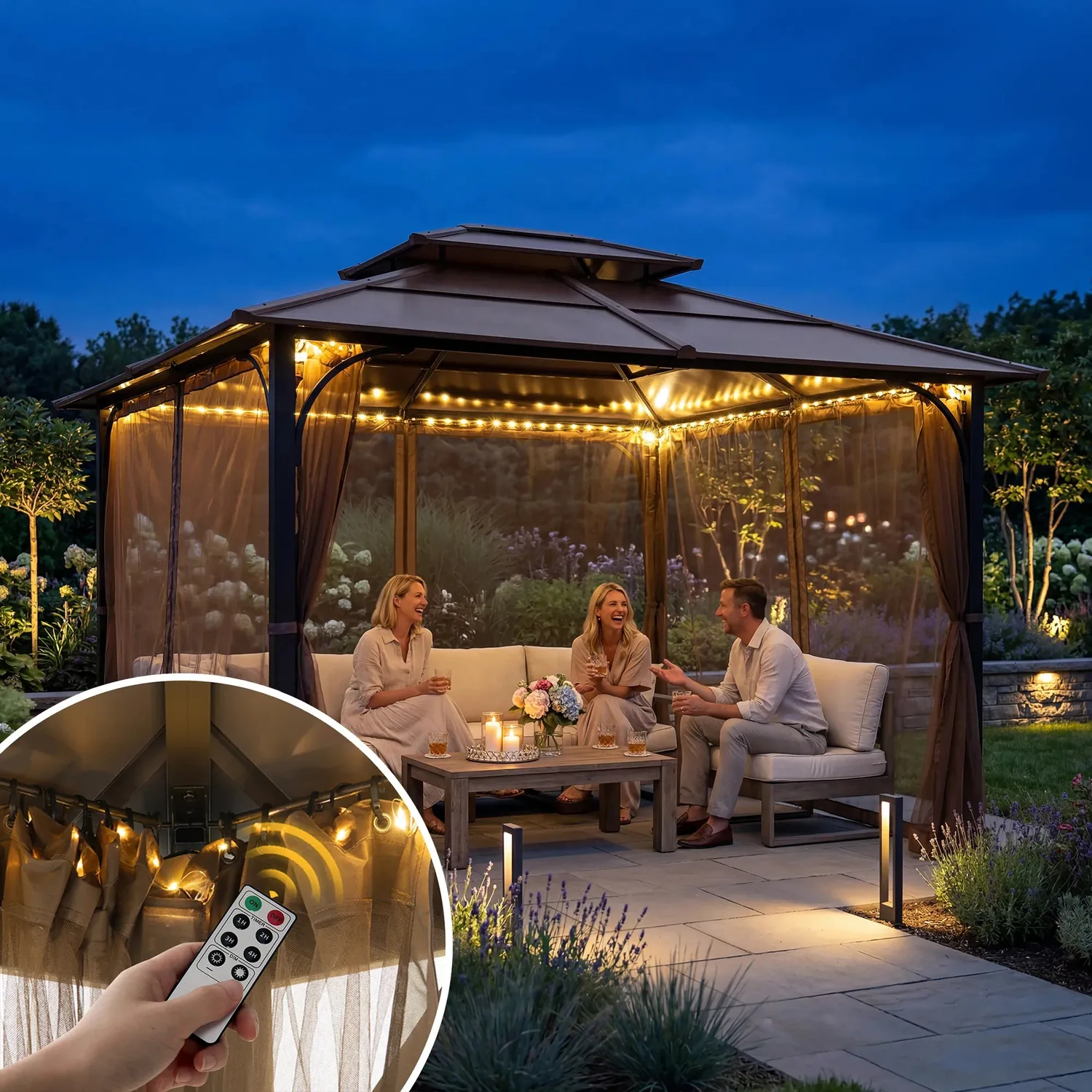
Transform Your Gazebo: Mosquito Netting with Warm LED Lights for 10x12 Hardtop
Sunjoy · Featured in this article
The key is intentionality. A large gazebo should anchor an entire outdoor living zone, not just provide shade for a bistro table. Think full dining setup, lounge furniture, maybe even an outdoor kitchen component adjacent to it. When a gazebo is sized to support actual living rather than occasional use, its presence feels earned rather than excessive.
This approach works especially well when you're designing for the yard you want rather than the yard you currently have. If your long-term vision includes extensive entertaining, outdoor dining for eight or more people, or creating a second living space outside, sizing up now prevents that "we should have gone bigger" regret later. Just ensure your current landscaping can visually support the scale—you may need to fast-track some mature plantings or hardscaping to balance the structure's weight.
Creating Balance With Strategic Landscaping
The gazebo's size isn't fixed by its dimensions alone—it's negotiable through how you landscape around it. Proper plantings, pathways, and surrounding elements can make a slightly oversized gazebo feel perfectly proportioned, or make an appropriately sized one feel even better integrated.
The cardinal rule: don't leave a gazebo floating in a sea of lawn. Ground it with foundation plantings, preferably with varying heights that create a transition from grass to structure. Taller shrubs at the corners soften the geometric edges, while lower perennials can flow around the base. If your gazebo is on the larger side for your yard, this landscaping buffer becomes non-negotiable—it prevents that "landed spaceship" effect.
Pathways also manipulate perceived size. A direct straight path to a gazebo emphasizes its presence as a destination, making it feel more prominent. Meandering approaches that reveal the structure gradually make it feel like a natural part of a larger journey. For smaller yards with appropriately compact structures, the wandering path creates the illusion of more space—you're not confronting the full scope of the yard in a single glance.
Consider lighting as part of the equation too. Those warm LED lights integrated into mosquito netting aren't just functional—they define the gazebo's evening presence. Soft lighting makes a structure feel inviting rather than imposing, especially important if size constraints meant you had to go slightly larger than the pure ratios would recommend.
---
Finding the perfect gazebo size is part measurement, part intuition, and entirely worth getting right. The questions that arise around specific dimensions, site conditions, and design integration come up repeatedly, so we've compiled answers to the most frequently asked questions to help you make the best choice for your unique outdoor space.
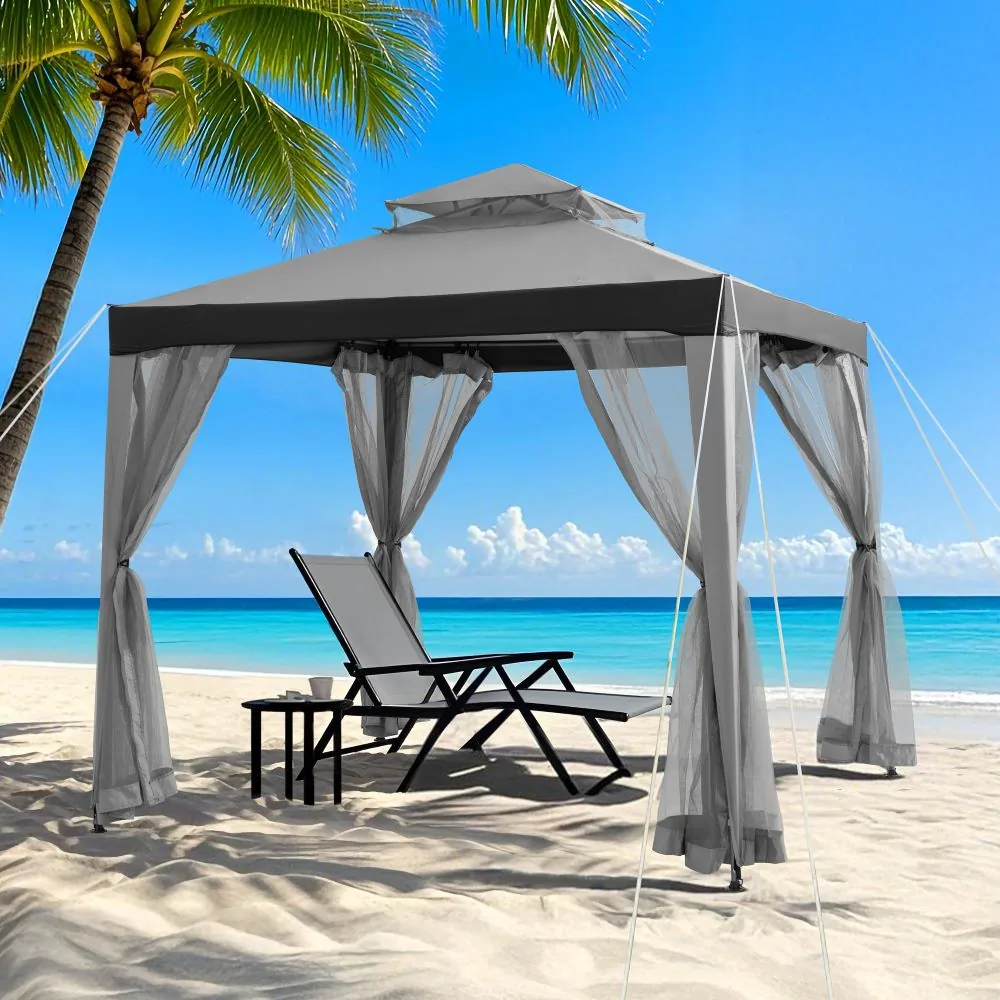
Transform Your Backyard: 8x8 Soft Top Gazebo with Mosquito Netting - Outdoor Living Dreams
Sunjoy · Featured in this article