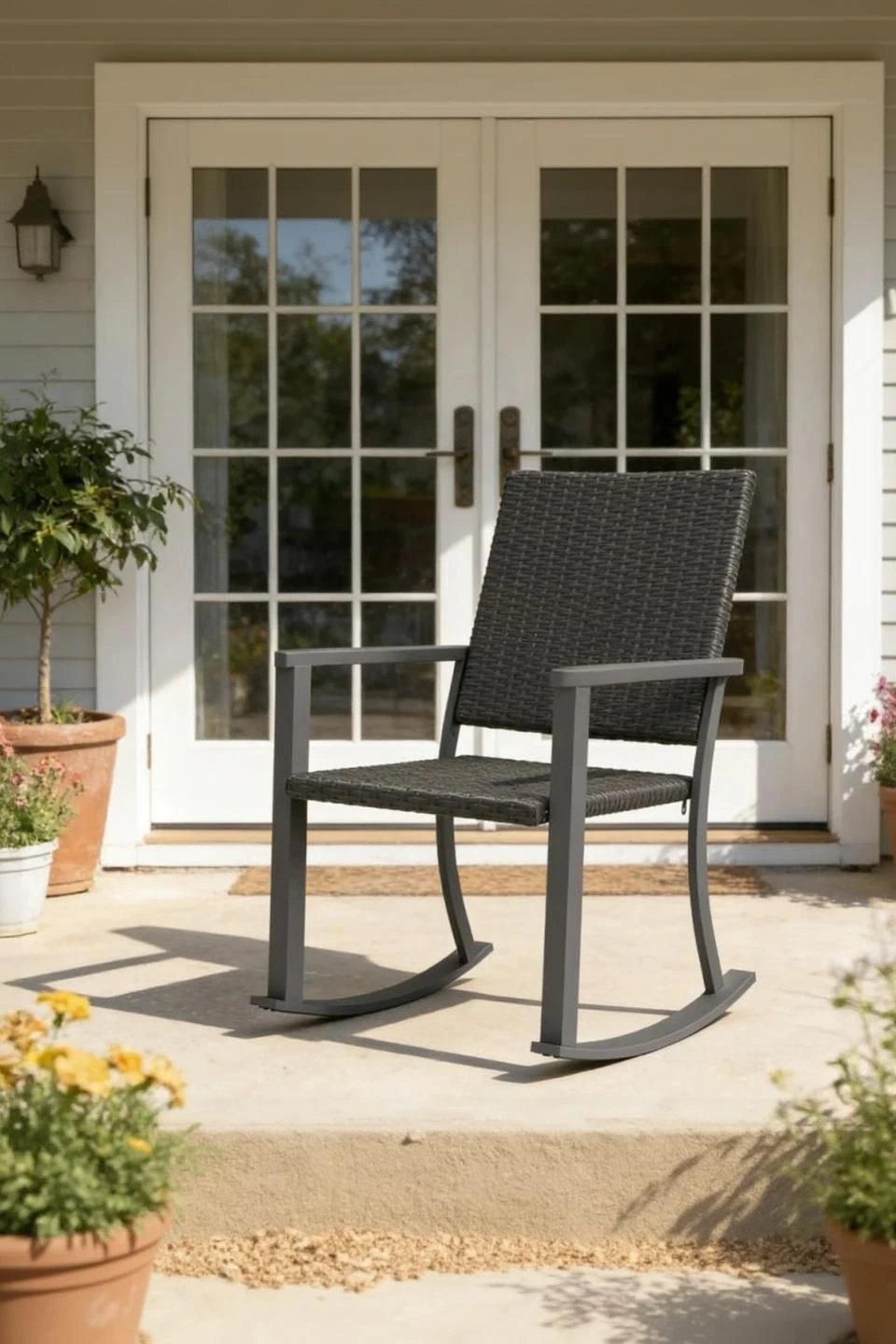
The choice between Adirondack and standard armrest patio chairs shapes more than just your outdoor aesthetic—it influences how you use your space, who sits comfortably, and whether your deck becomes a place for lingering conversation or quick coffee breaks. Both silhouettes have devoted followers, but understanding what each brings to the table (or deck) helps you commit to the right investment for your lifestyle rather than just following what looks good in someone else's yard.
Understanding the Fundamental Design Differences
Adirondack chairs emerged from the Adirondack Mountains in 1903, designed specifically for relaxation with their trademark reclined backs and low-slung seats. The wide armrests double as drink holders or book perches, while the fanned back provides lumbar support that encourages you to settle in for the long haul. The original design used eleven pieces of wood, but modern iterations like the YODOLLA Patio Adirondack Wicker Chair translate that iconic silhouette into weather-resistant materials without losing the essential geometry that makes these chairs so distinctive.
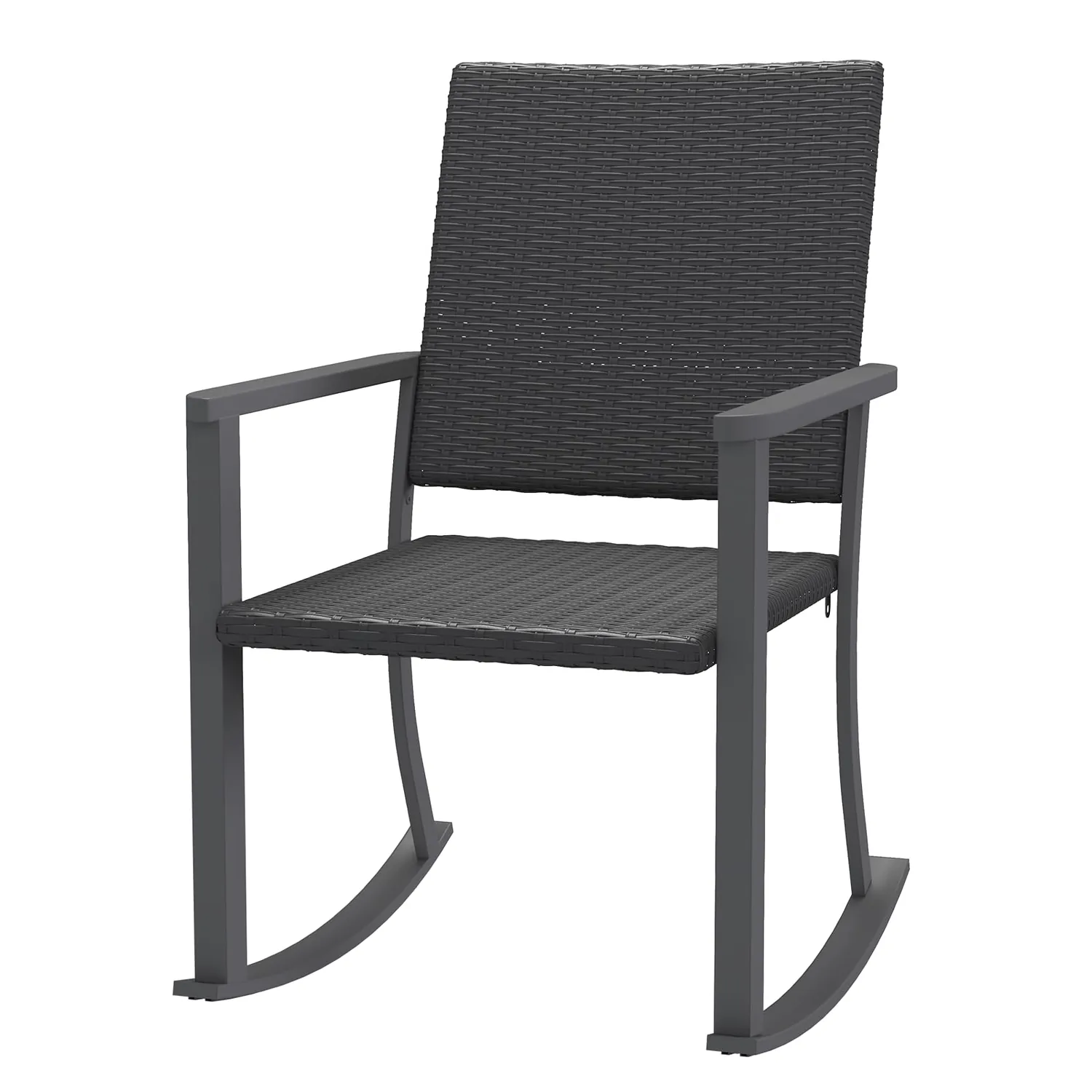
Standard armrest patio chairs, by contrast, take their cues from traditional dining and conversation seating. They sit higher off the ground, maintain a more upright posture, and feature narrower, functional armrests. This design prioritizes versatility over specialized lounging—you can pull them up to an outdoor table, move them easily around a fire pit, or cluster them for conversation without the spatial commitment that Adirondacks demand. The proportions make sense for a wider range of activities beyond pure relaxation.
The materials might be similar across both styles, but the frame geometry creates entirely different experiences. An Adirondack's recline angle typically ranges from 20 to 30 degrees, while armrest chairs stay closer to vertical at 5 to 15 degrees. That difference might sound minor on paper, but in your body, it's the distinction between reading posture and napping posture.
Space Planning and Layout Considerations
Adirondack chairs are spatial hogs, and there's no way around it. Each chair needs roughly 30 to 36 inches of width, and because people naturally want to prop their feet up, you should allocate at least four feet of depth per chair. Place two facing each other for conversation, and you've suddenly dedicated a 6x8-foot zone to seating. They work beautifully when you have generous square footage—a sprawling deck, a lakefront lawn, or a wide front porch—but they can overwhelm a modest balcony or compact courtyard.
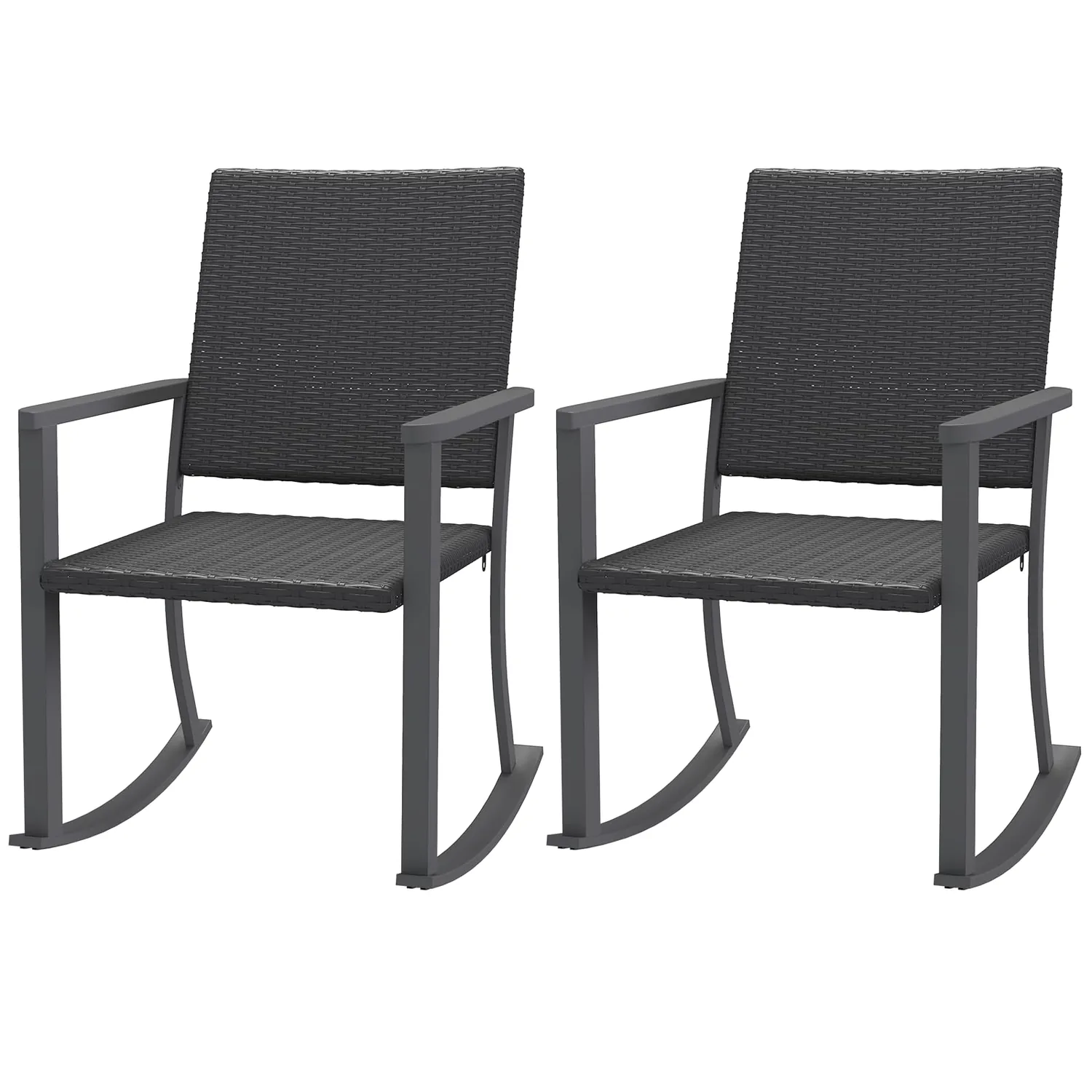
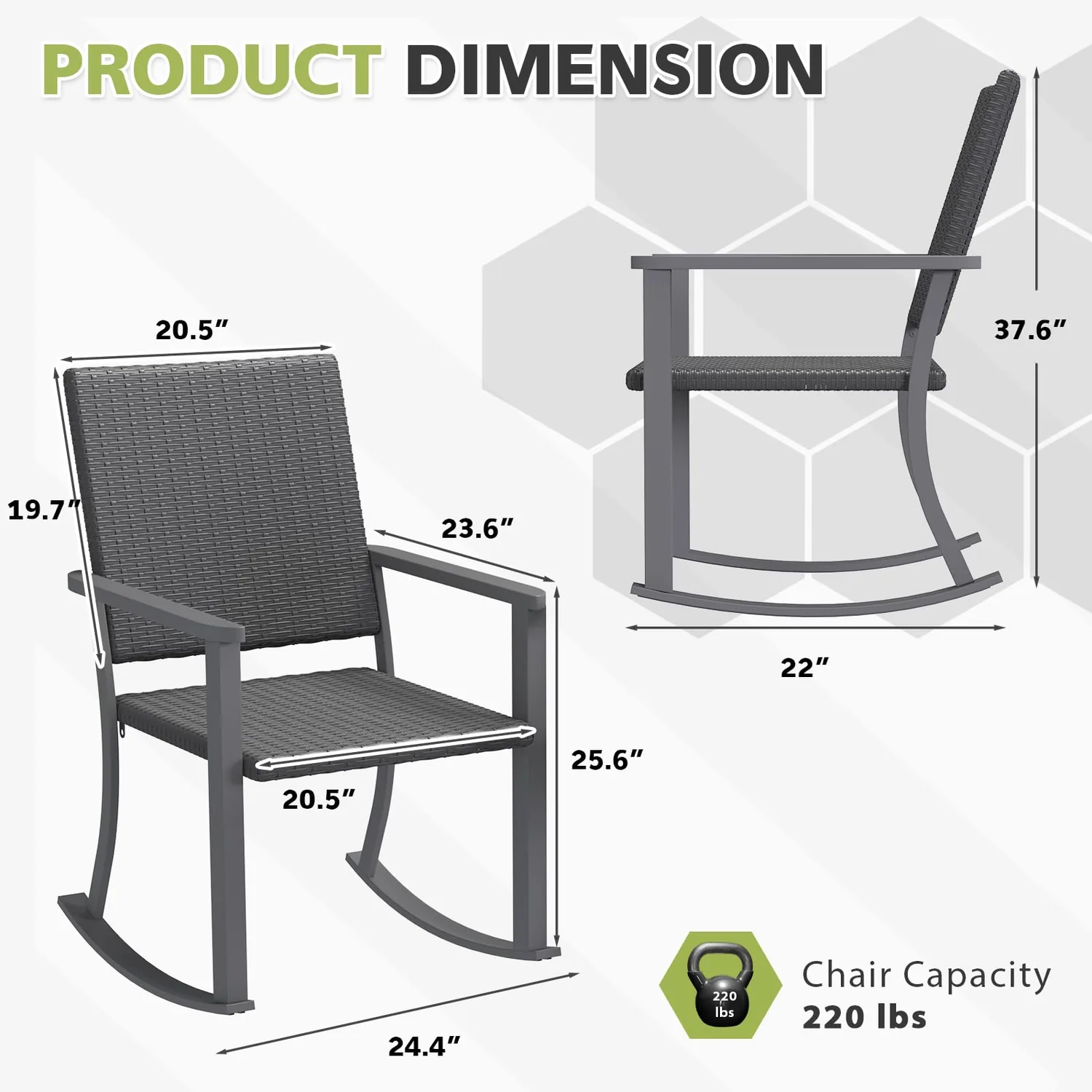
Standard armrest chairs pack more efficiently. Models like the YODOLLA Outdoor Rattan Patio Chairs with Armrests and Metal Frame typically measure 23 to 26 inches wide, meaning you can fit three where two Adirondacks would sit. They stack or nest in many cases, and their upright profile means you can push them against a railing or wall without that awkward gap that a reclined chair creates. For urban dwellers or anyone working with under 100 square feet of outdoor space, this efficiency matters enormously.
The flow around furniture changes too. Adirondacks create destinations—you arrange other elements around them because they're not easily relocated for a gathering. Armrest chairs function as flexible components in a larger system. You might start the afternoon with four around a table, then redistribute two to face the sunset and keep two at the table for drinks. That adaptability suits households where outdoor space serves multiple functions throughout the day.
Comfort Profiles for Different Body Types and Activities
Here's where personal physiology enters the equation more than most furniture guides acknowledge. Adirondacks treat tall people exceptionally well—the recline and extended seat depth prevent that dangling-feet sensation that shorter chairs can create. Someone six feet or taller often finds Adirondacks the only outdoor seating where their legs feel properly supported. However, that same depth becomes problematic for anyone under 5'4", whose knees might hover uncomfortably far from the seat edge, forcing an awkward scoot-forward position that negates the back support.
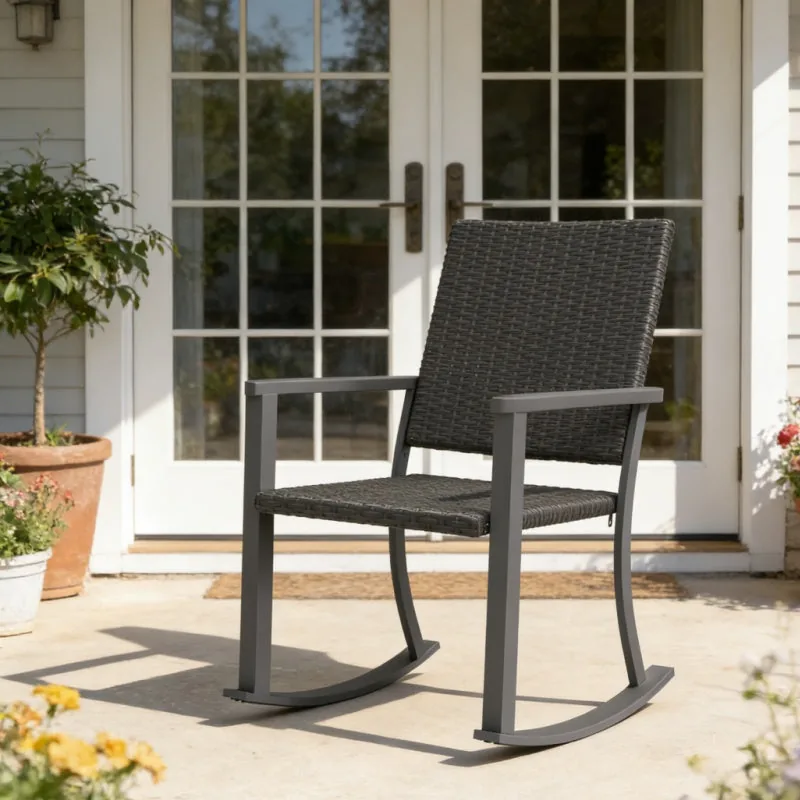
YODOLLA Outdoor Rattan Patio Chairs with Armrests and Metal Frame (1pcs)
YODOLLA · Featured in this article
The low seat height of Adirondacks (typically 13 to 15 inches) means getting in and out requires a degree of mobility. Anyone with knee issues, hip replacements, or general flexibility limitations often struggles with the up-and-down mechanics. My own parents, both in their seventies and active, switched from their beloved Adirondacks to armrest chairs after one too many ungraceful exits during dinner parties. Standard armrest chairs sit at 17 to 19 inches—the same height as most dining chairs—making them accessible for a broader age range and mobility spectrum.
For extended sitting, Adirondacks win for pure lounging without a cushion. The recline distributes weight across a larger surface area, reducing pressure points. But if you're someone who shifts positions frequently, works on a laptop outdoors, or eats meals in the seating, the upright armrest chair provides the postural support those activities demand. You can add cushions to either style, but Adirondacks rarely need them for comfort, while armrest chairs benefit significantly from even a thin seat pad for sessions longer than thirty minutes.
Maintenance, Weather Resistance, and Longevity
Both chair styles face the same environmental challenges—UV exposure, moisture, temperature swings, pollen, and the occasional beverage spill. The difference lies in how their designs respond to these stressors. Adirondacks, with their wide, flat armrests and reclined backs, create horizontal surfaces where water, leaves, and dirt accumulate. Those generous armrests that make such convenient side tables also require regular wiping down, and the angle of the seat means rain doesn't simply sheet off—it pools. If you choose an Adirondack, you're signing up for more frequent spot-cleaning or accepting a more weathered patina.
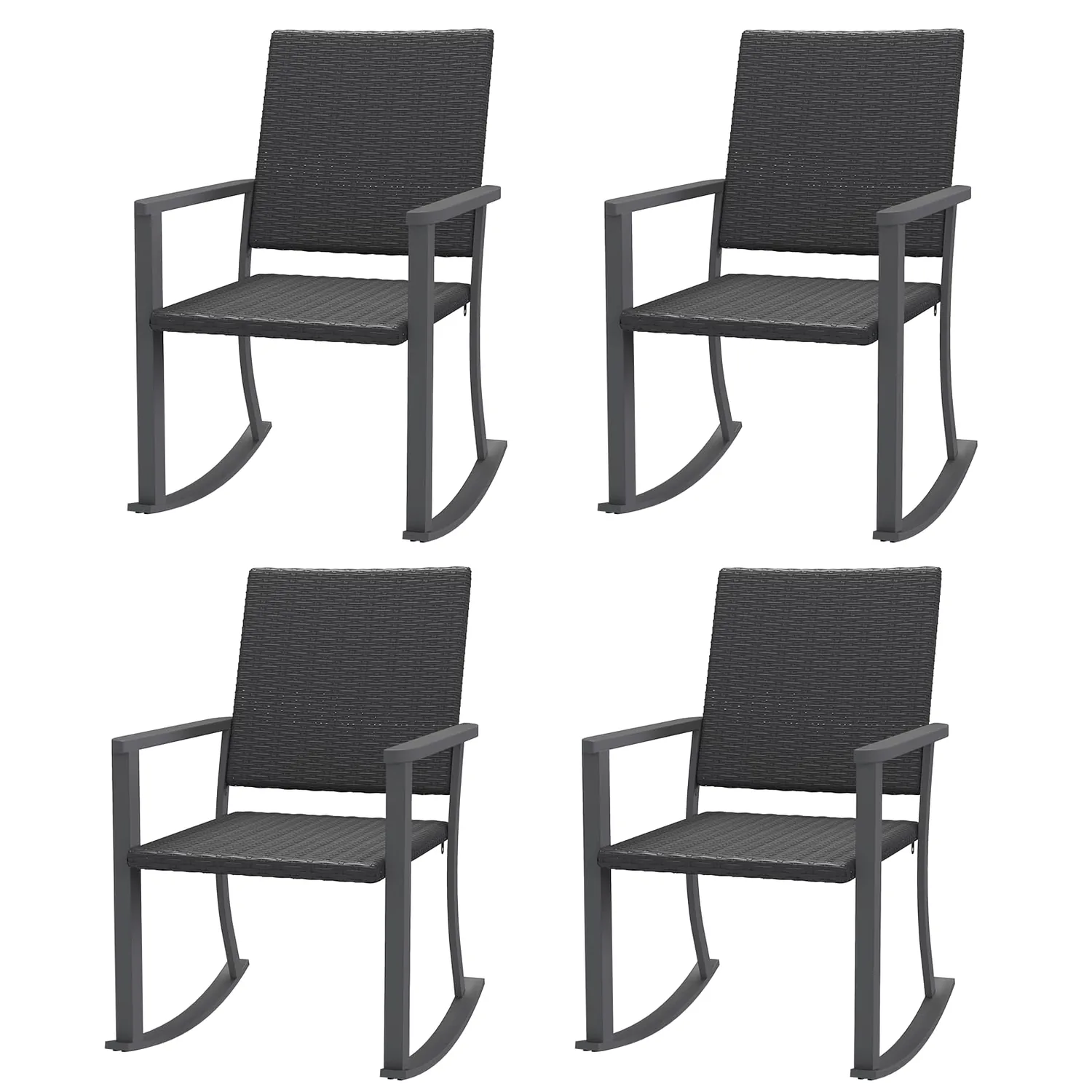
Standard armrest chairs with their upright backs and narrower profiles shed water and debris more naturally. The vertical orientation means less surface area collecting gunk, and designs like the YODOLLA rattan models with metal frames combine drainage-friendly weaving with powder-coated frames that resist rust. Over five or six seasons, that design advantage translates to chairs that look fresher with less intervention.
Storage considerations matter if you live anywhere with harsh winters or extended rainy seasons. Adirondacks rarely stack or fold, so storing them means dedicating shed or garage floor space to their full footprint. A set of four consumes roughly 20 square feet. Conversely, many armrest chairs stack or disassemble, compressing that storage footprint by 60 to 70 percent. If year-round outdoor storage isn't viable at your home, that stackability might be the deciding factor.
Color retention varies more by material than style, but it's worth noting that Adirondacks' larger surface areas show fading more dramatically. A white or brightly colored Adirondack that bleaches to uneven pastels looks shabby, while the same fading on a smaller armrest chair reads as gentle aging rather than deterioration. Dark colors or natural wood tones minimize this concern across both styles.
Aesthetic Coherence With Your Home's Architecture
Adirondacks carry strong stylistic associations—they evoke lakeside cabins, coastal cottages, and mountain retreats. Place them on a sleek modern deck with cable railings and ipe wood, and the disconnect can feel jarring unless you're deliberately playing with contrast. They harmonize beautifully with natural wood siding, stone foundations, and rustic landscapes, but they require more careful curation in contemporary or minimalist settings.
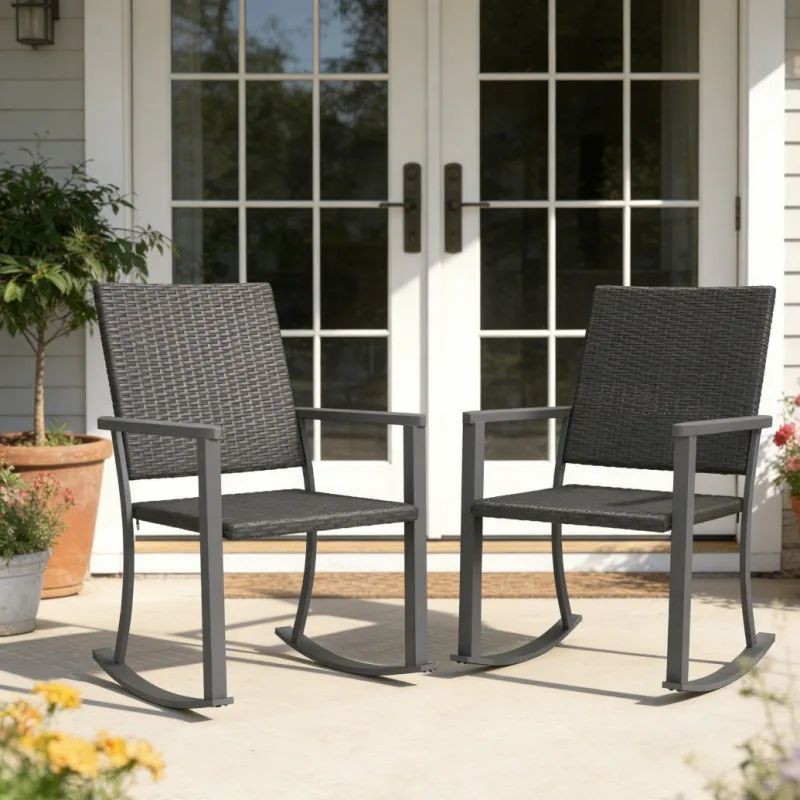
YODOLLA Outdoor Rattan Patio Chairs with Armrests and Metal Frame (2pcs)
YODOLLA · Featured in this article
Standard armrest chairs demonstrate greater stylistic flexibility. The cleaner lines adapt to mid-century modern, farmhouse, traditional, and even industrial aesthetics depending on material choice. A matte black metal frame with woven rattan works on a Brooklyn rooftop; swap the same frame in white with plush cushions, and it's at home in a suburban backyard. If your outdoor space needs to bridge architectural styles or if you're still defining your aesthetic preferences, armrest chairs offer more room to pivot without replacing your entire outdoor chairs collection.
The scale of Adirondacks can also overwhelm smaller homes. A modest bungalow or cottage with an 8x12-foot front porch might find two Adirondacks dominating the architecture rather than complementing it. The visual weight demands space to breathe. Armrest chairs maintain a lighter profile that respects architectural proportions on more intimate structures.
Cost Analysis Beyond the Price Tag
Purchase price tells only part of the story. Yes, you'll find both styles across a wide range—from $70 to $400+ per chair depending on materials. The YODOLLA 2 PCS Patio Adirondack Wicker Chair offers a mid-range entry point for the Adirondack style, while multi-piece sets like the YODOLLA four-piece armrest collection spread cost across quantity if you're furnishing a larger area.
But consider the total cost of ownership. Adirondacks, due to their comfort without cushions, save you $40 to $100 per chair in cushion purchases. However, their poor stackability means you might need to buy protective covers ($20 to $50 each) if you're storing them outdoors through winter, or you're accepting faster depreciation from weather exposure. Over five years, those covers or replacement costs can exceed what you'd spend on cushions for armrest chairs that stack and store efficiently.
The resale or hand-me-down value differs too. Adirondacks hold their desirability—a well-maintained set finds eager buyers or grateful nieces. Their iconic status transcends trends. Generic armrest chairs in dated colors or styles often end up curbside because they lack that timeless recognition. If you're viewing this as a short-to-medium-term purchase (three to five years before a move or major outdoor renovation), Adirondacks protect your investment better.
Making Your Decision: A Framework
Start with your most common use case. If "reading for two hours on Saturday afternoon" describes your outdoor habit, Adirondacks probably align with your lifestyle. If "outdoor dinner party for eight" or "laptop work while the kids play in the yard" better captures your reality, armrest chairs serve those needs more effectively.
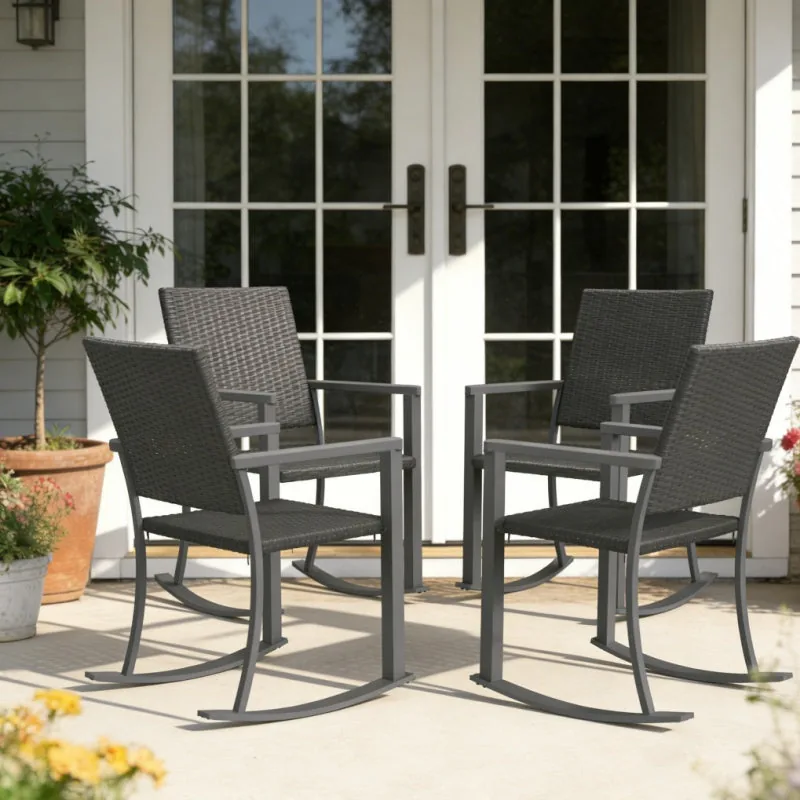
YODOLLA Outdoor Rattan Patio Chairs with Armrests and Metal Frame (4pcs)
YODOLLA · Featured in this article
Audit your space honestly. Measure your deck or patio, then subtract space for traffic flow, grill placement, and planters. If what remains feels spacious, you can afford Adirondacks' footprint. If you're calculating inches, armrest chairs are the pragmatic choice.
Consider your household's physical capabilities. If anyone struggles with low seating, hip mobility, or getting up without assistance, armrest chairs remove a daily frustration. Design should enhance life, not complicate it.
Finally, think about maintenance tolerance. Adirondacks reward people who enjoy the ritual of seasonal furniture care or who accept graceful aging in their outdoor spaces. If you want a set-it-and-forget-it solution that looks tidy with minimal intervention, the geometry and drainage of standard armrest chairs work in your favor.
You don't have to choose exclusively, either. Many outdoor spaces benefit from a mixed approach—Adirondacks in a dedicated relaxation zone by the fire pit, armrest chairs around the dining table. The key is understanding what each style does well, then matching those strengths to your specific square footage, habits, and household composition.
Frequently Asked Questions
Below you'll find answers to common questions about choosing between these two popular outdoor chair styles, covering everything from cushion needs to mixing styles in a single space.
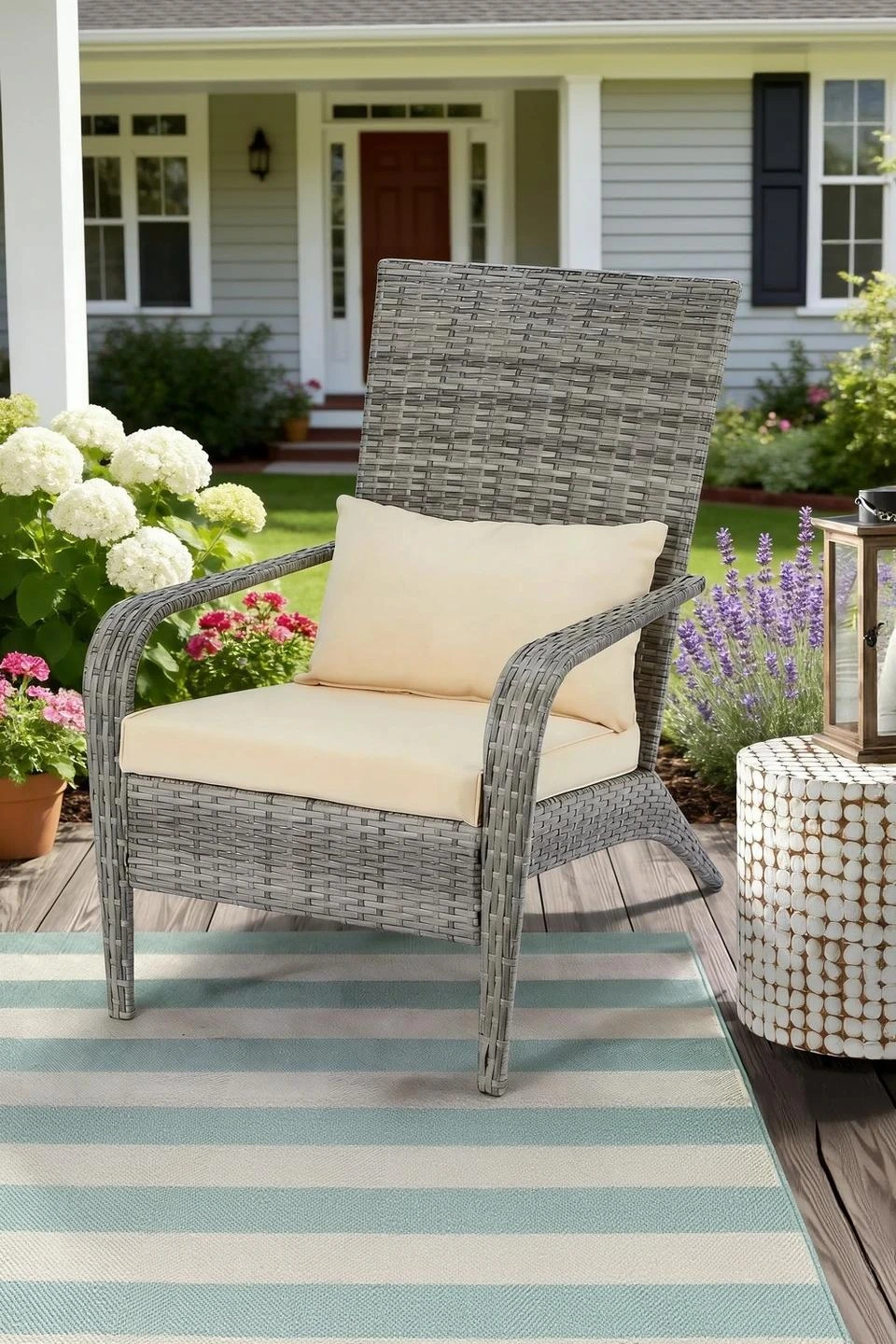
YODOLLA Patio Adirondack Wicker Chair, Grey
YODOLLA · Featured in this article
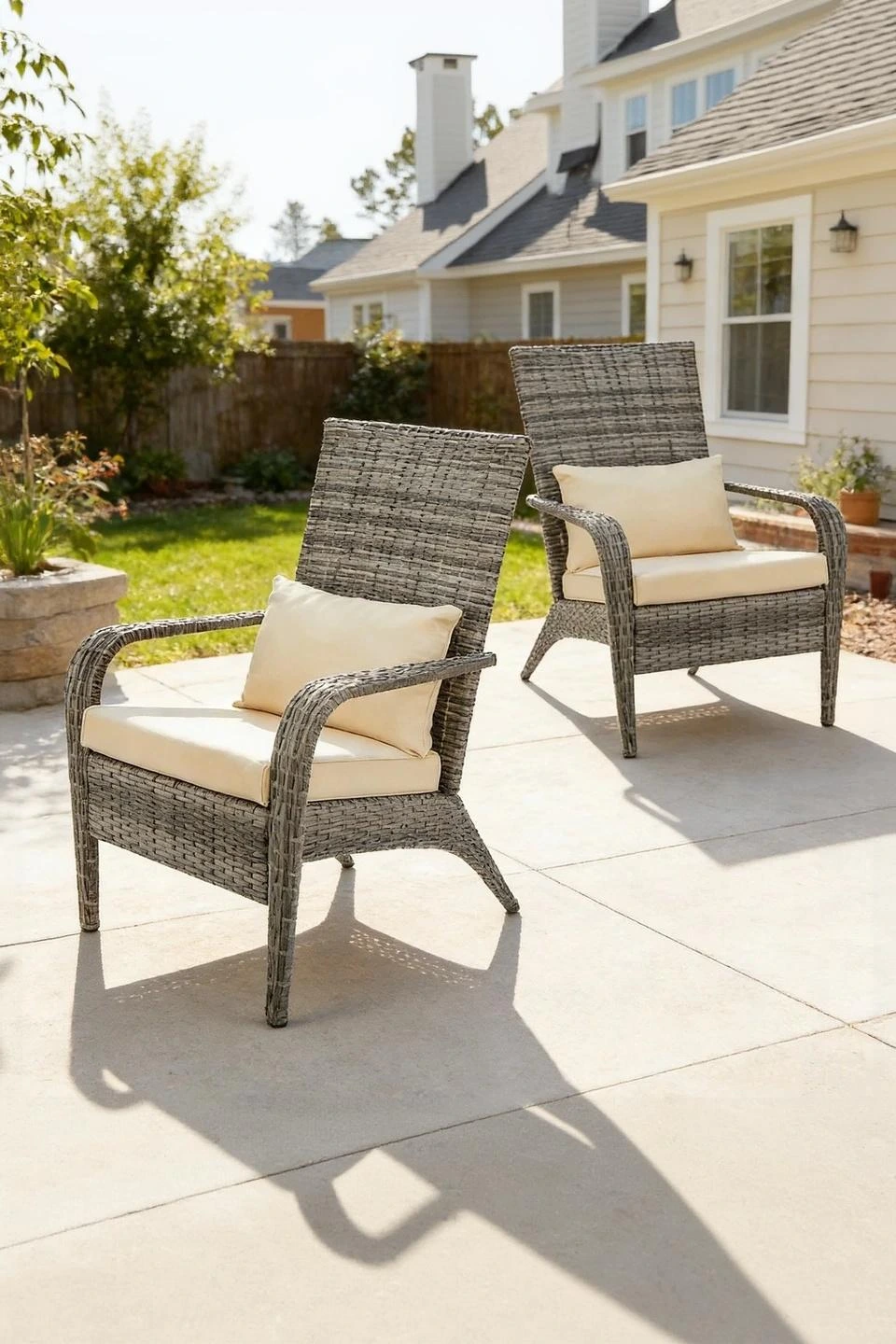
YODOLLA 2 PCS Patio Adirondack Wicker Chair, Grey
YODOLLA · Featured in this article