We've all been there: a guest bedroom that's more aspirational than actual, a studio apartment where every square foot counts, or a basement rec room that moonlights as overflow sleeping quarters during the holidays. The sleeper sofa promises to solve these spatial puzzles elegantly—until you wake up the morning after hosting and realize your spine has lodged a formal complaint. The good news? A back-wrecking sleeper sofa isn't inevitable. With some strategic shopping and a clear understanding of what separates the genuinely comfortable from the cleverly marketed, you can find a piece that serves double duty without the physical toll.
The Mattress Matters More Than You Think
Here's what most people get wrong: they shop for a sleeper sofa the same way they shop for a regular sofa, prioritizing aesthetics, upholstery, and leg style while treating the mattress as an afterthought. But when you're selecting a piece from the sofa beds collection, the hidden mattress deserves top billing in your decision-making process.
Traditional sleeper sofas came with notoriously thin innerspring mattresses—often just four or five inches of coils wrapped in a nominal layer of padding. These were designed primarily to fold compactly, not to support a human spine through a full night's rest. Modern options have evolved considerably, with memory foam, gel-infused foam, and even air mattress mechanisms offering substantial improvements. When evaluating a sleeper sofa, always check the mattress thickness (aim for at least 5 inches, with 6+ being ideal) and ask about the core construction. Memory foam distributes weight more evenly than traditional springs, which means fewer pressure points digging into your shoulders and hips.
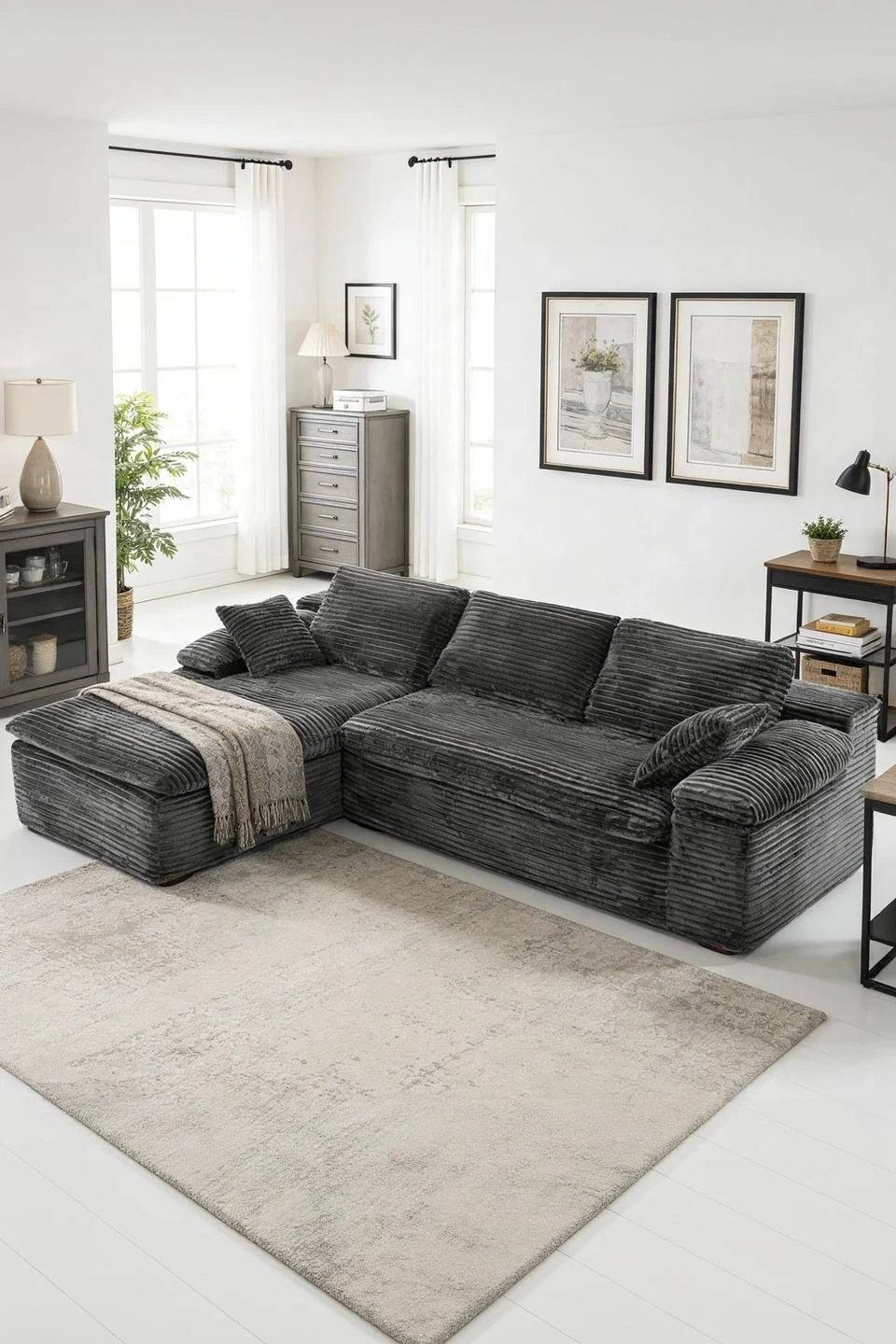
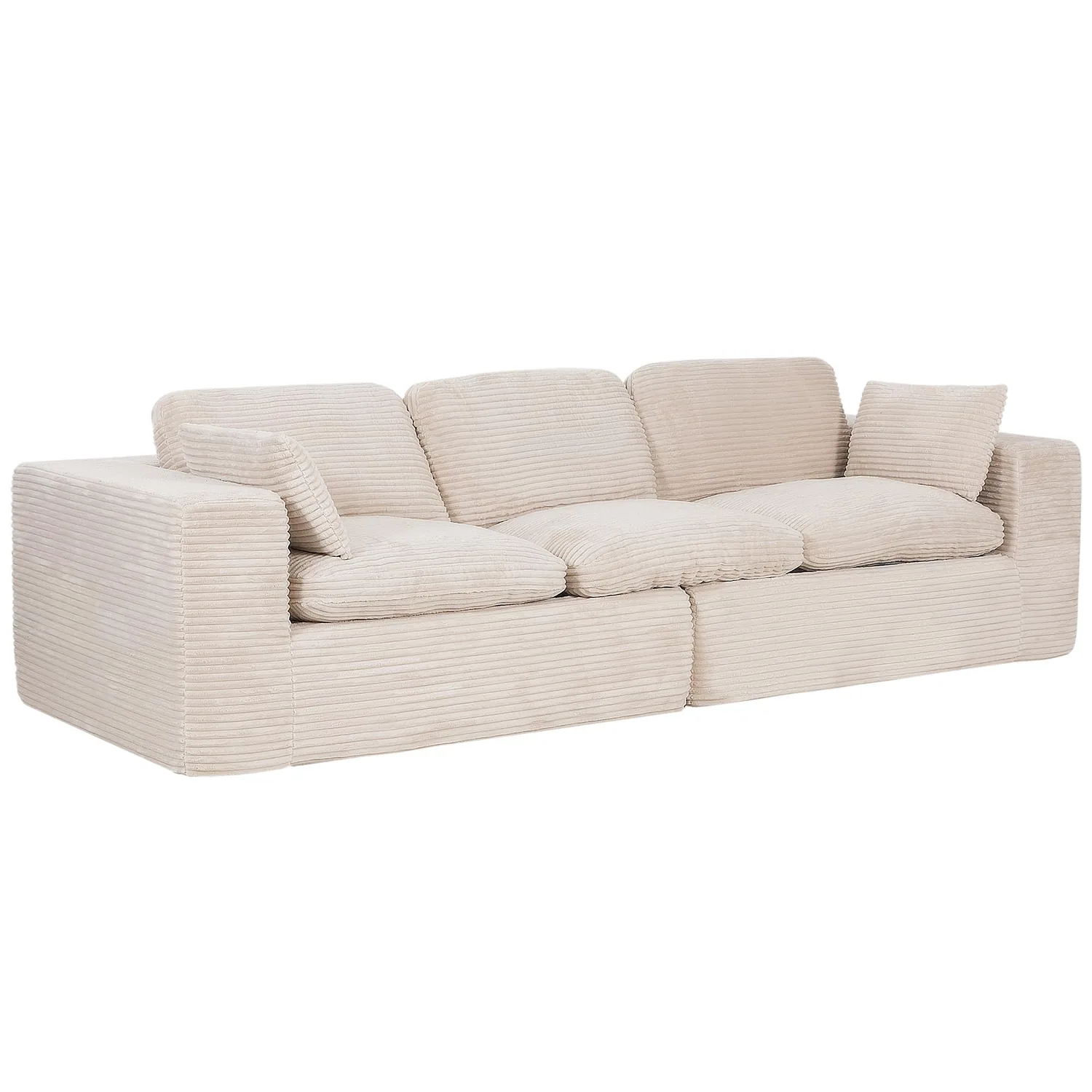
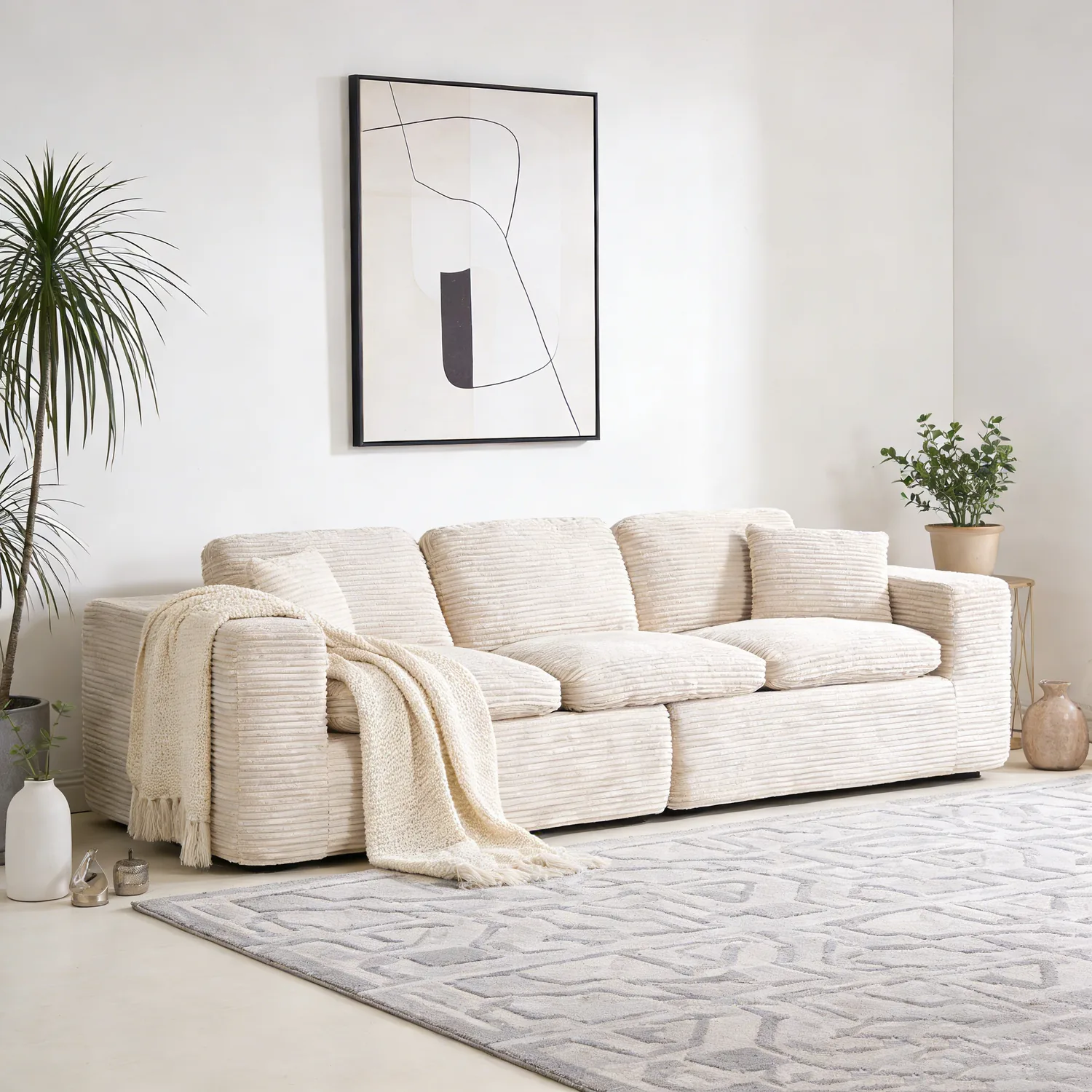
The YODOLLA 110" Oversized Black Cloud Sofa | Boneless Couch Modern Living Room Furniture takes a different approach entirely with its modular, boneless design that allows for multiple configurations—though if you're specifically after a traditional pull-out mechanism, you'll want to look at more conventional sleeper models.
Frame Construction: The Unsexy Foundation of Comfort
A mattress can only perform as well as the platform beneath it allows. Sleeper sofa frames bear considerably more stress than their non-converting cousins—they need to support not just seated weight but also the lateral forces of the pull-out mechanism and the distributed weight of sleeping bodies night after night. Cheap frames sag, creak, and create uneven sleeping surfaces that no mattress can fully compensate for.
Look for hardwood frames (maple, oak, or kiln-dried hardwood) rather than particleboard or softwoods. The pull-out mechanism itself should feel smooth and substantial—if it wobbles or catches during a showroom test, it'll only get worse with use. Corner blocks, where the frame pieces join, should be glued and screwed, not just stapled. Yes, this level of construction drives up the price, but back pain isn't cheap either, and a well-built frame can last fifteen years or more.
Size Reality Check: Bigger Isn't Always Better
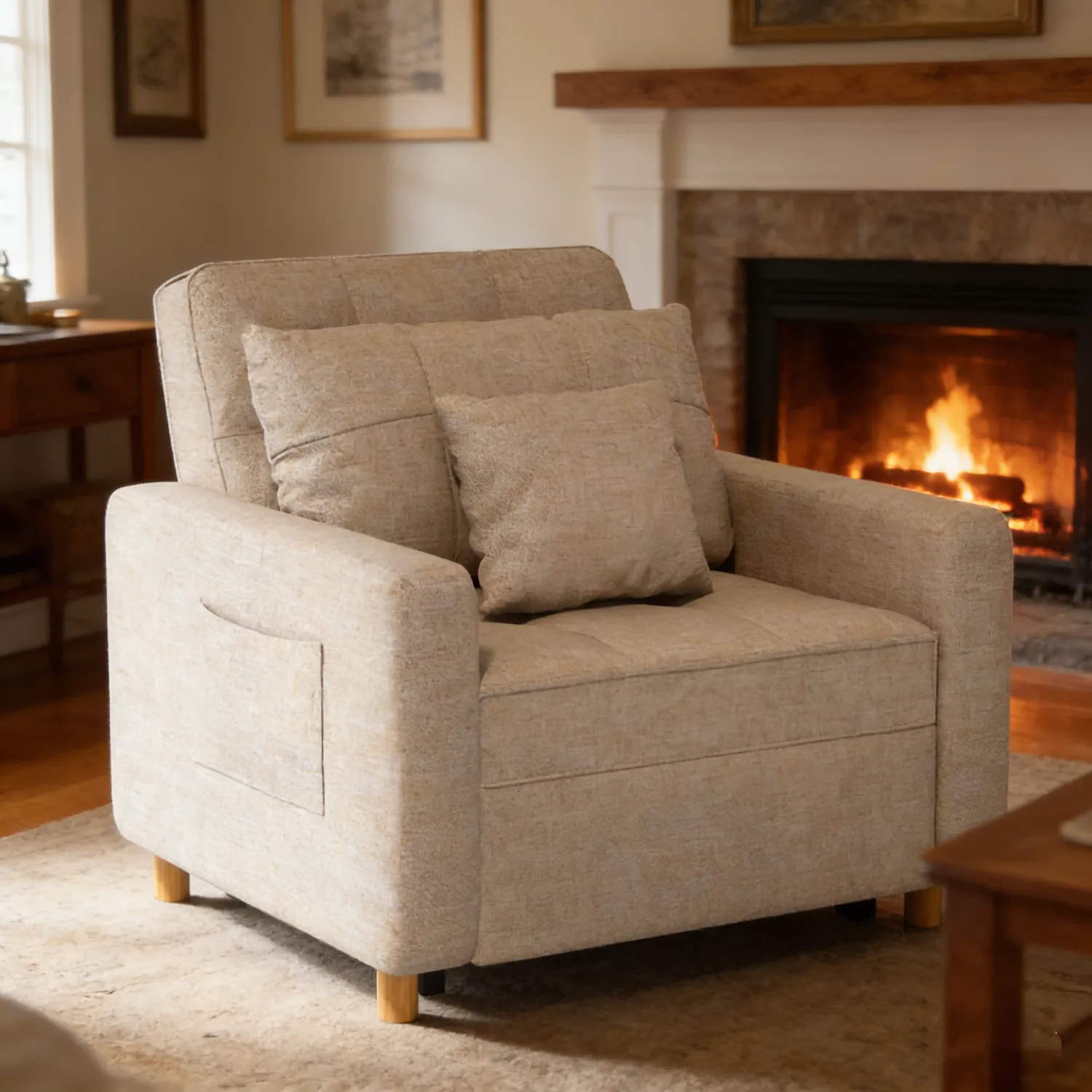
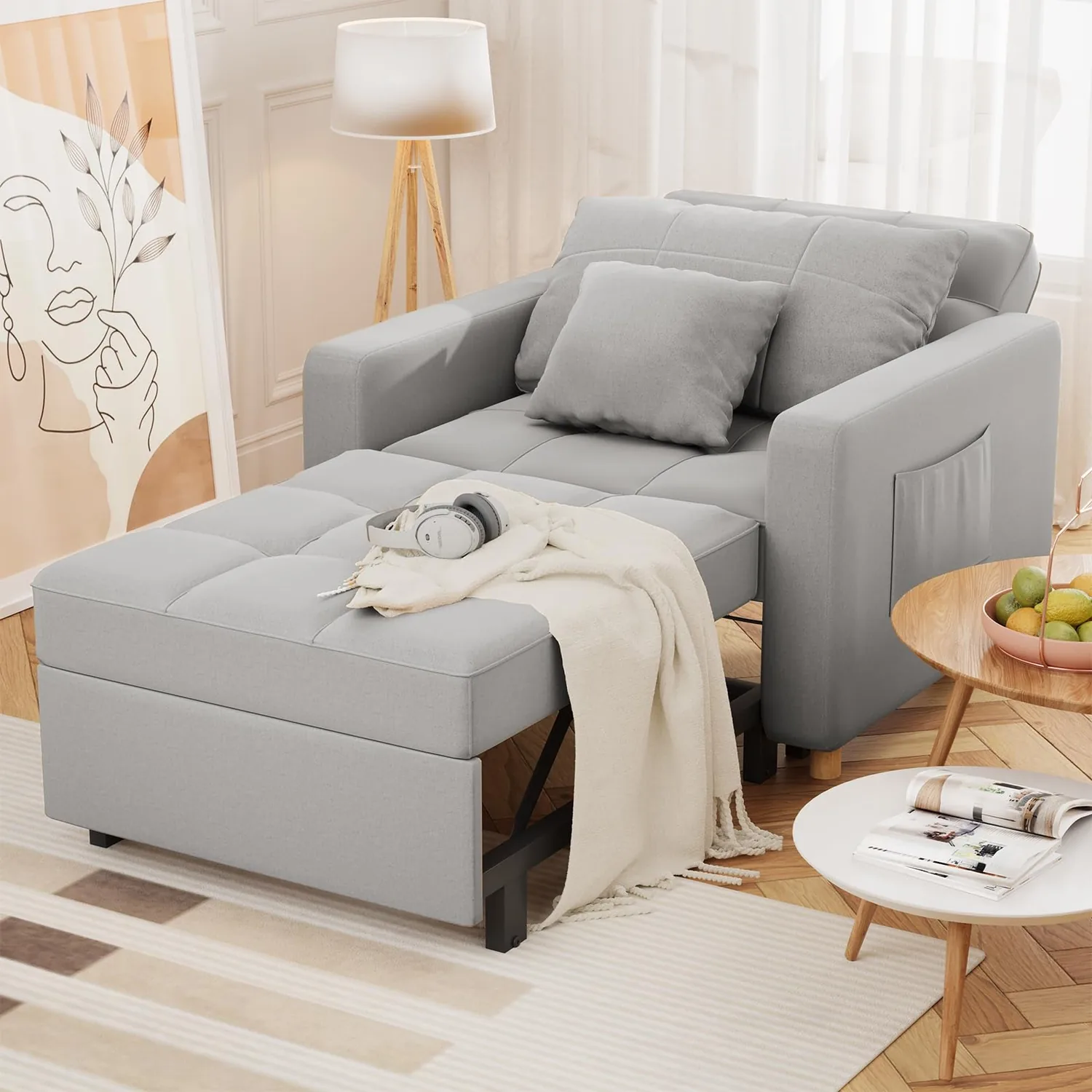
There's a persistent myth that a queen-size sleeper sofa is inherently more comfortable than a full or twin. In reality, the size that works best depends entirely on your room dimensions, guest sleeping patterns, and how the sofa functions in its primary role. A queen-size pull-out in a small room might force you to move furniture every time you convert it, creating friction that means you'll use it less—and guests will sense they're imposing. Sometimes a more compact option like the Gray Convertible Chair Bed 36" | Modern Space-Saving Sleeper Furniture makes more practical sense, especially for occasional single sleepers.
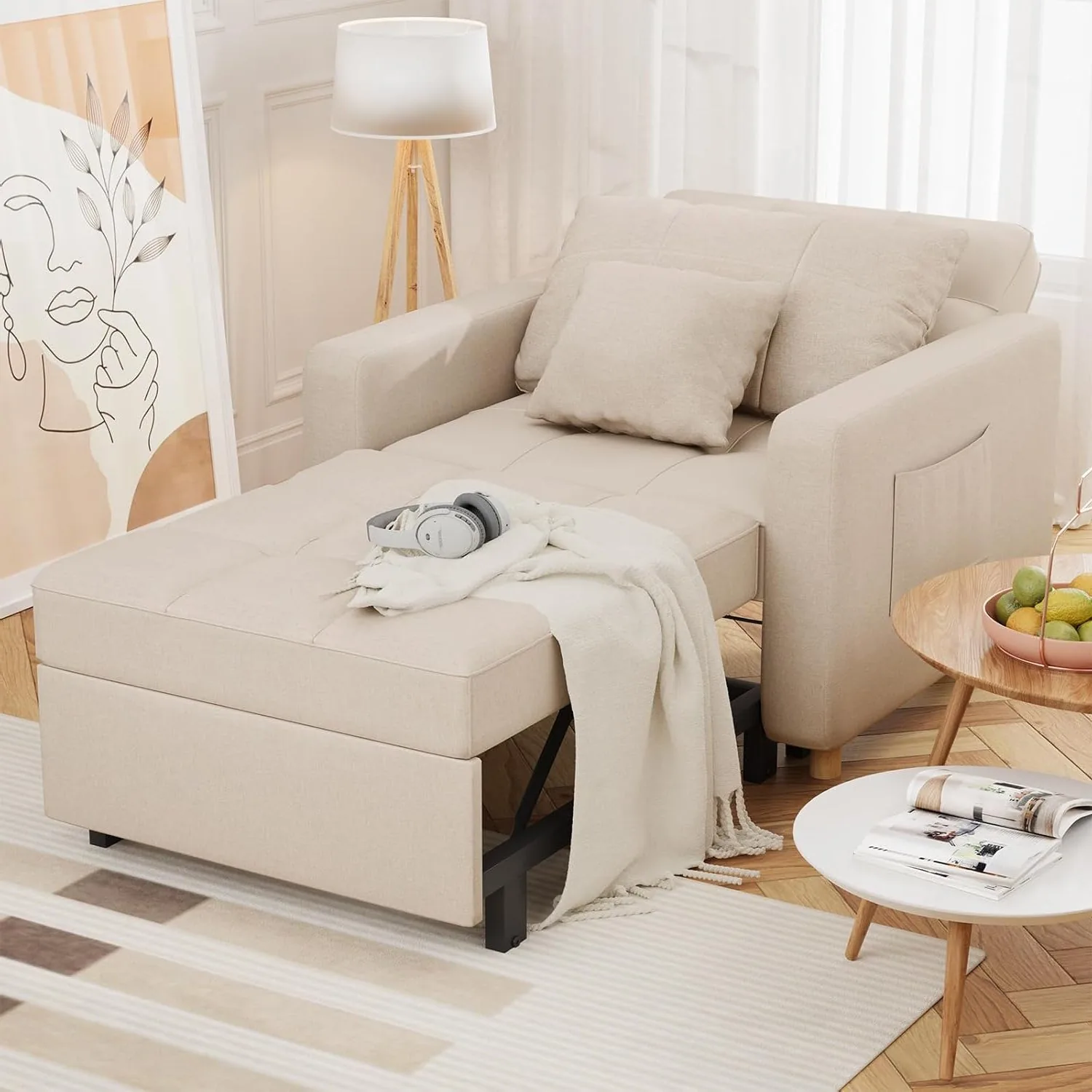
Transform Your Space: Beige Convertible Chair Bed for Modern Living
YODOLLA · Featured in this article
Twin and full-size sleepers also tend to have better weight distribution relative to their frame size. The mattress platform has less unsupported span, which translates to less sagging in the middle—that notorious valley that makes couples roll toward each other regardless of their actual sleeping preferences. If you're primarily hosting solo guests or couples comfortable in a full bed, a smaller footprint might actually deliver better overnight comfort.
The Convertible Alternative: Rethinking the Pull-Out Paradigm
Traditional pull-out mechanisms aren't the only game anymore. Convertible designs—where the sofa back folds down or the seat cushions rearrange to create a sleeping surface—have come a long way from the futon frames of college apartments past. These designs eliminate the metal bars and hinge points that plague traditional sleepers, and they often sit closer to the ground, which can feel more stable.
The Transform Your Space: Beige Convertible Chair Bed for Modern Living exemplifies this approach, offering a flip-down mechanism that's both easier to operate and less mechanically complex than a pull-out frame. The trade-off? Convertible styles typically create a sleeping surface from the existing cushioning rather than revealing a separate mattress, so you're quite literally sleeping on what people sit on during the day. This means upholstery density and cushion construction become even more critical—you want high-density foam (at least 1.8 pounds per cubic foot) that won't compress into uncomfortable lumps.
Testing Beyond the Showroom Sit
Showroom testing is notoriously misleading for sleeper sofas because most people don't actually deploy the bed mechanism and lie down for ten minutes. They sit on the sofa portion, maybe press on the cushions, and make a decision based on that limited data. To truly evaluate a sleeper sofa's back-friendliness, you need to be slightly shameless in the showroom.
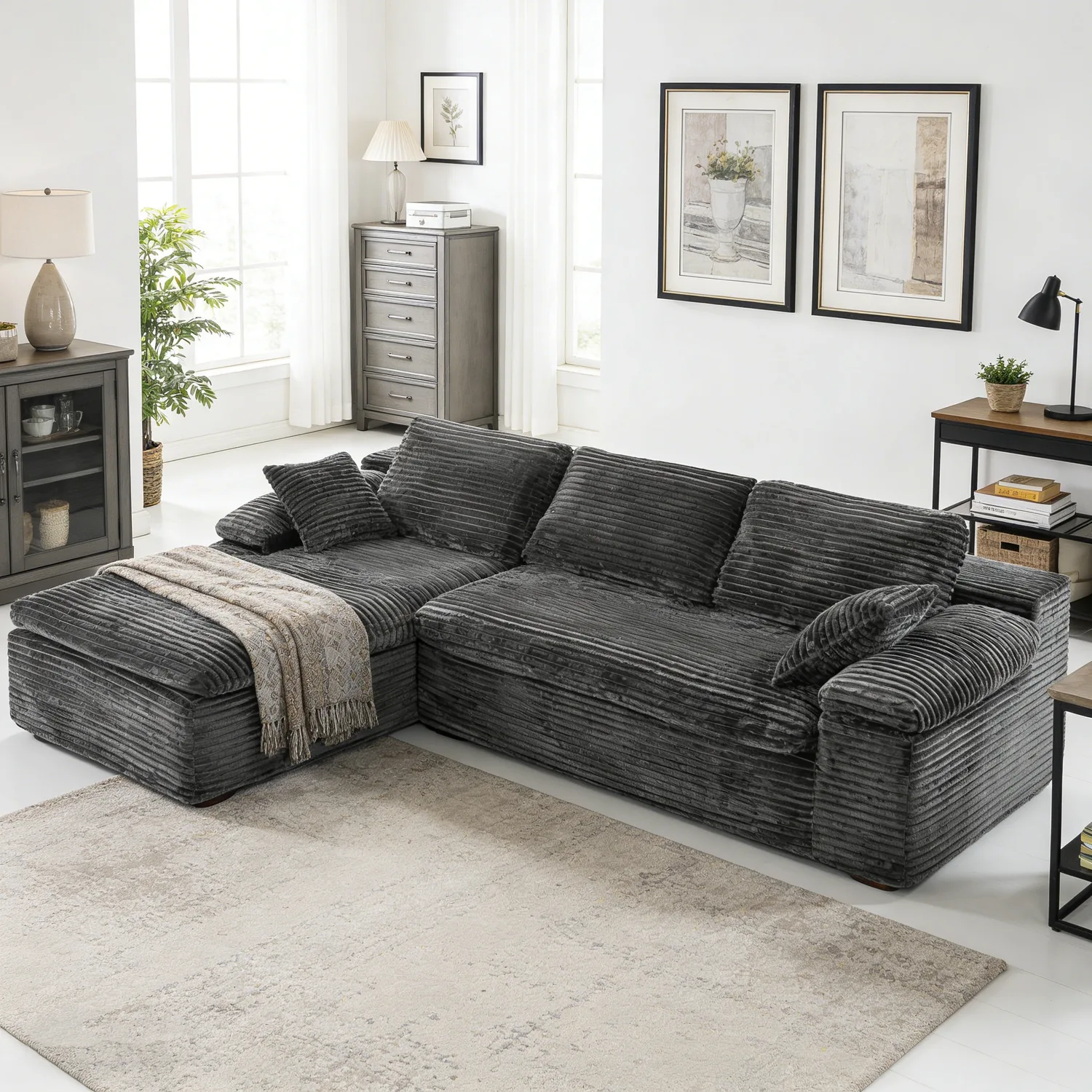
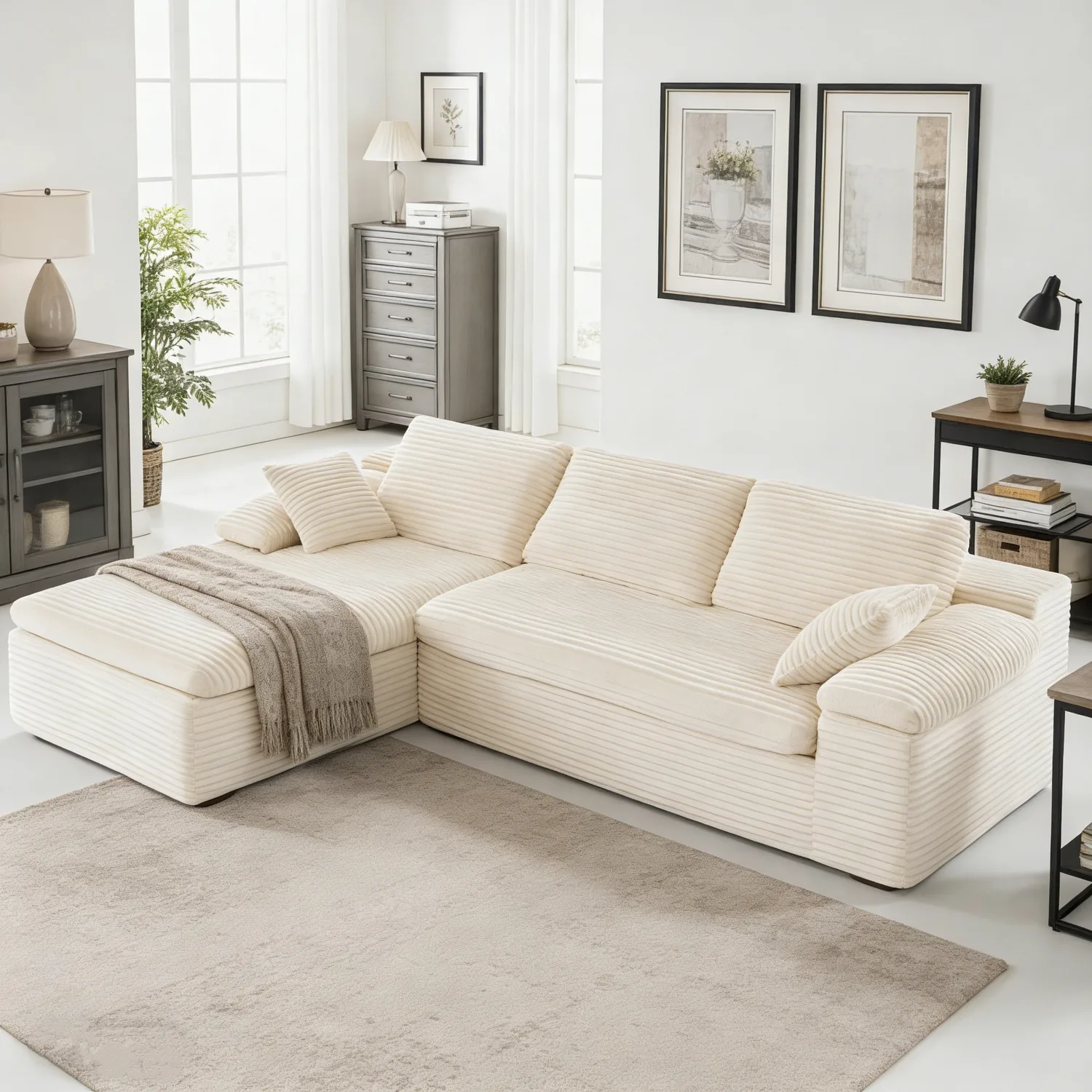
YODOLLA 110" L Shaped Cloud Sectional Sofa Beige - Modular Boneless Couch
YODOLLA · Featured in this article
Ask the salesperson to fully deploy the mattress. Then actually lie down on it for at least five minutes—long enough for your body to settle and for you to notice whether your lower back is arching (too firm) or sinking (too soft). Shift from back to side position. If you sleep with a partner, both of you should lie down simultaneously to test motion transfer. Does the other person's movement create waves you can feel? That's a sign of insufficient support or a too-soft mattress that won't hold up over time.
Also test the conversion process itself multiple times. A mechanism that's tricky or requires significant force will frustrate you at 11 PM when guests arrive tired from traveling. The Navy Convertible Sofa Bed - Modern 3-in-1 Sleeper Couch for Small Spaces, for instance, emphasizes easy conversion as a key feature—and that ease of use directly impacts whether you'll maintain the piece properly and use it as intended rather than letting it become an expensive regular sofa.
Cushion Configuration and Your Spine's Expectations
The relationship between sitting comfort and sleeping comfort is more complicated than it appears. Super-plush seat cushions feel luxurious for movie marathons but often lack the firmness necessary for proper spinal alignment during sleep. Conversely, a very firm sofa seat might telegraph every spring through to a sleeping guest. The sweet spot is a medium-firm seat cushion with substantial core support but enough surface cushioning to prevent pressure points.
Pay attention to cushion attachment style as well. Loose cushions that require constant refluffing and repositioning as a sofa translate to an uneven, shifting sleep surface. T-cushions (where the cushion has extensions that wrap around the arms) can create uncomfortable ridges on the sleeping surface. Tight-back designs or attached cushions generally convert to more uniform sleeping surfaces, though they sacrifice some of that sink-in lounge appeal when you're using the piece as a sofa.
Maintenance Realities and Long-Term Comfort
Here's an uncomfortable truth about sleeper sofas: they require more maintenance than regular sofas to remain genuinely comfortable. Mattresses need rotating every few months to prevent body impressions from forming. Mechanisms need occasional lubrication to maintain smooth operation. Upholstery sees more varied stress patterns from both sitting and sleeping use.
YODOLLA 110" Oversized Black Cloud Sofa | Boneless Couch Modern Living Room Furniture
YODOLLA · Featured in this article
When evaluating options, consider whether the mattress is replaceable. Some sleeper sofa designs use proprietary mattress sizes that can't easily be swapped out if the original loses support over time. This is a particular concern with lower-priced models that might have adequate frames but cheaper mattresses designed to be acceptable rather than excellent. The ability to upgrade the mattress five years down the line—without replacing the entire piece—can extend the comfortable lifespan considerably.
Also examine how the mattress is covered. A mattress protector isn't optional for sleeper sofas; it's essential. Guests may not mention accidents, and body oils accumulate faster on a surface that sees both sitting and sleeping use. A washable cover or the ability to easily fit a standard mattress protector onto the sleeper mattress is a practical consideration that impacts long-term hygiene and comfort.
When to Walk Away: Red Flags That Signal Future Back Pain
Some warning signs should send you straight to the next option. A metal bar that you can feel prominently through the mattress, even when new, will only become more noticeable as padding compresses. A mechanism that requires lifting the mattress platform to position it rather than smoothly extending indicates a weak support system. Seat cushions that bottom out when you sit forcefully suggest foam that won't maintain integrity as a sleeping surface.
Similarly, be wary of deeply tufted or channel-quilted mattress surfaces. These look elegant but create high and low spots that your spine will map out over the course of a night. A smooth or lightly quilted surface provides more consistent support. And if the price seems too good to be true for the size and purported quality, it probably is—adequate sleeper sofa construction simply requires more materials and engineering than a standard sofa, and that cost has to land somewhere.
The questions you ask in the showroom matter as much as the features you examine. What's the warranty on the mechanism versus the frame versus the mattress? (They're often different, and a short mattress warranty suggests the manufacturer doesn't expect it to last.) Can you see the frame construction, or is everything concealed? What's the weight capacity for the sleeping surface? A quality piece should support at least 500 pounds across the mattress without strain.
---
For more guidance on maximizing small-space sleeping solutions and understanding the trade-offs between different convertible styles, our coverage of space-saving furniture strategies and modular design can help you think through the broader context of your room's needs.
In the end, choosing a sleeper sofa that respects your spine and your guests' comes down to prioritizing the hidden components over the visible style elements—at least until you've confirmed the foundation is solid. Then you can obsess over whether you want oat linen or charcoal velvet. Your back will thank you, and your guests will actually mean it when they say they slept well.
The following section addresses common questions about sleeper sofa selection, comfort considerations, and maintenance that can help you make the most informed choice for your space and hosting needs.
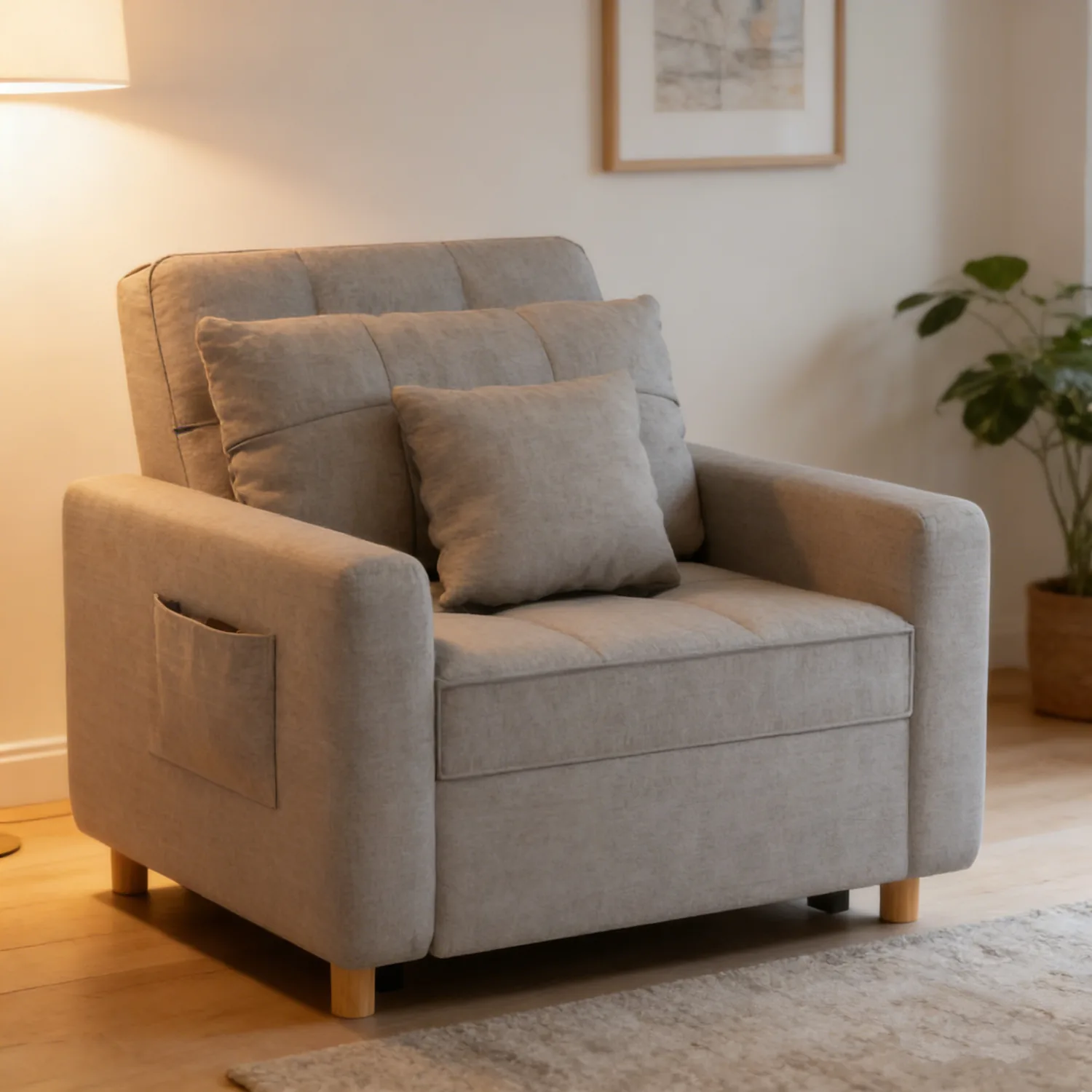
Gray Convertible Chair Bed 36" | Modern Space-Saving Sleeper Furniture
YODOLLA · Featured in this article
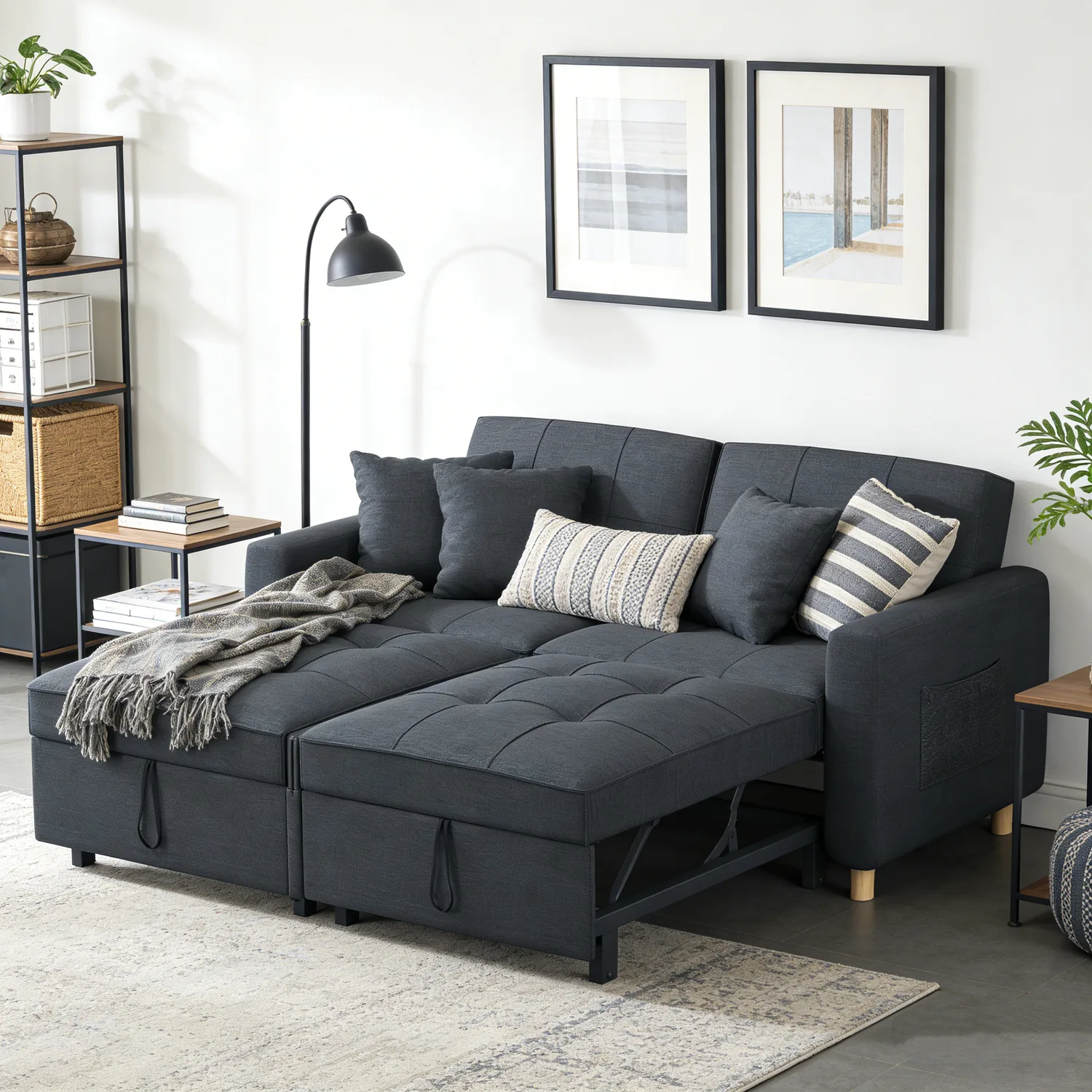
Navy Convertible Sofa Bed - Modern 3-in-1 Sleeper Couch for Small Spaces
YODOLLA · Featured in this article